
Customer Management: Every Account, Its Terms and Its History in One Record
Open Pantry keeps one record per wholesale customer — their order history, the products they buy, their agreed prices, delivery days, minimum order and credit terms, and the people at the venue who are allowed to order. On top of that sit the reports that matter to a food business: which accounts have gone quiet, what that is worth, and which of your reps is carrying them.
- One record per customer: history, pricing, delivery days, credit terms and contacts
- A Lapsed Purchases report that names the accounts going quiet and the dollars at risk
- Per-rep scorecards, at-risk customers and dollar-valued cross-sell opportunities
★★★★★ Trusted by 600+ suppliers
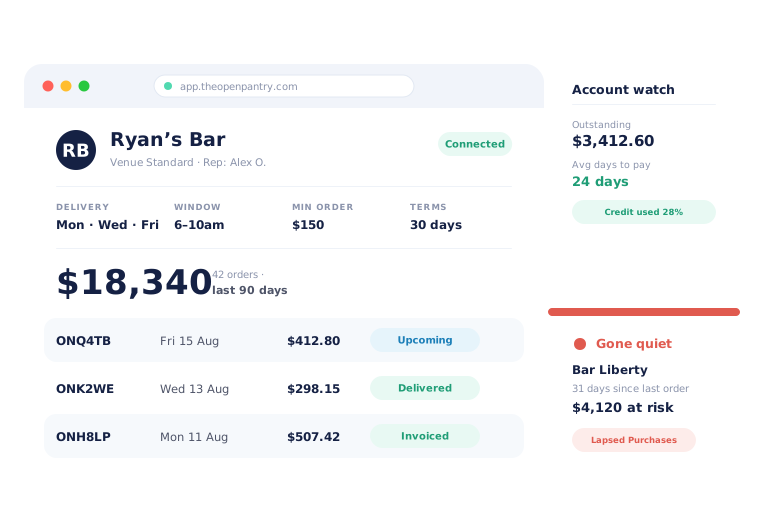



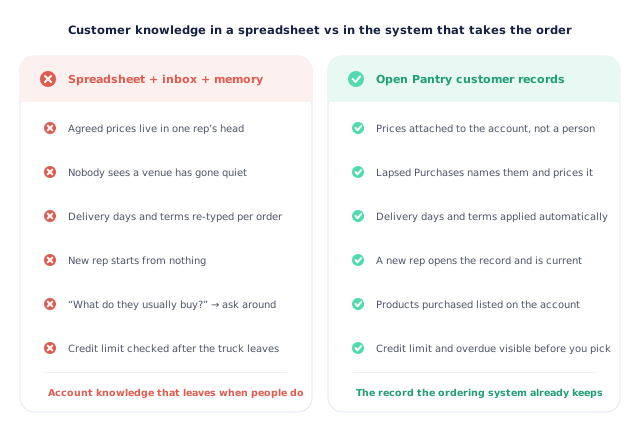
The account is well managed. It is just managed inside one person’s head.

What a customer pays, and why, lives with the rep who agreed it

A venue stops ordering and nobody notices until the quarter closes

Delivery days, cut-offs and credit terms differ per customer and sit in a spreadsheet

A new rep inherits an account with no history and starts from questions
Set the Account Up Once, Then Watch It
Accept the customer and set their price list
When a venue asks to connect, you approve the request and choose the price list they buy on at the moment you accept. The account starts on the right terms rather than being corrected later.
Set what is specific to them
Delivery days and window, minimum order value, payment terms, credit limit, per-customer prices and which products they can see — all held on the customer, not in a side document.
Group the customers that share a rule
Contract venues, a buying group, a region: put them in a customer group and set pricing and catalogue rules once for all of them instead of customer by customer.
Watch the accounts, not just the orders
The Lapsed Purchases report surfaces customers who have stopped ordering with the revenue at risk beside them, and the sales team reports show each rep their accounts, their at-risk list and their opportunities.
Free trial · Cancel anytime
One record that holds the agreement, not just the address
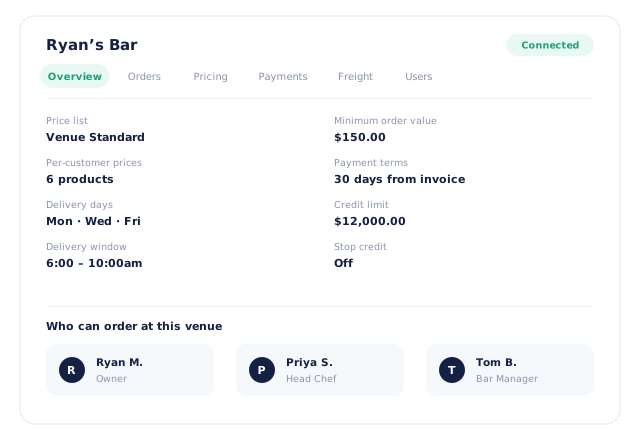
Open a customer in Open Pantry and you get the whole relationship: every order they have placed and the ones coming, the products they actually buy, the price list they are on and any prices agreed just for them, their delivery days and window, their minimum order value, their payment terms and credit limit — and, read-only, the people at the venue who are allowed to place an order. Nobody has to ring the rep to find out how this account works.
- Order history and upcoming orders, with the products purchased alongside
- Price list assigned, plus any per-customer prices set on top of it
- Delivery days, delivery window and minimum order value held on the account
- Payment terms, credit limit and stop-credit, visible before you pick
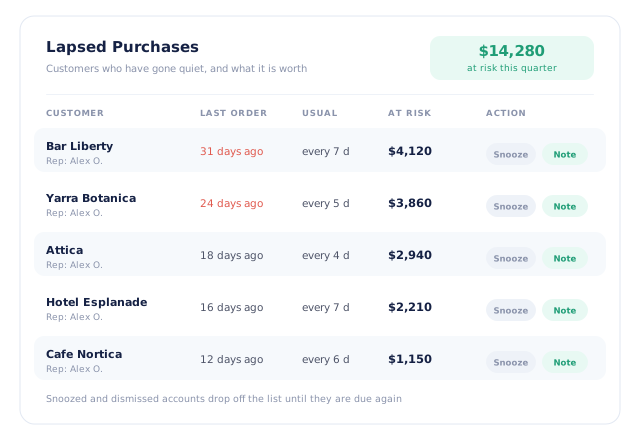
Lapsed Purchases: the report that names who has gone quiet
Losing a customer in wholesale is rarely an announcement. The orders just get further apart. The Lapsed Purchases report watches the ordering pattern each account has actually established and lists the ones that have drifted — how long since the last order, what they normally spend, and the revenue at risk if nothing happens. You can snooze an account you already know about, dismiss one that has genuinely closed, or leave a note for whoever picks it up.
- Ranked by revenue at risk, not alphabetically
- Measured against that customer’s own ordering rhythm, not a fixed number of days
- Snooze, dismiss or note each account so the list stays honest
- Shows the rep responsible, so it becomes someone’s job
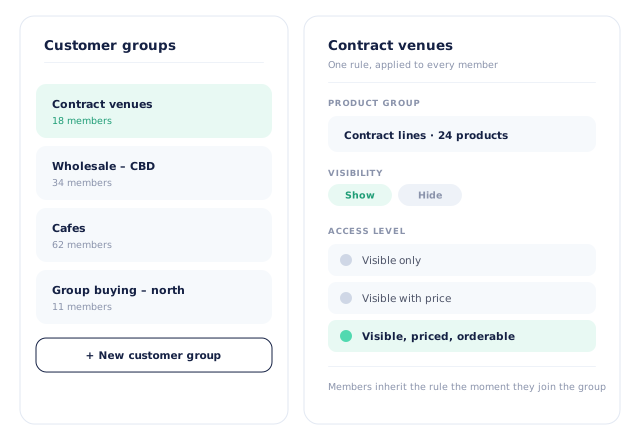
Customer groups, so a rule is set once and not fifty times
Most suppliers do not have five hundred pricing agreements — they have six, applied to different sets of customers. Customer groups make that explicit. Create a group, add the customers to it, and the pricing and catalogue rules you set apply to every member, including the ones you add next month. Take a customer out and they revert to their own terms. Groups are also how you talk to customers: send a message to a group, to customers at risk of going quiet, or to everyone, by push notification, email or both.
- Create groups and add or remove members at any time
- Group pricing and group product visibility applied to every member
- A per-customer rule still overrides the group when one account is different
- New members inherit the rule the moment they join
- Message a group, at-risk customers or everyone by push, email or both
Reports that tell a sales team where to spend the morning
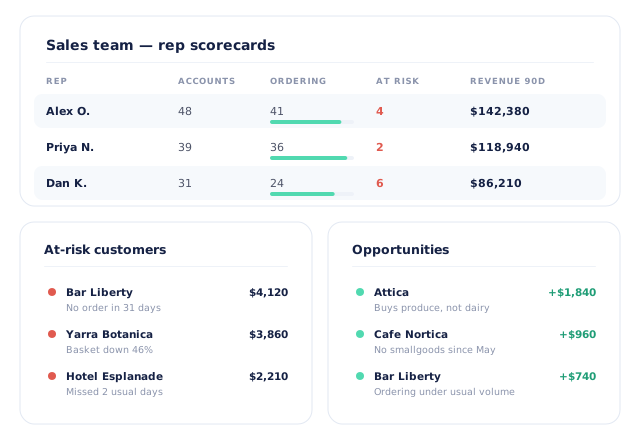
The sales team reports turn the customer list into work. Each rep gets a scorecard — how many accounts they hold, how many are still ordering, how many are at risk and what they have brought in — with the at-risk accounts named underneath. Alongside it, opportunities: customers buying one part of your range and not another, each with the revenue that gap represents. Per customer, the account itself carries its own signals — how much is outstanding, how much is overdue, average days to pay, how much of the credit limit is used, and whether they are due to reorder.
- Per-rep scorecards: accounts held, accounts ordering, accounts at risk, revenue
- At-risk customers named, with the reason and the value beside them
- Cross-sell opportunities valued in dollars, not flagged as a hunch
- Per-customer financial summary: outstanding, overdue, average days to pay, credit used
- More product lines purchased
- 24%
- Your always-on branded store and app put your full range in front of customers, so baskets grow.
- Less order-processing cost
- 95%
- AI order capture and auto-invoicing remove the manual keying between order and books.
- Fewer picking errors
- 80%
- Tablet pick & pack with FEFO lot and expiry tracking catches shorts and wrong items before they ship.
Real gains suppliers report after moving ordering, fulfilment and invoicing onto Open Pantry.
The Customer Record the Rest of the System Already Uses
Trusted by M&J Chickens
- $175m+
- Annual turnover
M&J Chickens use Open Pantry to move ordering out of calls and messages and into one digital workflow — giving customers a smooth ordering experience and giving the team fewer errors and less admin.
“With Open Pantry, we launched our own fully branded ordering app — it’s helped us protect our customer base, move to digital ordering, and deliver a much better experience to our venues.”

A pipeline CRM was not built for a customer you deliver to twice a week.
General CRMs are built to win a customer once. Wholesale food is the opposite problem: you won them two years ago and you now have to serve them forty times a month without dropping a price, a delivery day or a credit limit. A CRM that does not know what was ordered on Tuesday cannot tell you that Tuesday has stopped happening — so it gets updated by hand, falls behind, and quietly becomes a contact list. Keeping the customer record inside the system that takes the orders means the history is a by-product of the work, not another thing to maintain.
Questions Suppliers Ask About Customer Management
Is this a full sales CRM with a deals pipeline?+
What is on a customer record?+
Can different customers have different prices?+
How do I know a customer has stopped ordering?+
Can reps see only their own customers?+
What are customer groups for?+
How does a new customer get added?+
Can I send a message to all my customers, or just some of them?+
Can I see how much a customer owes me?+
Does it work if I only have thirty customers?+
Which plan includes customer management?+
Works Even Better With
Customer Pricing & Promotions
The per-customer prices and promotions that hang off the account record.
Explore →Sales Team CRM
Leads, pipeline, visit planning, targets and commission for your sales reps.
Explore →Margin & COGS Analytics
What each of those customers is actually worth, once cost is taken out.
Explore →Stop Keeping Your Best Accounts in Someone’s Head.
Join 600+ Australian suppliers running their ordering, fulfilment and invoicing on Open Pantry.
Setup done for you · Cancel anytime · Your data stays yours