
Smallgoods Wholesale Ordering: Dated, Picked Oldest First, Billed by Weight
Open Pantry is ordering software for smallgoods and deli producers. Use-by is held against the carton and pick lists run first-expired-first-out, so the oldest stock goes out first; random-weight lines like whole sopressa are weighed at pack and billed at that weight; and the delis and cafés that take the same board every week stop rebuilding it.
- Use-by on the carton, and pick lists ordered first-expired-first-out
- Random-weight lines weighed at pack and billed at the weighed figure
- Standing orders that place themselves, on the current price
★★★★★ Trusted by 600+ suppliers across Australia
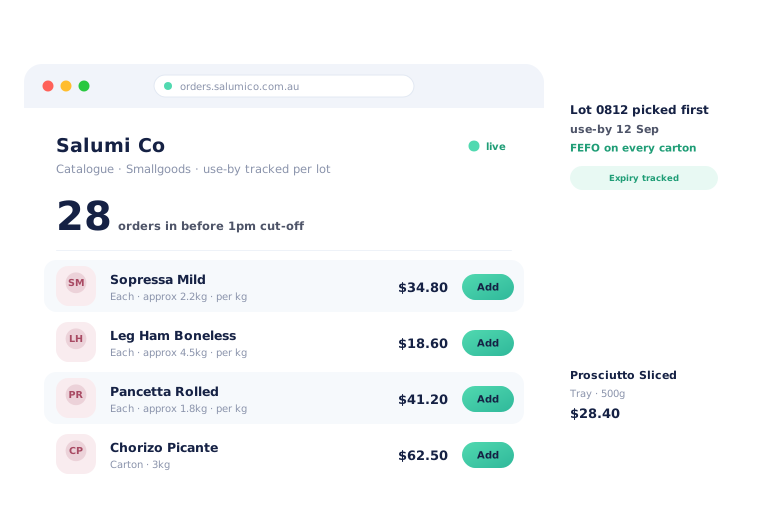



Dates and weights are the whole job, and both live on paper

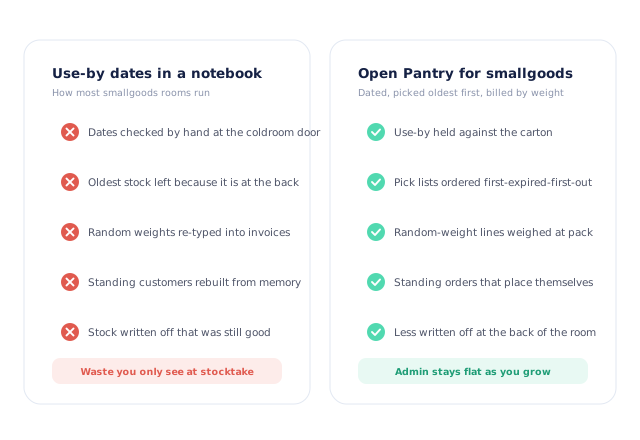
Use-by checked by hand at the coldroom door, one carton at a time

Newest stock picked because it is at the front

Random weights written on the label and re-typed into invoices

Standing deli orders rebuilt from memory every week
From the Coldroom to the Invoice, Once
Date the stock as it comes in
Lot and use-by are recorded against the carton, so the date lives with the product rather than in a notebook by the door.
Venues order what they always order
Delis and cafés order from your own app and list, or keep emailing. The ones on a repeating board have it created for them.
Pick oldest first, weigh as you go
The pick list is already ordered first-expired-first-out. Random-weight pieces are weighed as they are packed and that becomes the delivered quantity.
Invoice from what left
The invoice bills the weights captured at pack and syncs to your accounting system without anyone entering a kilogram twice.
Free trial · Cancel anytime
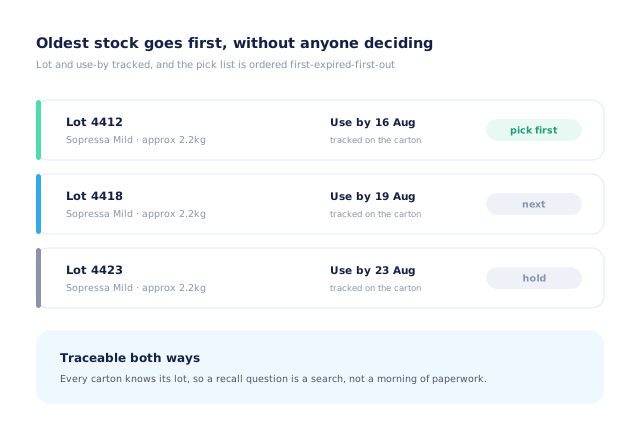
Oldest stock leaves first, without anyone deciding
Smallgoods live and die by dates. Use-by is held against the carton and the pick list is ordered first-expired-first-out, so the oldest stock goes out first automatically rather than depending on which end of the shelf the picker reached. Expiry is visible to the team while there is still time to move it, not at stocktake.
- Lot and use-by recorded against the carton
- Pick lists ordered first-expired-first-out automatically
- Expiry visible before it becomes a write-off
- Less stock quietly ageing at the back of the room
Random weight, billed at the weight you cut
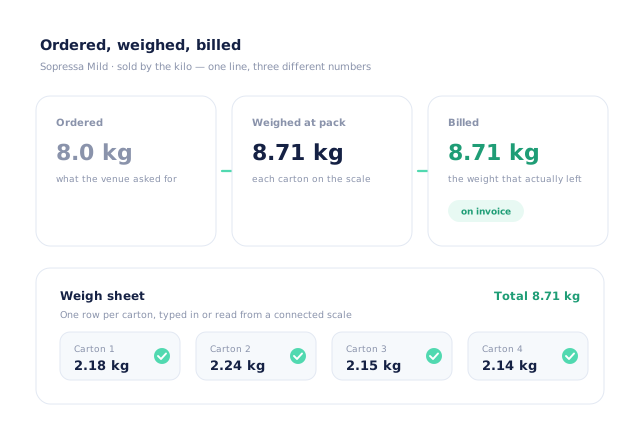
A whole sopressa is never exactly two kilos. Flag those products as catch weight and each piece is weighed as it is packed — typed in, or read from a connected scale if you use one — and the invoice bills the weighed total rather than the quantity ordered. Over or under, it is the weight that went in the box.
- One entry per piece or carton on the weigh sheet
- Billed at the weighed figure, over or under the order
- Set per product, so fixed-weight lines are untouched
- No weights re-typed from a label later
Fixed-weight trays and whole pieces, one catalogue
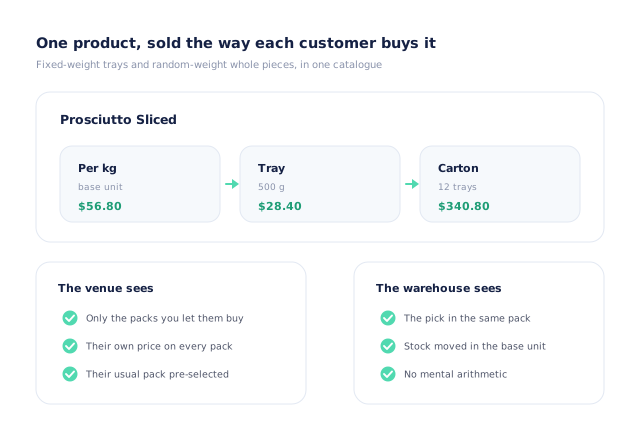
Sliced prosciutto sells by the tray and by the carton; the whole piece next to it sells by the kilo. They do not need to be different products. Open Pantry holds the pack ladder on one product and converts between the levels automatically, so stock still moves in your base unit and each customer sees only the packs you have opened to them.
- Base unit, tray and carton on the same product
- Automatic conversion so stock moves in one unit
- Fixed-weight and random-weight lines side by side
- The pick slip shows the pack the customer ordered
The board that reorders itself
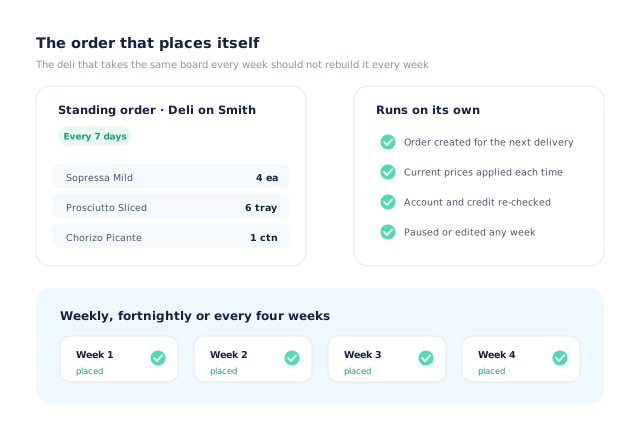
A deli that takes the same eight lines every Tuesday should not rebuild that order every Tuesday. Save it once as a standing order and Open Pantry creates the real order on the cycle you agree — priced at whatever the price is that week, with the account re-checked, and pausable for as long as they are closed.
- Runs every 7, 14 or 28 days on the cycle you choose
- Current prices applied each time it runs
- Account status and credit re-checked before it places
- Paused or edited at any time, without deleting it
- More product lines purchased
- 24%
- Your always-on branded store and app put your full range in front of customers, so baskets grow.
- Less order-processing cost
- 95%
- AI order capture and auto-invoicing remove the manual keying between order and books.
- Fewer picking errors
- 80%
- Tablet pick & pack with FEFO lot and expiry tracking catches shorts and wrong items before they ship.
Real gains suppliers report after moving ordering, fulfilment and invoicing onto Open Pantry.
Sits On Top of the Accounting You Already Run
Trusted by M&J Chickens
- $175m+
- Annual turnover
M&J Chickens are a protein wholesaler running the same shape of day — dated stock, weight-based lines and venues ordering right up to the cut-off. Open Pantry moved their ordering out of calls and messages into one digital workflow.
“With Open Pantry, we launched our own fully branded ordering app — it’s helped us protect our customer base, move to digital ordering, and deliver a much better experience to our venues.”

A date written on a carton is only as good as who reads it.
Every smallgoods room has a system for dates, and it is usually a person. It works right up until the morning that person is not there, or the newest carton is at the front, or the pallet gets restacked. Holding the date against the carton and ordering the pick list by it removes the one step that was always going to fail eventually — and it costs the picker nothing, because the list simply comes out in the right order.
Questions Smallgoods Producers Ask
Does Open Pantry track use-by dates?+
What is FEFO picking?+
What does lot tracking cover today?+
How are random-weight lines like whole sopressa billed?+
Can I sell fixed-weight trays and whole pieces from one catalogue?+
How do standing orders work?+
Can different customers pay different prices?+
What happens when we are short on a line?+
Do my customers have to use an app?+
Does it connect to my accounting system?+
Let the Dates Do the Deciding
Join 600+ Australian suppliers running their ordering, fulfilment and invoicing on Open Pantry.
Setup done for you · Cancel anytime · Your data stays yours