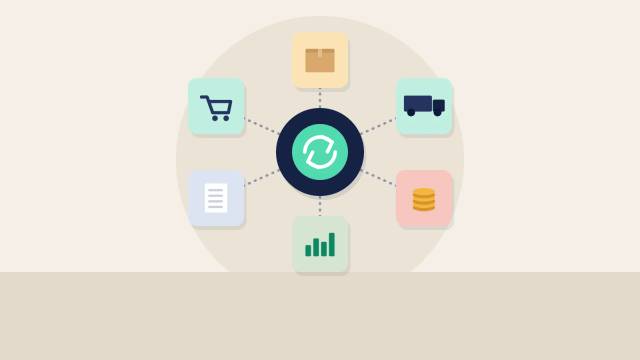
The best AI software for food wholesalers depends on the job: order capture, operations, sales, accounts payable or collections. No single product leads all five in 2026. Capture tools feed your existing ERP, while operations platforms such as Open Pantry run order capture through picking, invoicing and accounting sync in one system.
Key takeaways
- No single AI product leads every food wholesale job; start with the job costing the most staff hours.
- Capture tools write orders into your ERP; operations platforms also price, pick, invoice and sync accounts.
- Test vendors on ten of your own orders, including a voicemail, a catch-weight line and a late order.
- Fixes made in a separate system never reach the AI, so ask where your team corrects a wrong line.
- Auto-accept high-confidence orders customer by customer; keep review on for new senders and products.
- Treat vendor accuracy and time-saving figures as their own claims, not independent benchmarks.
In this guide 8 sections
- 01What is the best AI software for running a food wholesale business?
- 02The five jobs AI now does in a food wholesale business
- 03Capture layer or operations platform: which suits your business?
- 04How to choose the best AI software for food wholesalers
- 05What should a smaller food wholesaler buy first?
- 06Can AI software for food distributors accept orders without a person checking them?
- 07How Open Pantry helps food wholesalers run order-to-invoice with AI
- 08FAQs

The best AI software for food wholesalers is the product that removes your most expensive manual job, and in 2026 that job differs by business: order capture, running the operation, helping reps sell, processing supplier bills or chasing payments. No single product leads all five. Most AI tools do one job and hand the result to your ERP; a smaller group runs the whole order-to-invoice workflow in one system. Start with the job that eats the most staff hours, then decide whether you want a capture layer on your current system or one operations platform.
The money behind this category is real. Canals raised US$35 million in a Series A led by Base10 Partners in May 2026 (The SaaS News). Pepper raised a US$50 million Series C led by Lead Edge Capital, and its chief executive says it works with over 500 distributors (AgFunder News). Funding is not a reason to buy, but it explains why every software vendor is now pitching AI to your office.
A note on bias: we make one of the products in this guide, Open Pantry. Every competitor fact below comes from the vendor’s own page or a named news source, read on 5 November 2026 and linked in the sources.
What is the best AI software for running a food wholesale business?
There is no single best product: the best AI software for running a food wholesale business is the one that takes out your biggest manual job without adding a second system your team has to keep in step. For most Australian wholesalers with 5 to 50 staff, that job is order entry. Orders arrive by email, text, WhatsApp and voicemail, and someone retypes them before picking can start. For a larger distributor with a mature ERP, the bigger gain may sit in accounts payable or field sales.

Answer two questions before you book a single demo:
- Which job costs the most hours each week? Order entry, quoting, supplier invoices, collections or rep admin.
- Are you keeping your current ERP or accounting setup? If yes, you need a tool that writes into it. If your operation runs on a shared inbox, spreadsheets and Xero, one platform that covers capture through to invoice will usually remove more work.
The five jobs AI now does in a food wholesale business
Vendors use the same words ("AI agents", "operating AI", "AI-native ERP") for very different products. Sorting them by job keeps the comparison fair. All facts below are as at 5 November 2026.
Order capture
This is the most crowded job. The software reads orders from messages and turns them into sales orders.
- ManualOut says it reads WhatsApp, email, PDFs, spreadsheets and voice notes, matches every line to your catalogue and creates the sales order in your ERP. Its site lists Dynamics 365 Business Central, SAP, NetSuite, Acumatica, Sage and QuickBooks among the systems it writes into (ManualOut).
- Ordermentum Omni processes PDF and CSV purchase orders, SMS and orders written in an email body. It says "voice orders are coming soon" and claims "80% less manual data entry" (Ordermentum Omni).
- Conexiom says its Relay product validates "virtually any format, from email to handwritten notes" and lists native integrations with 40+ ERPs (Conexiom).
- GrubMarket AI Orders extracts orders from voicemails, emails and texts around the clock and syncs them to your ERP on your approval (GrubMarket software).
Treat every accuracy and time-saving figure as the vendor’s own claim, not an independent benchmark.
ERP or operations platform with AI built in
Here the AI sits inside the system that also holds stock, pricing and invoices. Stockline, from Y Combinator’s Summer 2025 batch, calls itself an "AI-native ERP for food wholesalers" that brings messaging, billing, inventory and CRM into one platform (Stockline). GrubMarket describes WholesaleWare as cloud-based, AI-powered ERP software for food wholesalers, distributors and shippers. Pepper describes itself as a platform to "run your entire business in one place" for independent distributors, with an Order Agent and an "AI Powered Order Desk" that turns texts, voicemails and emails into orders, and says it integrates with more than 60 ERP systems (Pepper). Open Pantry, covered at the end, sits in this group as an operations platform that runs alongside Xero, MYOB, QuickBooks or Sage rather than replacing an ERP.
Sales and prospecting
Choco SalesHub is described as Choco’s "AI-powered solution built for foodservice sales teams", with AI prospecting and menu scanning that reveals dishes, SKU gaps and replacement products for a pitch (Choco SalesHub). Pepper says its AI "surfaces slipping customers, reorder nudges, and margin opportunities" for reps. These tools suit distributors with a field sales team. A wholesaler whose owner is the sales team will get less from them.
Accounts payable and receiving
Canals lists order entry, accounts payable, statement reconciliation, PO tracking and receipt tracking among its workflows, and describes itself as the operating AI of 100+ distributors (Canals). The verticals named on its homepage are electrical, plumbing, HVAC, industrial and building materials, so a food wholesaler should ask for food references. Conexiom also automates supplier invoices alongside orders.
Finance and collections
Collections AI is the least mature job for food. Canals lists accounts receivable and quotes a customer reporting "99% cash application match accuracy"; Pepper lists a Finance Hub for "faster payments, cleaner collections". For most Australian wholesalers, the practical gain still comes from invoices that are right first time and sync to the accounting system without re-keying.
Capture layer or operations platform: which suits your business?
A capture layer reads the order and hands it to your ERP. That suits a distributor whose ERP already handles customer-specific pricing, picking, catch-weight and invoicing well. The trade-off is a seam: when a product code changes or a price is wrong, the fix happens in a different system, and two systems must agree on customers, products and prices.
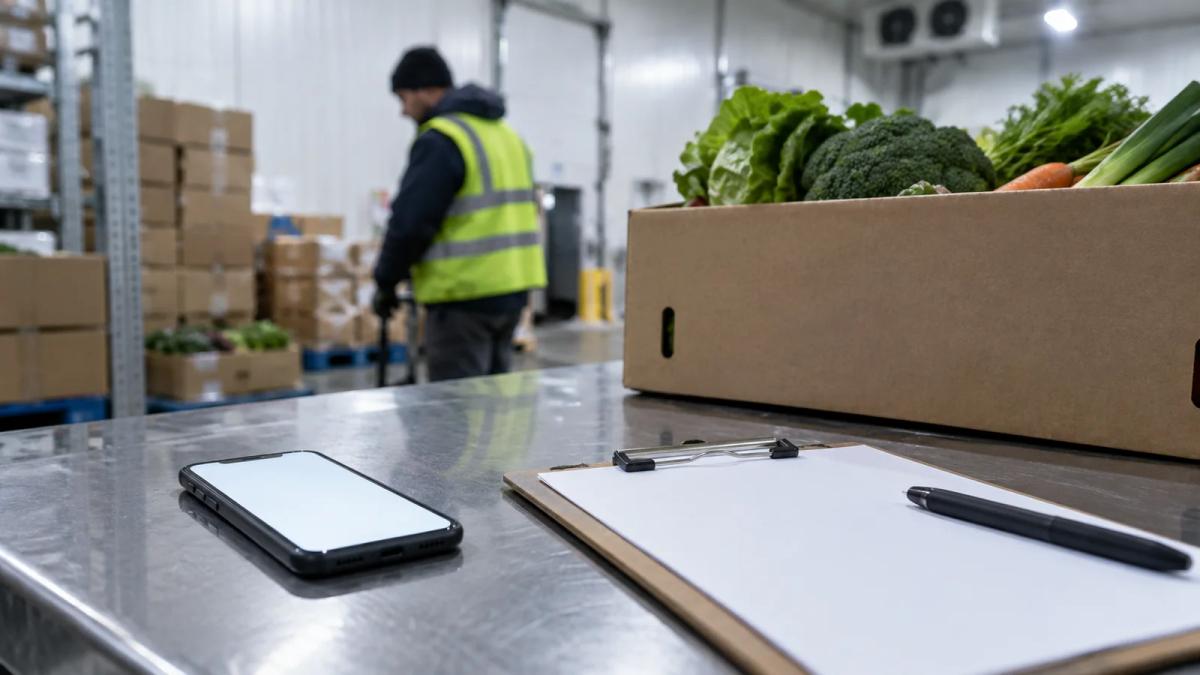
An operations platform reads the order in the same place that holds price lists, order cut-offs, delivery runs and invoices. The AI knows this café calls a 10 kg carton "a box", that they are on a contract price and that cut-off passed twenty minutes ago. A 40-truck distributor with a well-tuned ERP should not rip it out to get AI order capture. A six-truck produce wholesaler running orders from a shared inbox and spreadsheets will usually get more from one system than from layering AI on tools that were never joined up. Our comparison of AI order entry software for food wholesalers goes deeper on this choice for order capture alone.
How to choose the best AI software for food wholesalers
Put every shortlisted vendor through the same checks, using your own orders and bills rather than their demo data.
- Test ten real orders. Include a WhatsApp in trade shorthand, a photo of a handwritten order sheet, a voicemail, a catch-weight line, a customer on contract pricing and an order that lands after cut-off.
- Ask what happens to high-confidence orders. Can trusted orders go straight through, and who sets the bar? Ordermentum, for example, says every order arrives as a draft by default and auto-processing can be switched on per customer.
- Ask where corrections happen. If your team fixes a wrong line in another system, the AI never sees the fix and cannot learn from it.
- Trace one order to the accounts. Follow it through picking, short picks and substitutions, the delivery run, the invoice and the sync to your accounting system.
- Check local support and pricing. Vans leave at 5am. Ask where support sits, whether pricing is in AUD and how AI processing is billed.
- Ask for food references. Several tools in this category were built for building supplies or industrial distribution first.
For product-by-product detail on order capture, see the AI order entry software comparison grid and the Open Pantry comparison pages.
What should a smaller food wholesaler buy first?
For a wholesaler with one office person and a handful of delivery runs, start with order capture that is tied to invoicing, not sales AI or accounts payable AI. As an illustrative example, a produce supplier taking 80 orders a day, half by text and voicemail, has someone keying orders from 4am so picking can start at 5am. Removing that retyping frees the earliest and most error-prone hour of the day, and every wrong line caught at capture is a credit note you never raise.
Sales AI pays off once you have reps on the road and a pipeline to manage. Accounts payable AI pays off once supplier invoices run into the hundreds each month. Until then, simpler steps such as a supplier portal, customer-specific price lists and invoices that sync to your accounting software usually return more than another AI subscription.
Can AI software for food distributors accept orders without a person checking them?
Yes, for the orders the system is confident about. The pattern vendors now describe is consistent: high-confidence orders flow straight through, and anything uncertain (an unknown sender, an unmatched product, a quantity that reads two ways) goes to a person beside the original message. Ordermentum describes per-customer auto-processing and ManualOut describes "autopilot for the ones you trust". The right setting is earned customer by customer: start with review on, watch the corrections fall, then widen automation for regulars whose orders are consistently right.
How Open Pantry helps food wholesalers run order-to-invoice with AI
Open Pantry is an Australian B2B ordering and operations platform for wholesale food and beverage suppliers, founded in 2018. Its AI order capture reads email, PDFs, photos of order sheets, SMS, WhatsApp and voicemail, which is transcribed and then extracted into an order. Orders above a confidence threshold you set are placed automatically; anything below it waits beside the original message for a person to confirm. Orders then flow into digital pick and pack, delivery runs, invoicing and two-way sync with Xero, MYOB, QuickBooks and Sage. AI capture is on the Enterprise plan, billed per processed order from a prepaid credit wallet; Pro starts from $149 a month. If you are shortlisting the best AI software for food wholesalers, compare supplier plans and pricing.
Frequently asked questions
What is the best AI software for food wholesalers in 2026?
It depends on the job. For order capture into an existing ERP, look at capture tools such as ManualOut, Conexiom or Ordermentum Omni. For one system covering ordering, picking, invoicing and accounting sync, look at operations platforms such as Open Pantry or Pepper. For field sales, consider Choco SalesHub; for accounts payable, Canals. Test each one on your own orders before choosing.
Can you recommend the best ERP solutions for food distributors?
Food-specific options include GrubMarket's WholesaleWare and Stockline, which calls itself an AI-native ERP for food wholesalers. General ERPs used in distribution include Microsoft Dynamics 365 Business Central, SAP, NetSuite, Sage and Acumatica. Many Australian wholesalers under 50 staff do not need a full ERP: an ordering and operations platform running alongside Xero or MYOB usually covers order-to-invoice for less effort.
Is Open Pantry an ERP or an ordering platform for food wholesalers?
Open Pantry is an ordering and operations platform, not an ERP. It covers AI order capture, customer-specific pricing, digital pick and pack with catch-weight, delivery runs and invoicing, and syncs two ways with Xero, MYOB, QuickBooks and Sage. Large suppliers that already run an ERP can connect it on the Enterprise plan rather than replacing their existing system.
Can AI order entry software read voicemail and WhatsApp orders from customers?
Yes, many products now do. As at 5 November 2026, Open Pantry, ManualOut, Pepper and GrubMarket all describe reading voicemails or voice notes, and most also read SMS and email. Ordermentum Omni says voice orders are coming soon. Before you sign, ask each vendor to process one of your real voicemails live, including a regular customer's shorthand.
Do AI order entry tools accept orders automatically without a person checking?
Most can, for orders they are confident about. Open Pantry places orders above a confidence threshold the supplier sets and holds the rest beside the original message for a person to confirm. Ordermentum lets you switch on auto-processing per customer, and ManualOut describes autopilot for accounts you trust. Start with review on and widen automation as corrections fall.
Sources
- The SaaS News - Canals raises $35M Series A led by Base10 Partners (28 May 2026), accessed 5 Nov 2026
- AgFunder News - Pepper $50M Series C led by Lead Edge Capital, 'over 500' distributors (8 Apr 2026), accessed 5 Nov 2026
- Canals - homepage (workflows, operating AI of 100+ distributors, verticals, 99% cash application testimonial), accessed 5 Nov 2026
- Pepper - AI for independent distributors (Order Agent, AI Powered Order Desk, 60+ ERP systems, rep alerts, Finance Hub), accessed 5 Nov 2026
- GrubMarket - software suite (WholesaleWare AI-powered ERP, AI Orders synced to ERP on approval), accessed 5 Nov 2026
- Choco - SalesHub (AI-powered prospecting, menu scanning), accessed 5 Nov 2026
- ManualOut - AI sales order entry for food and FMCG distributors (channels, ERPs incl. Dynamics 365 BC, SAP, NetSuite, Acumatica, Sage, QuickBooks; autopilot), accessed 5 Nov 2026
- Ordermentum - Omni (PDF/CSV/SMS/email, voice coming soon, 80% less manual data entry claim, drafts by default, per-customer auto-processing), accessed 5 Nov 2026
- Conexiom - Relay (virtually any format, native integrations with 40+ ERPs, orders and invoices), accessed 5 Nov 2026
- Y Combinator - Stockline: AI-native ERP for food wholesalers (Summer 2025), accessed 5 Nov 2026
- Open Pantry - AI order capture (channels incl. voicemail, threshold you set, Enterprise, prepaid credit wallet per order), accessed 5 Nov 2026
- Open Pantry - Digital pick and pack (shorts, substitutions, catch-weight scale, invoices update), accessed 5 Nov 2026
- Open Pantry - Accounting sync (two-way with Xero, MYOB, QuickBooks and Sage; Zoho Books on request), accessed 5 Nov 2026
- Open Pantry - Supplier pricing (Free $0, Pro from $149/month, Enterprise custom), accessed 5 Nov 2026