Restaurants say they choose suppliers on quality, price and reliability, but what actually shifts their orders is friction: how long ordering takes, whether confirmation arrives, whether invoices need querying, and whether cut-offs are applied consistently. Buyers rarely announce a switch - they quietly order less.
Key takeaways
- Chefs name quality, price and reliability, but switching is usually triggered by accumulated operational friction.
- Buyers rarely announce a change of supplier; they quietly move volume to whoever is easier.
- One invoice discrepancy is an irritant, a pattern of them is a reason to leave.
- A clear, firmly held cut-off builds more trust than one enforced only some of the time.
- Easy ordering produces more frequent, smaller orders, which suits both the kitchen and the supplier.
- Every buyer-visible symptom traces back to how the supplier's own operation is organised.
In this guide 8 sections
- 01What Restaurants Say They Care About
- 02What Actually Drives Switching Behaviour
- 03The Ordering Experience as a Retention Lever
- 04What Good Looks Like From a Buyer’s Perspective
- 05How This Maps Back to Supplier Operations
- 06The Loyalty Dividend
- 07How Open Pantry Helps You Be the Supplier Restaurants Stay With
- 08FAQs
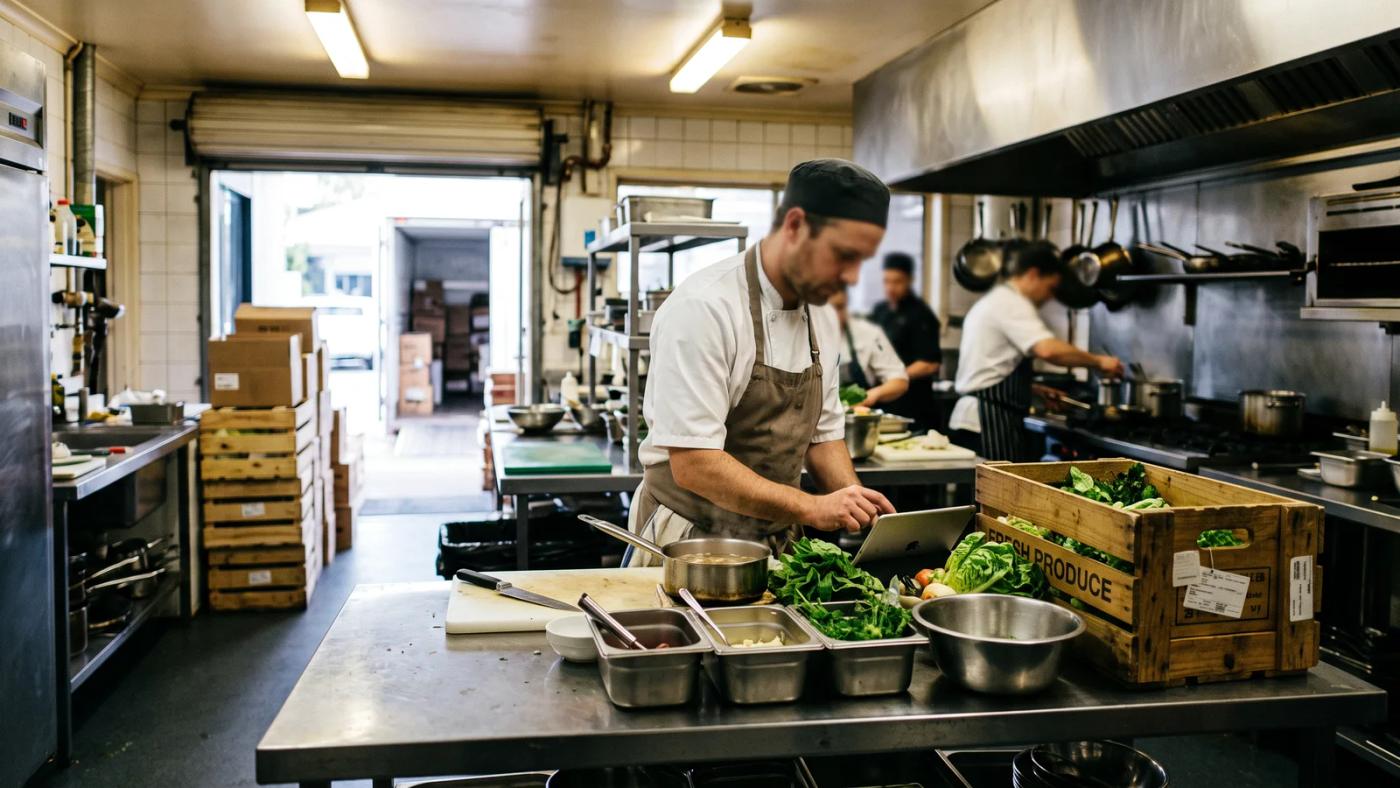
Ask a chef what makes a great supplier and they will mention product quality, price, and reliability. They will talk about the rep who actually picks up the phone, the supplier who called to flag a shortage before the order was due, the one who consistently delivers what they promised. They will not mention the ordering system. But it is there in the background, shaping the relationship in ways that neither party fully articulates - until the friction becomes noticeable, and by then it is often already eroding the relationship.
Understanding why restaurants choose some suppliers over others - and why they quietly leave others - is one of the more useful pieces of commercial insight a wholesale supplier can have, because most of what drives the decision is within your control.
What Restaurants Say They Care About
The stated reasons chefs and food service operators give for choosing a supplier are consistent and reasonable:

- Product quality and consistency - the same standard every delivery, not just on a good day
- Price - not necessarily the cheapest, but fair and transparent
- Reliability - they do what they say, when they say it
- Responsiveness - when something goes wrong, it gets sorted quickly
- Trust - built over time through consistent follow-through
None of this is surprising. But these stated preferences tell you what restaurants value in a supplier relationship in the abstract. They do not fully explain why restaurants actually switch suppliers - or why they stay with one supplier even when a competitor offers a better price.
What Actually Drives Switching Behaviour
The factors that actually trigger supplier switching tend to be operational and experiential - friction that builds up over time until it outweighs the inertia of an established relationship. Most of these are invisible to suppliers who are not paying attention to the buyer experience from end to end.
Ordering is hard or time-consuming
A busy kitchen does not have time for complicated ordering processes. If placing an order with you requires a phone call, an email thread, navigating a clunky portal, or working out what is in stock before knowing what to order - that friction accumulates. Over time, buyers find themselves ordering more from suppliers who make it easy, and less from those who do not, often without consciously deciding to switch.
Confirmation is inconsistent or confusing
When a kitchen manager places an order, they need to know it was received and what is coming. If confirmations are inconsistent - sometimes they arrive, sometimes they do not; sometimes the formatting is confusing; sometimes items are listed differently than how they were ordered - it creates anxiety. Did the order go through? Is the quantity right? Experienced kitchen operators build mental models around their most reliable suppliers and quietly reduce their exposure to the unreliable ones.
Invoice discrepancies that require follow-up
Every time a buyer has to query an invoice - because the price is different from what they expected, because an item was missing but still charged, because the credit from last week’s return is not reflected - it costs them time and creates doubt. A single discrepancy is a minor irritant. A pattern of them is a reason to find a supplier whose invoicing you can trust without checking.
Cannot easily see order history or track what they ordered
Kitchen managers and owners often want to check back on what they ordered, when, and at what price. If this requires digging through email threads or calling the supplier to ask, it is a small but consistent source of friction. Buyers who can access clean order history through a portal are less likely to feel the need to shop around - they have a reliable record of the relationship.
Cut-off times are unclear or inconsistently enforced
Nothing frustrates a kitchen more than placing an order they believe is within the cut-off and then finding out it missed the run. But the frustration is doubled when the cut-off is not clearly communicated in the first place, or when it is sometimes enforced and sometimes not. Inconsistency here erodes trust faster than a clear, firm cut-off that a buyer can plan around.
Short picks that arrive unannounced
A short pick a kitchen knows about at 6am is a menu adjustment. The same short pick discovered when the box is opened at 4pm is a service problem. What buyers hold against a supplier is rarely the shortage itself - it is finding out too late to do anything about it.
The Ordering Experience as a Retention Lever
Supplier retention is generally treated as a relationship problem - and it is. But it is also an operational problem. Every point of friction in the ordering and fulfilment process is a small withdrawal from the trust account. Remove the friction, and you give the relationship room to be what it actually is: built on product quality, expertise, and real service.

There is also a less obvious mechanism at work. Buyers who find ordering easy tend to order more frequently, in smaller, more regular quantities. This is a good outcome for both parties - it smooths demand for the supplier and reduces the risk of the buyer running out of stock. Friction in the ordering process pushes buyers toward less frequent, larger orders - or toward the supplier who is easier to deal with.
What Good Looks Like From a Buyer’s Perspective
When you ask buyers what a frictionless supplier experience looks like, the picture is consistent and achievable:
- A clean, mobile-friendly ordering portal they can use from the kitchen or the stockroom, at any time of day
- Instant confirmation of every order, with a clear summary of what was ordered and when it is coming
- Consistent invoicing that matches what was delivered, with no surprises
- Easy access to order history so they can check back on what they ordered, when, and at what price
- Clear cut-off times that are communicated in advance and applied consistently
- Early warning of a short pick or substitution, before the delivery arrives rather than after
- A responsive human on the other end when something goes wrong
None of this is extraordinary. But it is not universal either - and suppliers who deliver all of it consistently stand out against those who deliver it only sometimes.
How This Maps Back to Supplier Operations
The experience a buyer has is a direct reflection of how well the supplier’s back end is organised. Inconsistent confirmations happen when order intake is manual and someone forgets to send one. Invoice discrepancies happen when the picking process and the invoicing process are not connected. Unclear cut-off times happen when the supplier has not set them up clearly in their system. The buyer sees symptoms; the cause is operational.
This is why investing in operational infrastructure is not just an internal efficiency play - it is a customer experience investment. Every improvement you make to how your operation runs translates directly into a better experience for the buyers who order from you. And that experience is what keeps them there. The mechanics of one of those links - picking accuracy - are set out in the link between picking accuracy and customer retention.
The Loyalty Dividend
Buyers who have a frictionless experience with one supplier are significantly less likely to shop around. Not because they are loyal in some abstract sense, but because switching has a cost: learning a new portal, re-entering order history, adjusting to different confirmation formats, managing the uncertainty of a new relationship. When your ordering experience is easy, that cost of switching is not worth the effort for most buyers - even if a competitor offers a marginally better price.
This is the loyalty dividend of a well-run operation. It is not earned through a loyalty programme or a price concession - it is earned through consistent, frictionless execution, week after week. Over time, it compounds into a customer base that stays, orders reliably, and refers you to other buyers.
How Open Pantry Helps You Be the Supplier Restaurants Stay With
Almost everything that makes a restaurant leave a supplier is an operational artefact, which means it can be fixed. In Open Pantry, customers order through your own supplier portal for restaurant customers, with your catalogue, your published cut-offs and instant confirmation on every order - so the buyer never has to wonder whether the order went through. Order status tracking tells them what is picked and where the delivery is, which is what removes the 4pm phone call. And because the invoice is generated from what was actually picked and delivered through automated invoicing and payments, the invoice queries that quietly cost suppliers accounts largely stop happening.
Frequently asked questions
Why do restaurants switch from one wholesale food supplier to another?
Rarely for a single dramatic reason. It is usually accumulated friction: ordering that takes too long, confirmations that arrive inconsistently, invoices that need to be queried, order history that cannot be checked without a phone call, and cut-offs applied unevenly. Each one is small, and together they outweigh the inertia that keeps an established relationship in place.
What do chefs actually want from a supplier's ordering process?
A clean mobile ordering portal usable from the kitchen at any hour, instant confirmation showing what was ordered and when it is coming, invoices that match what was delivered, easy access to order history with prices, cut-off times published in advance and applied consistently, early warning of a short pick, and a human who answers when something goes wrong.
Does a better price win a restaurant account from a competitor?
Less often than suppliers expect. Switching carries a real cost for a kitchen: learning a new portal, rebuilding order history, adjusting to different confirmation formats, and carrying the uncertainty of an unproven supplier. When the incumbent's ordering experience is easy, a marginally better price usually is not worth that effort.
How do invoice errors affect wholesale supplier retention over time?
They cost the buyer time and, more damagingly, they create doubt. Once a kitchen believes it has to check your invoices, every delivery carries admin work it did not have before. Invoice discrepancies mostly come from the picking and invoicing processes not being connected, so the fix is operational rather than a matter of being more careful.
Should I tell a customer about a short pick before delivery?
Always. A shortage a kitchen learns about at 6am is a menu adjustment; the same shortage found when the box is opened at 4pm is a service failure. Buyers hold the timing against you far more than the shortage itself, and early notice is one of the cheapest retention actions available to a supplier.