

The Link Between Picking Accuracy and Customer Retention

Most wholesale food suppliers focus on sales, pricing and product quality when trying to retain customers. While these factors matter, there is one area that has a far bigger impact on customer loyalty than most suppliers realise — picking accuracy. It doesn’t matter how good your product range is, how competitive your pricing is or how strong your relationship with a chef is. If orders arrive with regular mistakes, the customer eventually leaves.
Picking accuracy isn’t just a warehouse issue — it’s a customer retention strategy.
This article explains why fulfilment performance determines supplier loyalty, how errors affect customer behaviour and what suppliers can do to dramatically improve picking accuracy.
Why Picking Accuracy Drives Customer Loyalty
Chefs rely on orders arriving correctly and on time. When items are missing or incorrect, the impact is immediate. Prep is delayed, menus may need to change, and kitchen staff are forced to spend time fixing avoidable issues.
For chefs, accuracy is not optional. It is a basic part of reliable service. When mistakes happen repeatedly, trust drops and the supplier becomes harder to rely on.
Many kitchen teams will not complain more than once. They simply reduce orders or move to a supplier they trust more.
Why Chefs Prefer Digital Ordering Over Calls, Texts and Emails
The Hidden Cost of Poor Picking Accuracy
Picking errors do not stop at the wrong item. They create financial, operational, and customer-related costs that can affect the entire business.
❌ Direct Losses
These include re-delivery costs, replacement stock, emergency purchasing, wastage, credit notes, refunds, and lost invoice value.
❌ Operational Losses
Mistakes can slow warehouse activity, create confusion during delivery, increase internal communication, and add avoidable labour hours.
❌ Relationship Losses
Repeated errors weaken customer trust, reduce order frequency, increase price sensitivity, and often lead to long-term churn.
By the time a customer decides to leave, the impact is rarely limited to a single order. This is why improving picking accuracy is not just an operational fix, but a practical way to protect margins and strengthen retention.

Why Picking Errors Happen
Picking errors rarely come from bad staff. They come from a system that forces staff to work with incomplete, inconsistent or unclear information.
Common causes include:
1. Orders Coming from Multiple Channels - email, text, WhatsApp, PDFs and manual notes all introduce variations and contradictions.
2. Outdated Paper Pick Slips - a chef updates an order at 10pm, but the warehouse prints pick slips at 4am. The change never reaches the picker.
3. Poor Product Naming - different names for the same item (e.g. “chicken breast,” “breast fillet,” “breast 5kg”) lead to misinterpretation.
4. Manual Copying and Data Entry - every time data is re-entered, accuracy declines.
5. Substitutions Not Recorded Correctly - if a picker substitutes something verbally without noting it, the invoice won’t match the order — leading to disputes.
6. Lack of Visibility Between Teams - sales, admin, warehouse and drivers don’t see the same information at the same time.
Why Digital Ordering Makes Chefs Happier and More Loyal
How Better Systems Improve Picking Accuracy
Suppliers do not need more staff to improve picking accuracy. In most cases, they need better structure, clearer workflows, and more reliable information.
Platforms like Open Pantry help streamline the fulfilment process by ensuring pickers work from accurate, up-to-date order data. When the system reduces confusion, accuracy improves quickly.
Below are some of the most effective ways better systems support more accurate picking.
1. Centralise All Orders into One System
When staff no longer need to interpret multiple messages, search across inboxes, or guess customer intent, the risk of mispicks drops immediately.
A centralised order system helps ensure:
- no lost orders
- no conflicting instructions
- consistent order formatting
- clear product names and pack sizes
For suppliers still receiving manual orders, order conversion tools can help turn emails or messages into structured digital orders before picking begins.
2. Use Real-time Digital Pick Lists
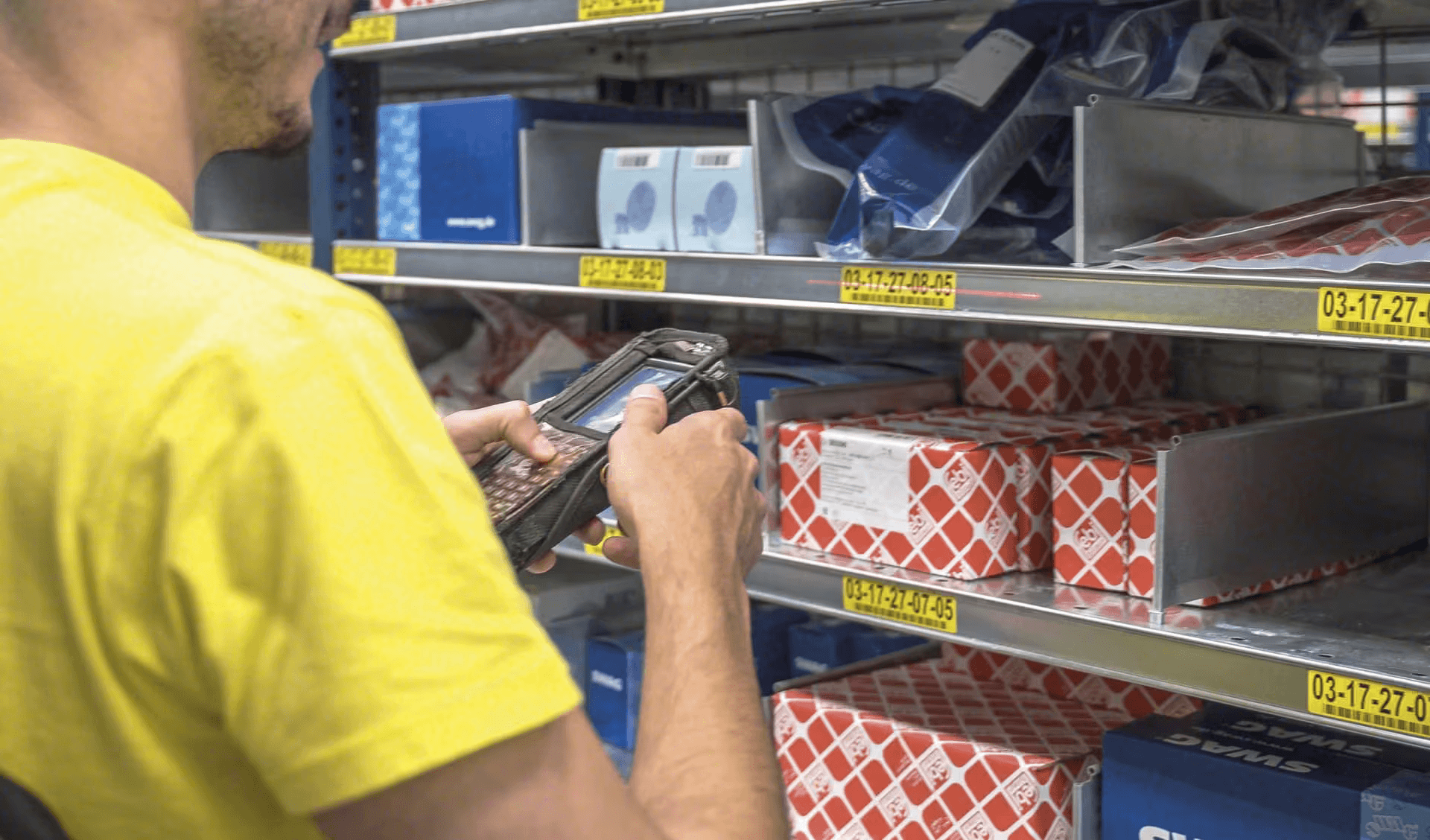
Digital pick lists are one of the most effective ways to improve warehouse accuracy. Unlike paper-based systems, they give pickers access to live order information as it changes.
With digital pick lists:
- orders update in real time
- changes sync instantly
- substitutions are visible immediately
- product notes stay attached to the order
- items can be grouped by zone, route, or customer
This helps remove one of the most common causes of picking errors: outdated information.
3. Use Customer-specific Catalogues
Customers sometimes order the wrong item by mistake, especially when product options, pack sizes, or pricing vary. Customer-specific catalogues reduce this risk by showing each buyer only the products relevant to them.
This includes:
- available products
- correct pack sizes
- agreed pricing
- approved categories
Better order accuracy at the customer level leads to cleaner, more accurate picking in the warehouse.
4. Record Substitutions and Shortages Digitally
Many delivery issues happen because substitutions or shortages are not clearly recorded. When these updates are logged digitally in real time, the entire team works from the same information.
This means:
- drivers can see the update
- admin teams stay informed
- invoices match the delivery
- customers see an accurate order history
Clearer substitution records help reduce disputes and improve trust.
5. Connect Picking With Delivery and Invoicing
Accuracy improves further when picking is connected to the rest of the workflow. When delivery updates, substitutions, and invoicing all flow from the same system, there is less room for manual error.
A connected workflow helps ensure that each team is working from the same source of truth, from order placement through to delivery and invoicing.
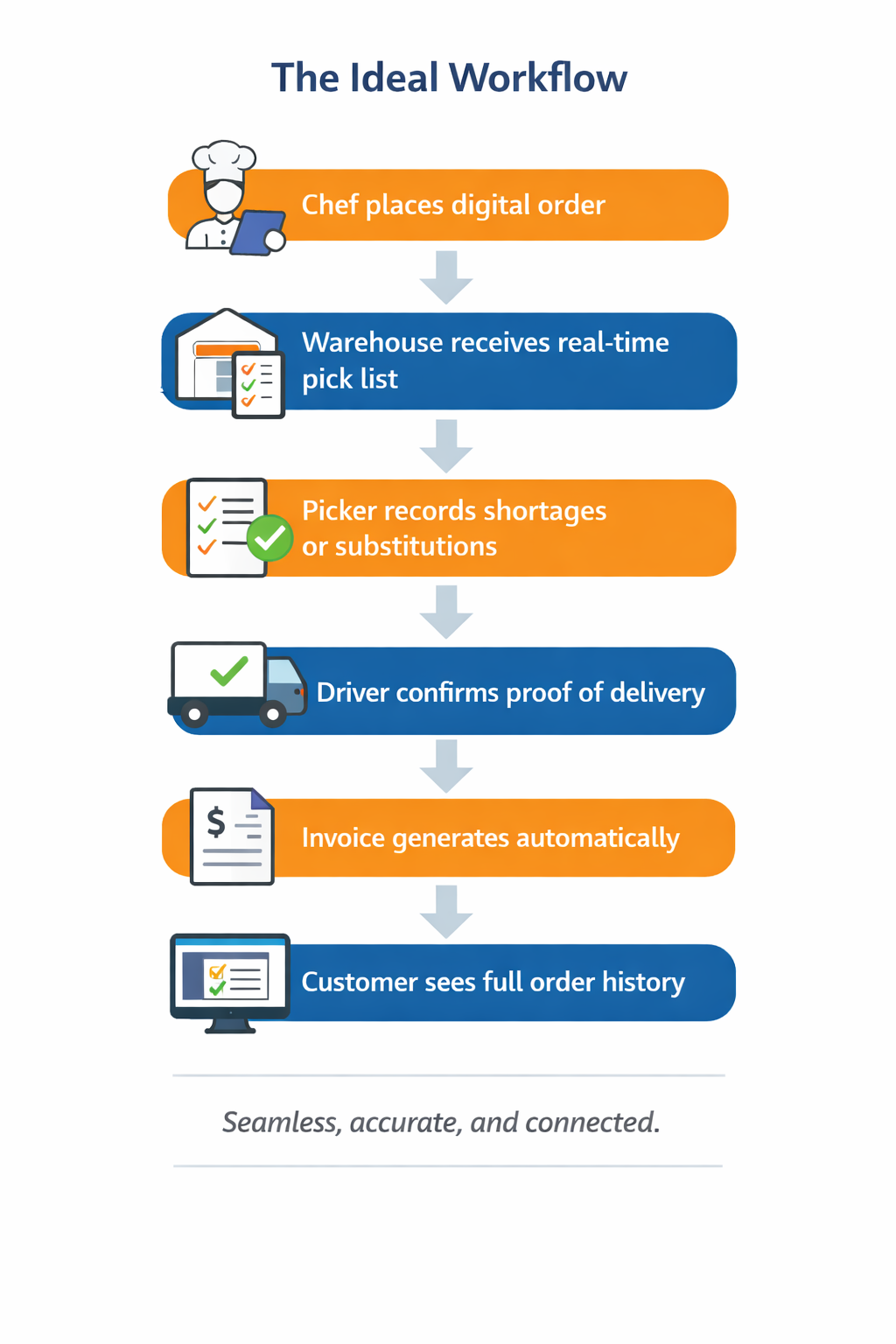
Open Pantry helps keep this workflow seamless by connecting orders, picking, delivery, and invoicing in one system. This gives every team access to the same live information, reducing errors and improving accuracy.
How to Reduce Order Errors Without Hiring More Staff
How Improved Picking Accuracy Reduces Churn
Chefs stay loyal to suppliers who make ordering and delivery feel dependable. They are more likely to keep buying from suppliers who:
✅ deliver what they promise
✅ communicate clearly when changes happen
✅ provide accurate and consistent orders
✅ avoid disrupting prep and service
✅ resolve issues quickly and professionally
When picking accuracy stays high week after week, chefs feel supported rather than stressed. They can plan with more confidence, reduce last-minute adjustments, and rely on the supplier as part of a smoother kitchen operation. That consistency builds trust, and trust is what drives long-term loyalty.
For suppliers, the benefits often go beyond fewer mistakes. Businesses that improve fulfilment accuracy often see:
✅ more repeat orders
✅ higher average order value
✅ more referrals from satisfied customers
✅ lower price sensitivity
✅ reduced churn
✅ a stronger brand reputation
Over time, accurate fulfilment becomes part of the customer experience. It shapes how reliable your business feels to the people ordering from you. Accuracy is not just a warehouse metric. It is a customer experience metric.
Wholesale Food Ordering Automation Guide (2026)
Suppliers that invest in better fulfilment systems often improve customer experience more effectively than through discounts or marketing alone. When orders arrive correctly, consistently, and with less friction, customers are more likely to stay.
Open Pantry supports this with an integrated ordering and fulfilment workflow that improves accuracy from order placement to invoicing.
Explore Open Pantry to see how a connected workflow can reduce errors and improve customer retention.