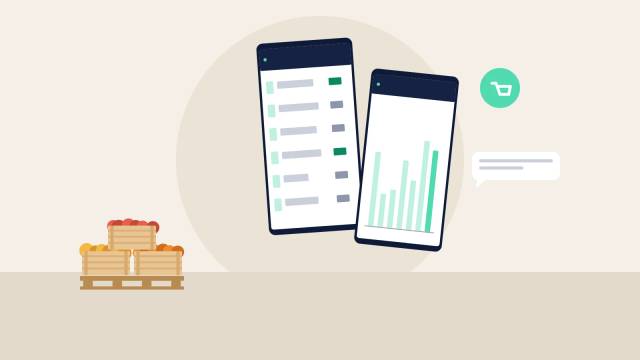
Independent wholesale food suppliers compete against larger distributors on responsiveness, curation, expertise and relationship quality, not unit price on commodity lines. The advantage only holds if operations support it: easy ordering, accurate invoicing, clear cut-offs and visibility of which accounts are drifting away.
Key takeaways
- Large distributors win on buying power and logistics; those advantages are real and not going away.
- Independents win on flexibility, curation, product expertise and direct relationships with buyers.
- Operational friction erodes those advantages before a buyer ever gets to your product quality.
- Price commodity lines to hold accounts, and compete hard where your sourcing is actually different.
- Structured customer-specific price lists defend margin better than ad hoc discounts nobody can reconstruct.
- Buyers cannot see your team size; they see whether ordering, confirmation and invoicing are consistent.
In this guide 9 sections
- 01What Large Distributors Actually Have
- 02What Independent Suppliers Have That Large Distributors Do Not
- 03The Operational Parity Problem
- 04Where to Compete on Price, and Where Not To
- 05How Technology Closes the Gap
- 06The 'Look Bigger Than You Are' Advantage
- 07A Strategic Posture That Works
- 08How Open Pantry Helps Independents Compete With Larger Distributors
- 09FAQs
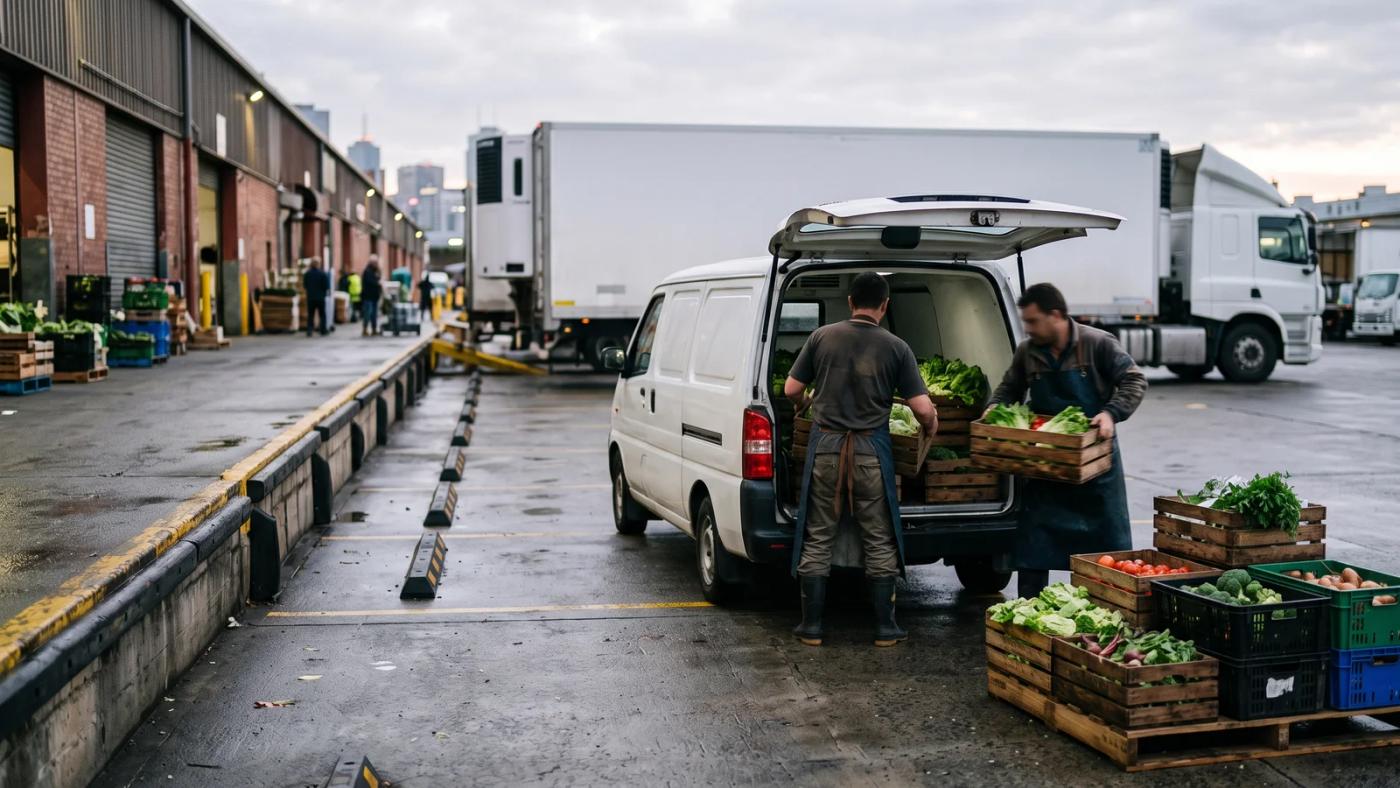
Large distributors have scale. They have buying power, logistics infrastructure, and in many cases, relationships that go back decades. Competing against larger distributors as an independent wholesale food supplier can feel like a structural disadvantage - and in some dimensions, it is. But independent suppliers have something large distributors cannot easily replicate, and the right operational tools make that advantage real, consistent, and repeatable.
What Large Distributors Actually Have
It is worth being clear-eyed about what you are up against. Large distributors have real advantages:
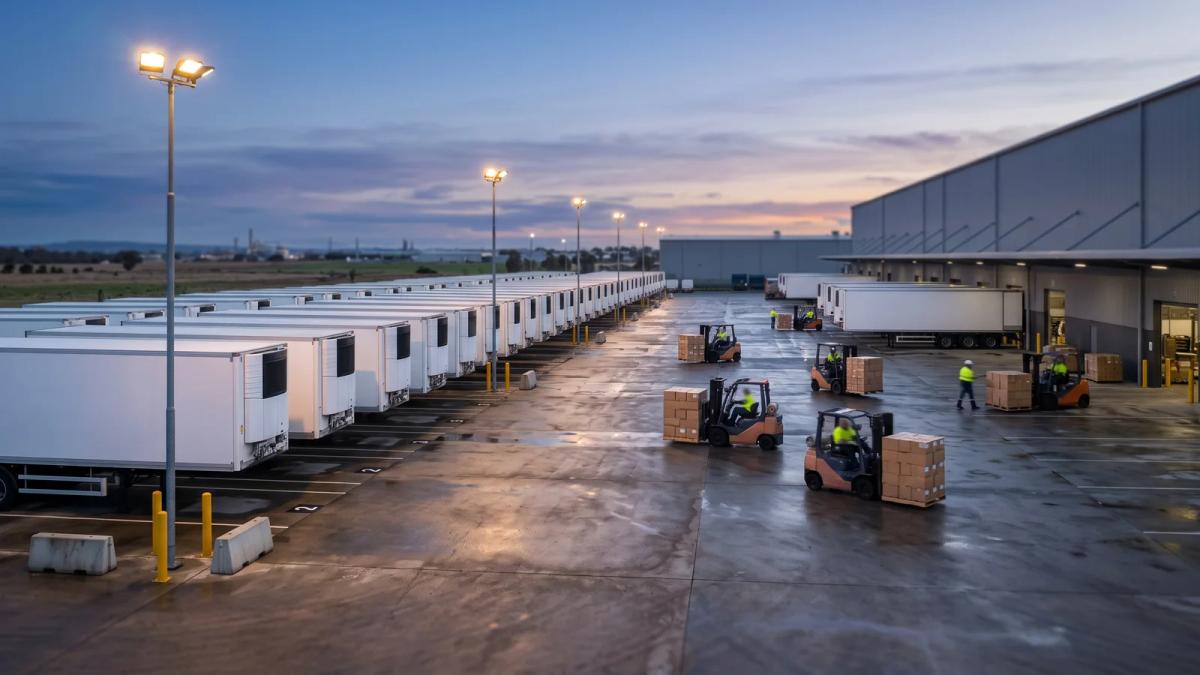
- Buying power that allows them to compete aggressively on price for commodity products. For high-volume, undifferentiated goods, they can often undercut independents on unit cost.
- Logistics infrastructure - their own fleets, established delivery windows, and the ability to absorb delivery costs across high volumes in ways that independent operators simply cannot match.
- Established relationships, particularly with larger customers like hotel groups, aged care providers, and institutional buyers who often prefer the risk profile and consistency of dealing with a large, known supplier.
- Technology investment. Large distributors have typically built or bought enterprise ordering systems, CRMs, and operational tools that give their teams real-time visibility across their operations.
These advantages are real and they are not going away. The question is whether they are decisive in the segments you are competing in - and for most independent suppliers, the answer is: not necessarily.
What Independent Suppliers Have That Large Distributors Do Not
The advantages of an independent wholesale food supplier are less visible but deeply practical.
Flexibility and responsiveness
A large distributor takes weeks to add a new product, change a pricing arrangement, or adjust a delivery schedule. An independent supplier can do it today. For restaurant buyers who are changing their menus, responding to seasonal availability, or dealing with a supply disruption, this flexibility is enormously valuable. Responsiveness is a real competitive advantage - but only if your operations support it.
Deep product knowledge and curation
Independent wholesale food suppliers often have knowledge of their products that large distributors cannot replicate at scale. Whether you are a specialist in local produce, artisan pantry goods, seafood, or specialty meats, the expertise you bring to the relationship is something a national distributor cannot offer across a catalogue of thousands of product codes. Buyers who are building distinctive menus value this - and the suppliers who communicate it well earn loyalty that price-matching cannot displace.
Personal relationships with buyers
When a chef has a question about a product, they want to speak to someone who knows the answer. When there is a problem with an order, they want it resolved immediately by someone who understands their kitchen’s needs. Large distributors route these conversations through call centres and ticketing systems. Independent suppliers can offer a fundamentally different - and often far better - customer experience, built on direct human relationships.
Speed to make decisions and changes
Pricing decisions, new customer terms, product additions, and policy changes that would take weeks to navigate through a large distributor’s approval processes can happen in a conversation for an independent. This agility is particularly valuable in a market where relationships are won and deepened through responsiveness.
Ability to serve niche and specialist segments
Large distributors are optimised for volume and breadth. They struggle to serve the niches that independent suppliers are built for - local and regional produce, certified organic or ethical sourcing, specialty imported goods, small-batch artisan products. These segments are often high-margin and loyalty-rich, but only viable for suppliers who are willing to build deep expertise in them. Large distributors are not competing meaningfully here.
The Operational Parity Problem
Here is the challenge: independent suppliers often cannot match the technology infrastructure of large distributors. And this erodes their natural advantages in ways that are subtle but significant.
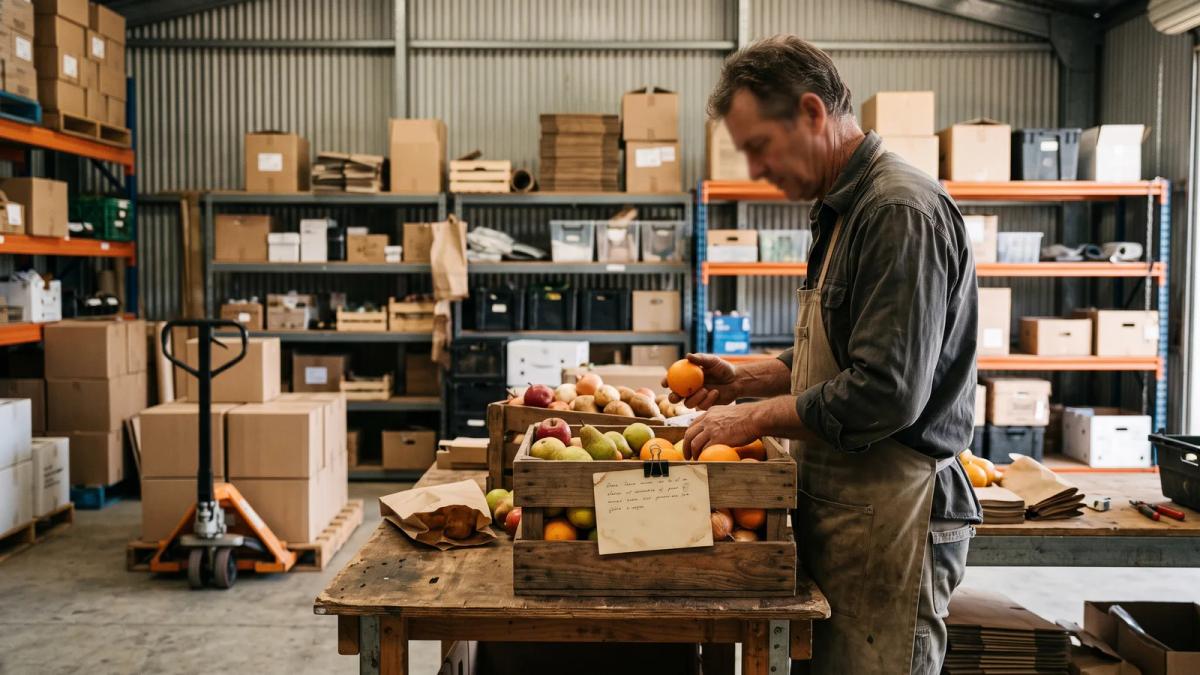
If your ordering process is harder than a large distributor’s, buyers who value convenience will drift toward the easier option - even when your products are better. If your invoicing is inconsistent, it creates friction that undermines the trust you have built. If your delivery communication is ad hoc, buyers cannot rely on you the way they can rely on a distributor with an established logistics operation. These are not fatal problems, but they accumulate over time and make it harder to retain the customers you have worked hard to win.
The good news is that the technology gap between independent suppliers and large distributors has narrowed considerably. Platforms purpose-built for independent wholesale food businesses now offer capabilities that would have required enterprise-level investment a decade ago.
Where to Compete on Price, and Where Not To
Independents lose most often when they try to win a commodity line on unit price. The buying-power gap on a staple product is structural and no amount of operational efficiency closes it. The practical response is not to match the price but to change what is being compared:
- Price the commodity lines to hold the account, not to win it, and accept a thinner margin on the products a buyer can price-check in thirty seconds.
- Compete hard on the lines where your sourcing, grading or specification is actually different - and make that difference visible in your catalogue rather than assuming the buyer knows.
- Use customer-specific pricing to reward volume and commitment on your terms, rather than discounting across the board. A structured price list per customer is a more defensible position than an ad hoc discount that nobody can reconstruct six months later.
- Count the total cost to the buyer, not the unit price. A short pick they have to work around, or an invoice they have to query, costs a kitchen real time - and a supplier who never causes either is worth a few cents a kilo.
How Technology Closes the Gap
The right platform gives an independent supplier operational infrastructure that lets their natural advantages come through - without the friction that erodes them. Specifically:
- A customer ordering portal that is as clean and easy to use as anything a large distributor offers - accessible on mobile, with a clear product catalogue, real-time cut-off visibility, and instant confirmation.
- Automated invoicing that goes out promptly and accurately every time, without someone manually generating PDFs in accounting software. Consistency here signals professionalism.
- Consistent cut-off and delivery communication so buyers know exactly when to order and when to expect delivery - removing the ambiguity that erodes trust over time.
- Customer health visibility - the ability to see which customers have not ordered recently, which accounts have outstanding balances, and which relationships need attention before they drift away quietly.
- Pick and pack tools that let your warehouse team work from organised, accurate packing lists rather than handwritten sheets - reducing errors and saving time on every order run.
The 'Look Bigger Than You Are' Advantage
With the right platform, a two-person wholesale food operation can deliver a customer experience that is indistinguishable from - and often better than - what a much larger supplier offers. Buyers do not see your team size when they log in to order. They see whether your portal is easy, whether confirmation arrives promptly, whether your invoices are accurate, and whether you pick up the phone when they need you. These are all things an independent supplier can do better than a large distributor, if their operations support it.
This is not about pretending to be something you are not. It is about making sure the real advantages you have - expertise, responsiveness, relationships, flexibility - are not undermined by operational friction that buyers experience before they get to any of that.
A Strategic Posture That Works
The independent suppliers who compete most effectively against large distributors tend to have a clear view of where they are playing and why. They are not trying to out-price large commodity distributors on staple goods. They are competing on curation, responsiveness, expertise, and relationship quality - in segments where those things matter more than price. And they are using their operational infrastructure to make sure the buyer experience reinforces those advantages rather than working against them. The related question of what makes a buyer stay is covered in why digital ordering makes chefs happier and more loyal.
How Open Pantry Helps Independents Compete With Larger Distributors
Open Pantry gives independent wholesale food suppliers the operational infrastructure that used to require enterprise budgets. Your customers order through your own branded ordering app - your name, your catalogue, your cut-offs - so the ordering experience is as easy as a national distributor’s while the relationship stays yours. Customer pricing and promotions let you hold structured, per-customer price lists rather than ad hoc discounts, which is where independents usually lose margin. And a supplier CRM view of each customer shows who has gone quiet before they quietly leave - the accounts most worth a phone call this week.
Frequently asked questions
How can an independent food supplier compete with a large distributor on price?
Usually it should not try, at least on commodity lines where buying power is structural. Price those to hold the account and accept a thinner margin. Compete instead where your sourcing, grading or specification is different, make that difference visible in your catalogue, and use structured customer-specific pricing to reward volume rather than discounting across the board.
What advantages do independent wholesale suppliers actually have?
Speed and depth. An independent can add a product, change a price arrangement or adjust a delivery schedule the same day, where a large distributor takes weeks. They carry real product knowledge across a smaller catalogue, and a buyer with a problem speaks to someone who knows their kitchen rather than a call centre queue.
Why do buyers leave an independent supplier for a larger distributor?
Rarely for product quality, and often for friction. Ordering that takes longer, confirmations that arrive inconsistently, invoices that have to be queried, delivery communication that is ad hoc. Each one is small; together they make the bigger supplier feel like the safer choice regardless of what is in the box.
Can a small supplier deliver the same ordering experience as a national distributor?
Yes. Platforms built for independent wholesale food businesses now provide branded ordering apps, published cut-offs, instant confirmation, automated invoicing and accounting sync at a cost that no longer requires enterprise budgets. A two-person operation on the right platform can present better than a national distributor, because buyers judge the experience, not the headcount.
Which customer segments should an independent supplier target?
The ones large distributors are poorly optimised for: local and regional produce, certified organic and ethical sourcing, specialty imports, small-batch artisan products, and any buyer building a distinctive menu. These segments are typically higher-margin and more loyal, and they reward exactly the expertise a national catalogue cannot carry.