


Restaurants stop losing money on short deliveries by checking each delivery against the order at the door, matching the invoice to what actually arrived before paying, and sending a supplier credit request the same day with evidence. Then track every request until the credit note appears on the statement.
Key takeaways
- Supplier credits go missing when the person who sees the short is not the person paying the invoice.
- Check each delivery line against your own order, not against the supplier's docket, before signing.
- Write shorts and substitutions on the docket and photograph anything damaged, short or wrong.
- Three-way matching compares ordered, received and invoiced quantities and prices line by line before payment.
- A credit request should name the invoice, line, quantity, price and amount, with evidence attached.
- Keep a credit log and check open credits for a supplier before paying their next invoice.
In this guide 7 sections
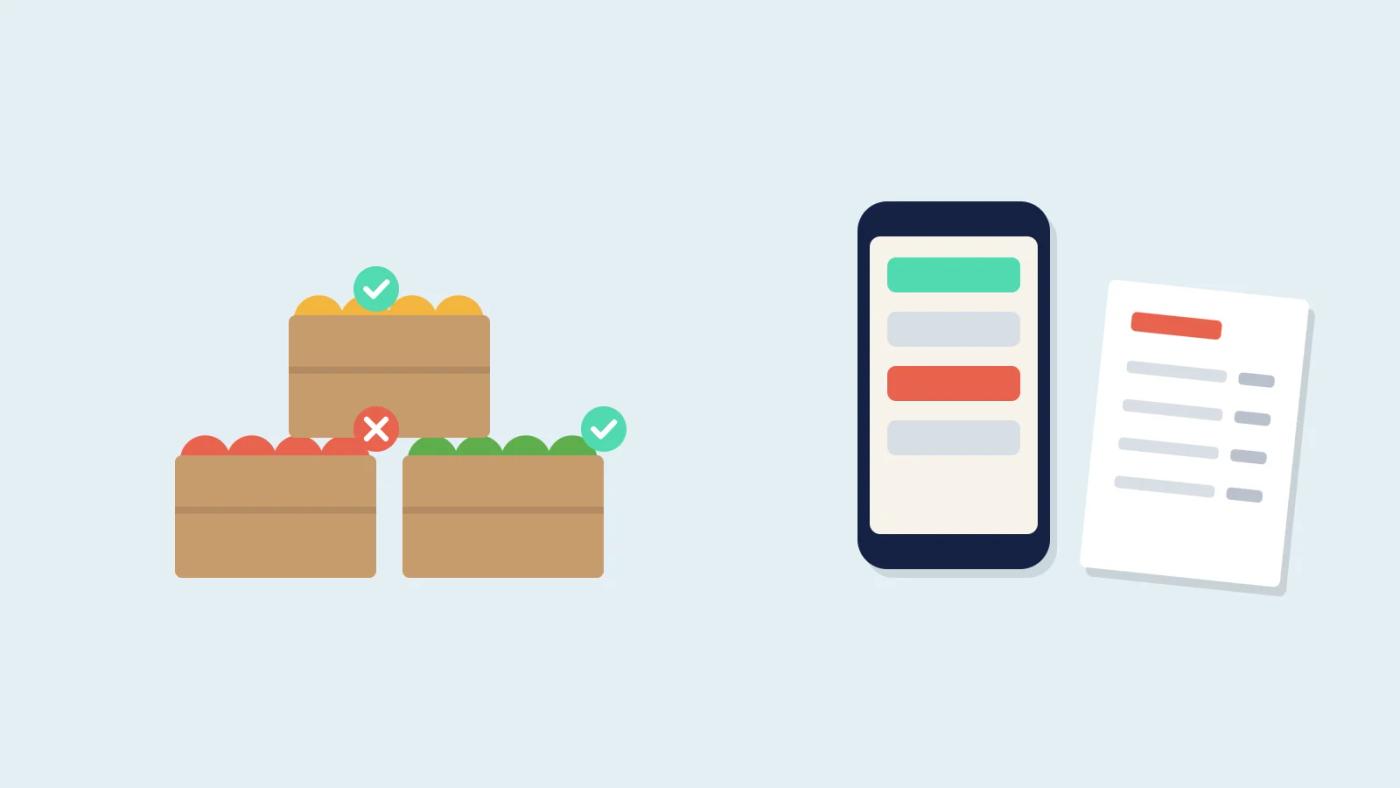
You stop losing money on short deliveries by checking every delivery against your order at the door, matching the invoice to what arrived before you pay it, and sending supplier credit requests the same day with evidence attached. Then you track each request until a credit note appears. Skip any of those steps and you can end up paying for stock you never received, and the loss is invisible once the bill has been paid.
The pattern is familiar. The invoice says ten kilos of chicken thigh, the cool room got eight. The driver is in a hurry, the chef signs the docket mid-service, and someone means to ring the rep. Three weeks later the invoice has been paid in full, nobody remembers which delivery it was, and the credit never comes.
Why do supplier credits go missing?
Supplier credits go missing because the short is noticed by one person, the invoice is paid by another, and nothing connects the two. Most suppliers are not trying to short you. Pickers make mistakes, stock runs out after the invoice prints, and substitutions happen at 4 am. But a supplier can only credit what you tell them about.
Common ways a credit falls through the gaps:
- The docket is signed without checking, so the supplier has a signature saying everything arrived.
- The short is mentioned to the driver, who has no way to raise a credit.
- No one writes it down, so by the time the invoice is processed, the detail is gone.
- The invoice is paid on the total, without anyone looking at the lines.
- The credit is requested but never followed up, and it slips off the next statement.
Line-level checking only works if the invoice has lines, and you’re entitled to them: the Australian Taxation Office says a tax invoice must describe what was sold, including quantity and price, and a supplier must provide one within 28 days if you ask (unless the sale is $82.50 or less including GST).
Margins in the industry are thin. ASIC figures reported by Accountants Daily show 2,078 accommodation and food services companies entered insolvency in 2025-26, the second highest of any industry. On margins like that, unclaimed credits are money most venues cannot afford to leave behind.
What should you check when a delivery arrives?
When a delivery arrives, check each line against what you ordered, not against the supplier’s docket. The docket shows what the supplier thinks they sent. Your order shows what you need.
A practical check at the door:
- Have the order to hand, on paper or a phone, before the truck turns up.
- Count or weigh each line. Proteins and produce by weight where it matters; cartons opened if the count is in doubt.
- Check substitutions. A different brand, size or grade is a substitution, even if the driver calls it "the same thing".
- Check quality and temperature. Food Standards Australia New Zealand’s guidance on receiving food says chilled food should arrive at 5°C or colder, hot food at 60°C or hotter, and frozen food frozen hard. Damaged or out-of-date stock should be refused or noted.
- Write the gap on the docket before you sign, with the quantity short and what was substituted.
- Take a photo of anything damaged, short or wrong, with the docket in frame.
Put chilled and frozen stock away first. A ten-minute check is worth less than a box of prawns sitting on the loading dock.
What is three-way matching for a restaurant?
Three-way matching means checking that what you ordered, what was delivered and what was invoiced all agree, line by line, before you pay. It’s a standard accounts-payable check. Restaurants rarely do, because the order lives in a text message, the delivery check lives on a crumpled docket and the invoice arrives by email a day later.
For each line, compare:
- Ordered: the quantity and price on your order.
- Received: what you counted at the door.
- Invoiced: what the supplier billed, and at what price.
Worked example (hypothetical numbers): you ordered 10 kg of chicken thigh at $11.50/kg. You received 8 kg. The invoice shows 10 kg at $12.20/kg. That single line has two problems: a 2 kg short ($24.40 at the invoiced price) and a price difference of $0.70/kg on the 8 kg you did receive ($5.60). In a sheet, the credit due on a line is:
=(InvoicedQty-ReceivedQty)*InvoicedPrice+ReceivedQty*(InvoicedPrice-AgreedPrice)
That is $30 on one line. Across several deliveries a week, small gaps like this add up over a year.
If you cannot match every line on every invoice, start with the suppliers and categories where errors cost the most: proteins, seafood and produce, where weights and prices move. Dry goods with fixed pack sizes and stable prices can be spot-checked. Whoever pays the bills should see the door check before approving payment, so a short noted at 6 am is still visible when the invoice is processed on Thursday.
How do you chase a credit so it actually arrives?
You chase a credit by sending a written request the same day, with the evidence, to the right person, and then ticking it off only when the credit note shows up on your statement.
A credit request that gets actioned includes:
- Invoice number and delivery date
- The line, the quantity short or wrong, and the price you were charged
- The amount you are asking for
- The photo and the signed docket, if you have them
- A clear ask: "Please issue a credit note for $30.00 against invoice 48213."
Send it to the rep or the accounts address the supplier uses, not the driver. Then keep a simple credit log: date raised, supplier, invoice, amount, status. Check it weekly. If a credit has not appeared after a week or two, follow up with the reference. Before paying a supplier’s invoices, look at open credits for that supplier first, and hold the disputed amount if your terms allow it.
How Restaurant AI Manager helps with supplier credit requests
Restaurant AI Manager, Open Pantry’s AI restaurant operations software, puts delivery check-off on a phone at the door, line by line. Ordered, arrived and invoiced are matched line by line, and the gap is drafted as a credit request for you to send. Nothing goes to the supplier until you press Send. Invoices come in by forwarding the email or snapping a photo, and substitutions and price rises are flagged before you pay. Suppliers do not need to be on Open Pantry. Try it in the live demo, no sign-up needed.
Bottom line
Supplier credit requests only work for a restaurant when the check at the door, the invoice and the request are connected. Check every line against your order, match the invoice before paying, send the request the same day with evidence, and keep chasing until the credit note lands.
Frequently asked questions
What should a restaurant do when a supplier delivery is short?
Note the short on the delivery docket before signing, with the quantity missing, and take a photo with the docket in frame. Then send a written credit request to the rep or the supplier's accounts address the same day, quoting the invoice number, the line, the quantity and the amount. Log the request and tick it off only when the credit note appears on your statement.
What is three-way matching for restaurant supplier invoices?
Three-way matching checks that what you ordered, what you received at the door and what the supplier invoiced all agree, line by line, before you pay. It catches short deliveries, substitutions and prices that differ from the agreed rate. Start with proteins, seafood and produce, where weights and prices move most, and spot-check stable dry goods.
How do I write a credit request email to a food supplier?
Keep it short and specific. Include the invoice number and delivery date, the product line, the quantity short or wrong, the price charged and the exact amount you want credited. Attach the photo and signed docket if you have them, and finish with a clear ask, such as please issue a credit note for $30.00 against invoice 48213. Send it to the rep or accounts, not the driver.
Should I sign the delivery docket if items are missing?
Sign it only after writing the missing or substituted items on the docket itself, with quantities. A clean signature tells the supplier everything arrived as invoiced, which makes a later credit harder to claim. Have your order to hand when the truck arrives, count or weigh each line, check substitutions and temperatures, and put chilled stock away first.

