

How to Build a Digital Product Catalogue That Increases Buyer Spend
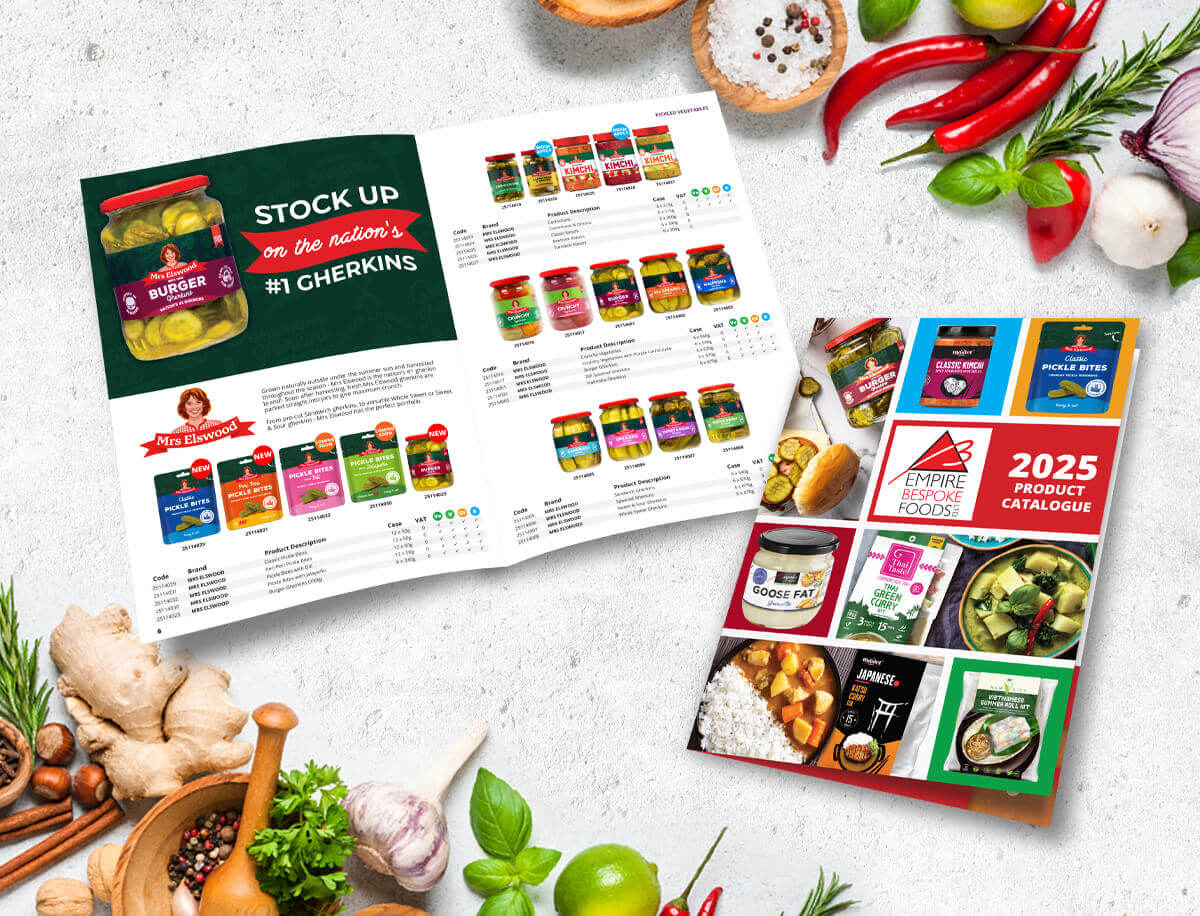
For wholesale food suppliers, your product catalogue is more than a list of items. It’s your storefront. It shapes how chefs browse, how quickly they order, and how much they buy. A messy catalogue leads to confusion, wrong items, and lower spend. A clear and digital catalogue increases order frequency, improves accuracy, and makes it easier for customers to discover new products.
This article explains why a digital catalogue is essential for today’s suppliers, the elements that drive higher order value, and how to structure your product catalogue for maximum clarity and conversion.
Why Food Suppliers Need Digital Catalogues
Chefs today expect the same experience from wholesale suppliers that they get from consumer apps: fast, searchable, visual, and mobile-friendly. A PDF price list or spreadsheet simply can’t deliver that.
A modern digital catalogue gives customers:
- Accurate product names
- Images that help reduce errors
- Pack sizes and units of measure
- Real-time pricing
- Visibility of availability
- Easy reordering
- The ability to search and filter fast
Platforms like Open Pantry provide suppliers with a fully digital catalogue built directly into the ordering experience. When buyers browse a clear catalogue, they spend more and make fewer mistakes.
Wholesale Order Management for Foodservice Suppliers
Why Old Catalogues Fail
Many suppliers still maintain catalogues in Excel sheets, PDFs, or internal systems that aren’t connected to ordering. This creates issues across the business.
1. Confusing Product Names
If a product is listed as “Breast Fillet 8kg” in one place and “Chicken Breast 2kg x4” in another, customers get confused and choose the wrong item.
2. Incorrect or Outdated Pricing
If prices change frequently (as they do for meat, fresh produce, and seafood), old versions circulating among staff or customers cause disputes.
3. Missing Product Images
Chefs ordering fast at the end of the night rely heavily on images to avoid mistakes. Without photos, mispicks happen more often.
4. Poor Browsing Experience
Static lists make it difficult for customers to discover new or seasonal items, reducing upsell and cross-sell opportunities.
5. Not Mobile-Friendly
Most chefs order on their phone. A PDF or spreadsheet simply isn’t designed for mobile use.
These issues cost suppliers money in the form of misorders, credits, missed sales, and frustrated customers.
How Wholesale Food Suppliers Can Eliminate Manual Orders Forever
Features of a High-Performing Catalogue
If you want customers to order more and faster, your digital catalogue needs a few key elements.
1. Clear & Descriptive Product Names
Avoid internal abbreviations like “CBR Fil 2kg”. Your team might know what that means, but chefs often don’t.
Write product names using:
• Plain language
• Pack size
• Unit of measure
• Variant or grade
For example:
“Chicken Breast Fillet – Skin Off – 2kg” “Roma Tomatoes – Box – 10kg” “Atlantic Salmon – Fresh – Fillet – Per kg”
Clear naming reduces mistakes and encourages confidence when ordering.
2. High-quality Product Images
Images are one of the easiest ways to boost order accuracy. They give chefs visual confirmation that the item is what they expect.
Good catalogue images:
• Are bright and clear
• Show the product in its raw state
• Match the pack size
• Help distinguish similar items
Suppliers using images see fewer mispicks and higher basket sizes because chefs explore more categories.
3. Logical Categories and Subcategories
Chefs think in categories, not SKU numbers. A digital catalogue should group products in a way that reflects how kitchens operate.
Examples:
• Meat
• Poultry
• Seafood
• Fruit
• Vegetables
• Dairy
• Dry Goods
• Packaging
Subcategories (e.g. “Leafy Greens”, “Poultry Cuts”, “White Fish”, etc.) make browsing fast and intuitive.
4. Fast Search and Smart Filters
Search is where most orders begin. A chef types “chicken” and expects to see everything relevant. Filters for pack size, price, specials, or supplier-specific lines also increase basket value.
A good digital search experience often leads to customers finding new products they didn’t know you sold.
5. Customer-Specific Product Visibility
Not every customer should see every product. High-performing catalogues allow suppliers to hide items or show specialised lines only to selected buyers.
Open Pantry supports customer-specific visibility, which helps suppliers tailor their catalogue and improve conversion.
6. Customer-specific Pricing
Chefs need to know what they pay, not the general market price. Showing customer-specific pricing builds trust and reduces invoice disputes later.
When customers see the correct price, they place more confident orders and repeat purchases accelerate.
Cut Emergency Orders by 70% With Purchase Order Management
Increase Orders with a Digital Catalogue
A strong digital product catalogue directly impacts revenue by enabling:
- More product discovery through easy browsing
- Higher confidence with accurate names and images
- Faster ordering, leading to more frequent purchases
- Seasonal promotions that increase basket size
- Cross-sell opportunities with complementary products
Many suppliers see 10–25% increases in average order value after upgrading their catalogue experience.
Simplifying Catalogue Management for Your Team
Suppliers often worry that maintaining a digital catalogue will take more work. In reality, modern platforms reduce admin because:
- Changes update everywhere automatically
- Pricing exceptions apply to the right customers
- Bulk uploads allow fast changes
- Visibility rules streamline categories
- Product data lives in one central location
Open Pantry’s supplier platform connects catalogue, pricing, visibility, stock, and ordering into one clean system so suppliers can update once and sync everywhere.
Top 10 Best Wholesale Food & Beverage Suppliers in Melbourne
How a Strong Catalogue Helps You Win More Orders
Your product catalogue plays a major role in how customers browse, order, and spend. When it is digital, well-structured, and easy to use, chefs order with confidence, discover more products, and place larger, more frequent orders. This leads to higher average order value, fewer mistakes, and a better experience for both customers and your internal team.
Modern platforms like Open Pantry help food suppliers manage their catalogue, customer-specific pricing, and product visibility in one central system, ensuring everything stays accurate and up to date.
If you want to increase buyer spend and simplify ordering at the same time, it’s time to upgrade your product catalogue. Explore how Open Pantry can help you turn your catalogue into a growth tool.