An ERP integrates procurement, inventory, finance and logistics in one system and suits large food suppliers with complex supply chains, while standalone purchase order software handles procurement alone, costs less and deploys faster, which suits smaller suppliers wanting a practical procurement fix without a months-long rollout.
Key takeaways
- ERP systems track stock and expiry in real time and generate purchase orders when stock runs low.
- ERPs keep vendor details, pricing and contracts in one place for easier negotiation.
- Standalone PO software automates order creation, vendor management, tracking and reporting.
- ERP deployment can take months and needs data migration, training and dedicated IT support.
- Standalone tools set up quickly with minimal training but may need APIs or middleware to connect.
- Large complex suppliers lean ERP; smaller suppliers usually get more value from standalone software.
In this guide 8 sections
- 01What is an ERP System?
- 02Key Benefits of ERP for Food Suppliers
- 03What is Standalone Purchase Order Management Software?
- 04Core Capabilities of Standalone Purchase Order Management Software
- 05Scalability & Flexibility: Which One Adapts Better?
- 06Implementation Complexity: ERP vs. Standalone Solutions
- 07Integration Capabilities:
- 08FAQs
Food suppliers face unique challenges in procurement, inventory management, and order processing. Whether managing perishable goods, handling bulk orders, or ensuring compliance with food safety regulations, having the right software is crucial. Enterprise Resource Planning (ERP) systems and standalone purchase order management solutions offer different approaches to streamlining these processes.
This article explores their key differences, helping food suppliers determine the best fit for their operational needs.
What is an ERP System?
An ERP system is an all-in-one business management solution that integrates various functions, including procurement, inventory, finance, and logistics. For food suppliers, ERP systems help track stock levels, automate purchase orders, manage supplier relationships, and ensure regulatory compliance. These systems improve efficiency by providing real-time data and seamless coordination across departments.
Key Benefits of ERP for Food Suppliers
1. Better Inventory & Expiry Management: Tracks stock levels in real time, ensuring perishable goods are used before they expire. This helps reduce waste and keeps products fresh for customers.
2. Easier Supplier & Contract Management: Keeps all vendor details, pricing, and contracts in one place. This makes it easier to manage supplier relationships, negotiate better deals, and ensure consistent quality.
3. Stronger Regulatory Compliance: Helps food suppliers meet food safety standards by tracking ingredients, allergens, and expiry dates. This reduces the risk of non-compliance and ensures product safety.
4. Automated Procurement Workflows: Speeds up ordering by automatically generating purchase orders when stock is low. This reduces errors, prevents shortages, and ensures timely deliveries.
5. Smarter Decision-Making with Real-Time Data: Provides instant reports on costs, demand trends, and stock levels. This helps businesses plan better, avoid overordering, and improve profitability.
Related guideBest ERPs for Food & Beverage Wholesalers in Australia (2026)
What is Standalone Purchase Order Management Software?
Standalone purchase order management software is a specialised tool designed to handle procurement processes exclusively. For food suppliers, it offers essential features like automated order creation, real-time tracking, and vendor management without the complexity of a full ERP system. These solutions are often more affordable, quicker to implement, and tailored for businesses that need a streamlined approach to procurement.
Related guideOnline Purchase Order Systems: A Guide for Food SuppliersCore Capabilities of Standalone Purchase Order Management Software
1. Automated Purchase Order Creation: Reduces manual work by automatically generating purchase orders, minimising errors, and speeding up procurement.
2. Vendor Management: Keeps all supplier information in one place, making it easier to track contracts, prices, and communication with vendors.
3. Real-Time Tracking: Allows businesses to monitor purchase order statuses, ensuring on-time deliveries and better accountability.
4. Customisable Workflows: Adapts to specific approval processes, helping businesses set up rules that match their procurement needs.
5. Seamless Integration: Connects with accounting, inventory, and other business software, reducing the need for manual data entry.
6. Analytics & Reporting: Provides valuable insights into spending patterns, supplier performance, and cost-saving opportunities to support better purchasing decisions.
Scalability & Flexibility: Which One Adapts Better?
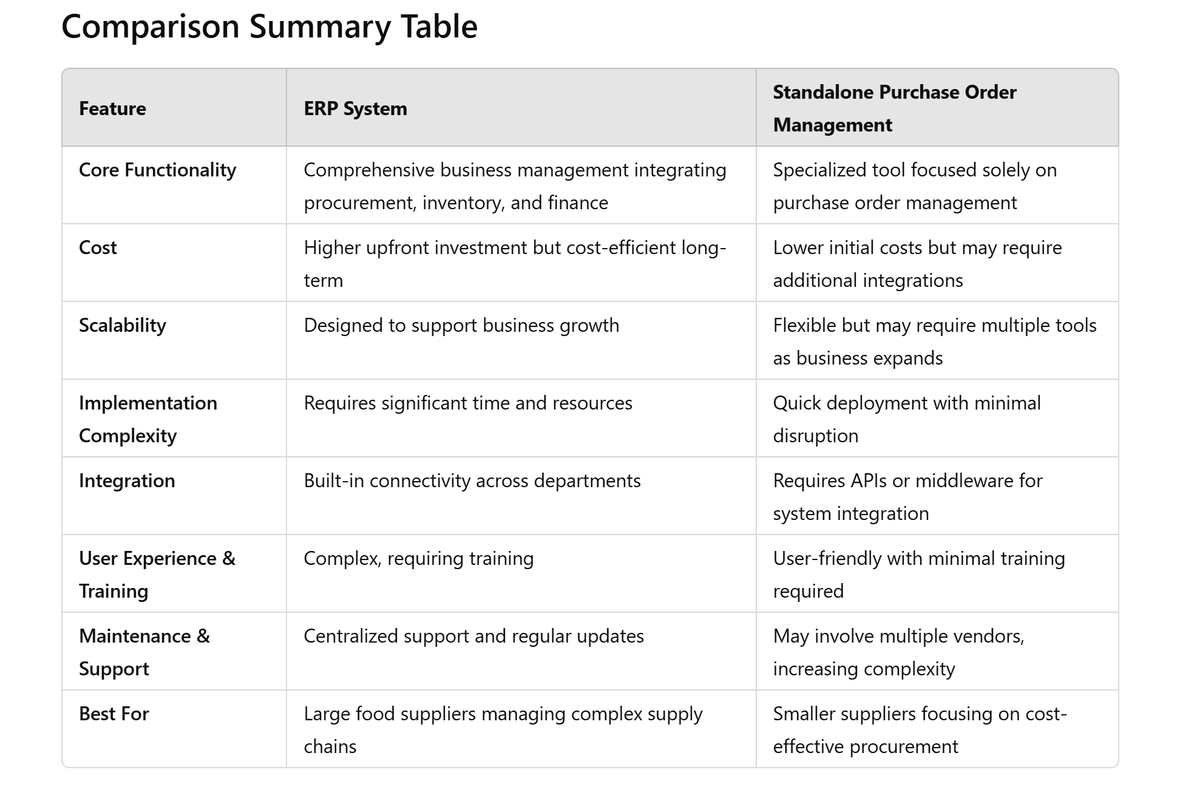
- Standalone Systems: These offer flexibility through modular add-ons, allowing businesses to customise features as needed. However, as operations grow, managing multiple disconnected systems can become complex and inefficient.
- ERP Systems: Designed for long-term growth, ERP solutions seamlessly scale with increasing order volumes, supplier networks, and operational complexity. While they require a higher initial investment, they provide a unified system that simplifies expansion and prevents data silos.
Implementation Complexity: ERP vs. Standalone Solutions
- ERP Implementation: Requires extensive planning, data migration, and employee training. Due to its complexity, deployment can take months and may require dedicated IT support. However, once fully integrated, it streamlines multiple business functions and improves overall efficiency.
- Standalone Implementation: Offers a quicker and simpler setup, requiring minimal training and technical expertise. This makes it an ideal choice for smaller food suppliers looking for an immediate solution without significant downtime or resource allocation.
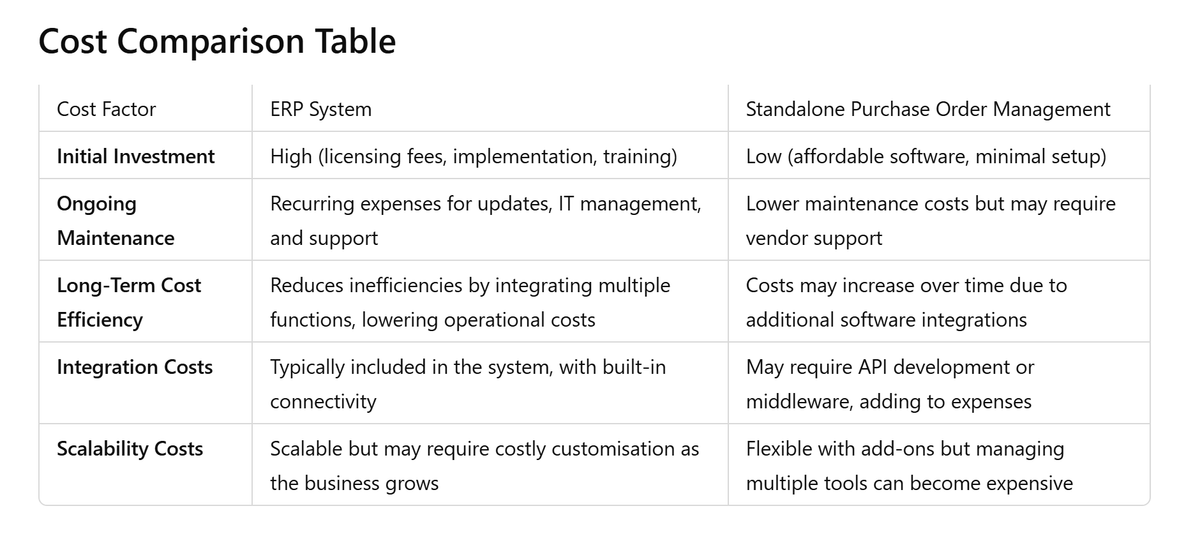
Integration Capabilities:
- ERP Systems: Come with built-in integration across procurement, inventory, finance, and logistics, ensuring data consistency and real-time visibility. This allows food suppliers to manage stock levels, track orders, and maintain compliance with minimal manual intervention.
- Standalone Software: May need additional API development or middleware to connect with existing accounting, inventory, or supplier management systems. While this allows some level of flexibility, integration costs can add up, and data may not flow as smoothly across departments.
Choosing between an ERP system and standalone purchase order management software depends on business size, complexity, and future growth plans. Large food suppliers handling complex supply chains and high order volumes may benefit from the scalability and automation of an ERP system. On the other hand, smaller businesses looking for a cost-effective and straightforward procurement solution may find standalone purchase order management software more practical.
For food suppliers seeking an industry-specific solution, Open Pantry is a top choice. Designed to meet the unique needs of food suppliers, Open Pantry simplifies order management, inventory tracking, and workflow automation while remaining user-friendly and affordable. By selecting the right software, food suppliers can optimise their procurement operations, reduce costs, and improve efficiency, ultimately enhancing their overall business performance.
Frequently asked questions
What is the difference between an ERP and standalone purchase order software?
An ERP is an all-in-one business management system integrating procurement, inventory, finance and logistics, giving real-time data and coordination across departments. Standalone purchase order software handles procurement exclusively, offering automated order creation, real-time tracking and vendor management without the complexity of a full ERP, and is usually more affordable and quicker to implement.
How does an ERP help food suppliers specifically?
It tracks stock in real time so perishable goods are used before they expire, keeps vendor details, pricing and contracts in one place, helps meet food safety standards by tracking ingredients, allergens and expiry dates, automatically generates purchase orders when stock is low to prevent shortages, and provides instant reports on costs, demand trends and stock levels.
What can standalone purchase order software actually do?
Six core capabilities: automated purchase order creation to cut manual work and errors, vendor management holding supplier contracts, prices and communication in one place, real-time tracking of order statuses, customisable workflows matching your approval rules, integration with accounting and inventory software to avoid re-keying, and analytics on spending patterns, supplier performance and cost-saving opportunities.
Which option scales better as a food supply business grows?
ERP systems are designed for long-term growth and scale with increasing order volumes, supplier networks and operational complexity, providing a unified system that simplifies expansion and prevents data silos, though they require a higher initial investment. Standalone systems offer flexibility through modular add-ons, but as operations grow, managing multiple disconnected systems becomes complex and inefficient.
How long does each option take to implement?
ERP implementation requires extensive planning, data migration and employee training, so deployment can take months and may need dedicated IT support, though once integrated it streamlines multiple business functions. Standalone implementation is quicker and simpler, needing minimal training and technical expertise, which suits smaller food suppliers wanting an immediate solution without significant downtime.
Which option should a food supplier choose in the end?
It depends on business size, complexity and growth plans. Large food suppliers handling complex supply chains and high order volumes benefit from the scalability and automation of an ERP. Smaller businesses looking for a cost-effective and practical procurement solution usually find standalone purchase order management software more suitable.