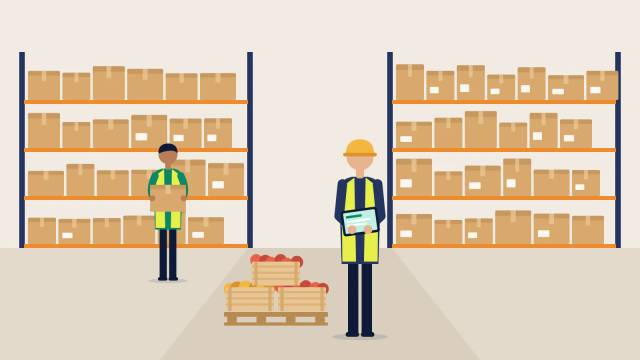
Pick and pack errors are systemic, not careless: they come from stale pick lists, customer-by-customer picking, interruptions, lookalike stock stored together and no verification step. Fix the system with digital pick lists generated at picking time, zone-based wave picking, check-off at the point of pick, a second set of eyes before packing, and an error log you actually review.
Key takeaways
- Pick and pack errors are systemic: they come from the process and the layout, not from carelessness.
- Calculate your own cost per error and your own error rate rather than borrowing someone else's figures.
- A pick list generated at picking time cannot go stale, which removes a whole category of error.
- Confirm each item at the moment of picking, so accuracy never depends on remembering afterwards.
- Break the single-person pick-and-pack loop with a quick second check before boxes are sealed.
- Errors cluster by product, location, time of day and shift — the log is what makes the pattern visible.
In this guide 7 sections
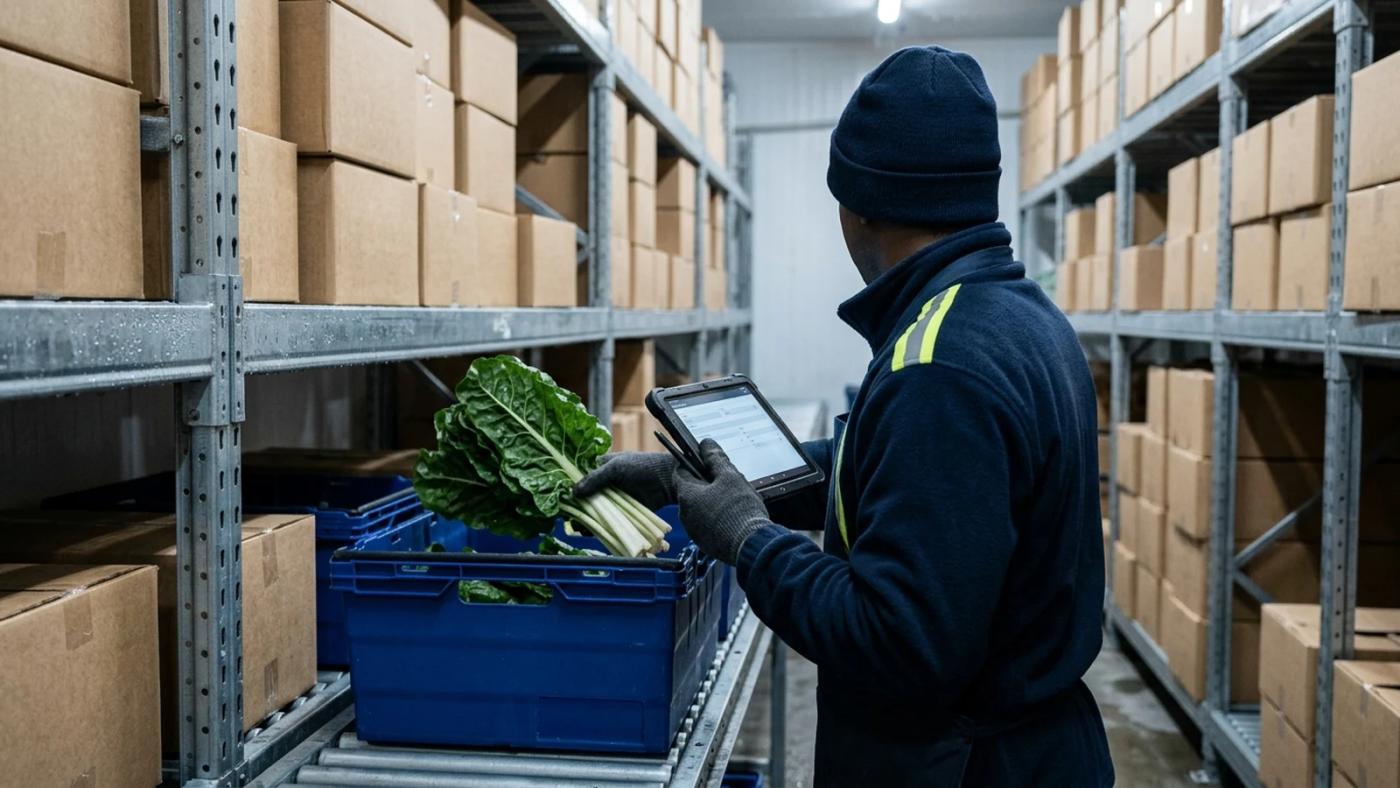
Every wrong item, missed product or incorrect quantity that leaves your warehouse costs you money. There is the direct cost — the re-delivery, the credit note, the replacement stock. And there is the less visible cost: the erosion of customer trust, the time your staff spend fielding complaint calls, the reputation that gets quietly damaged every time a hospitality business opens a delivery and finds it is not quite right.
Pick and pack errors are not inevitable. They are largely systemic — the product of processes, environments and tools that make errors easy to make and hard to catch. Systemic problems have systemic solutions. This guide lays out a practical, step-by-step approach to reducing pick and pack errors in a wholesale food operation.
Why Errors Happen
Before you can fix a problem, you need to understand it accurately. Pick and pack errors in wholesale food operations most commonly come from:
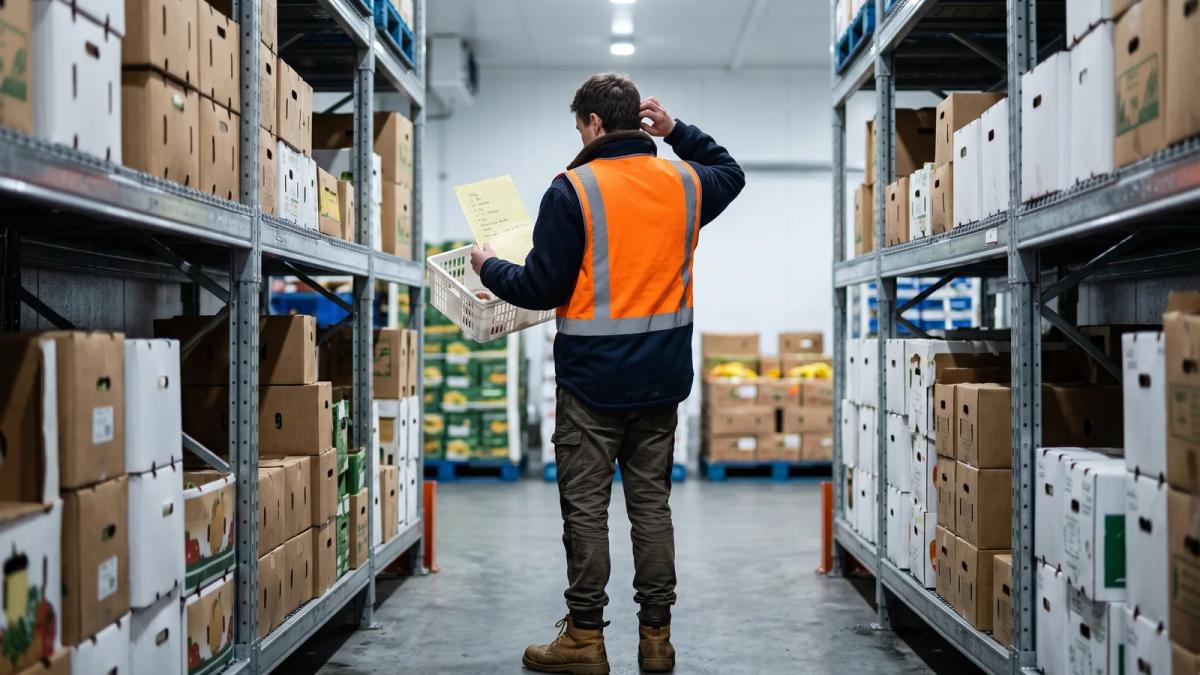
- Handwritten or poorly formatted pick lists. A list that is hard to read, missing key details or formatted inconsistently is a list that will generate errors. Staff should not have to interpret a pick list — it should be unambiguous.
- Multiple people working from different versions of the same list. If orders change after pick lists have been distributed and not everyone gets the update, you will get errors. One picker has the old list, another has the new one, and the result is unpredictable.
- Interruptions mid-pick. A phone call, a question from a colleague, a last-minute order change — any interruption during picking resets focus and creates a moment where the picker loses their place. The item they were about to pick gets missed.
- Similar-looking products stored near each other. Two products in near-identical packaging, stored in adjacent locations, will be confused — especially under time pressure. Warehouse layout is a quality control decision, not just a storage efficiency decision.
- No verification step before packing. If picked items go straight into boxes with no check, errors that happened during picking will not be caught until a customer calls.
- Staff rushing at peak times. Speed and accuracy trade off against each other under pressure. When volume spikes and time is short, error rates rise.
Work Out What Errors Actually Cost You
Most suppliers have a rough sense that errors are expensive, and almost none have the number. It is worth calculating your own rather than borrowing someone else’s, because the figure is what makes the case for changing the process.
Take one recent error and add up what it consumed: the time someone spent identifying and confirming it, the credit note raised, the replacement stock, any return trip the vehicle made, and the admin time spent managing the exception and the customer conversation. Do that for five or six recent errors and you will have a defensible average for your operation.
Then pair it with your error rate. Count the line items you pick in a typical day, and count the lines that generated a credit or a complaint over the last month. The rate is usually lower than people fear and the volume higher than they expect — which is the point. A small percentage of a large number of lines is a meaningful weekly cost, and it is almost entirely preventable. Picking accuracy also feeds directly into whether customers stay, which we cover in the link between picking accuracy and customer retention.
A Systematic Approach to Reducing Errors
Use Digital Pick Lists That Are Always Current
A pick list generated directly from your order management system at the time of picking is accurate by construction. There is no version problem, no transcription step, no chance of a handwritten note being misread. If an order changes before the cut-off, the system reflects it. If an order changes after picking has started, the system flags it rather than silently creating a discrepancy. Digital pick lists remove an entire category of error before picking even begins — our guide to moving from paper pick slips to digital picking walks through how to make that change without disrupting a live warehouse.

Organise Pick Lists by Warehouse Zone, Not by Customer
Wave picking — where all units of a given product or zone are picked across all orders at once — is more efficient and more accurate than picking one customer at a time. Your picker moves through the warehouse on a single logical path, pulling quantities as they go. This reduces the number of times they return to any given location, and reduces the fatigue-related errors that come from unnecessary movement. It is also easier to concentrate on "four units of product X" than to hold several customers in your head at once.
Check Off as You Pick — Not From Memory
Every item picked should be confirmed at the moment of picking. This is the simplest error-reduction step available and it costs almost nothing to implement. Whether it is a tick on a printed list, a tap on a tablet or a scan, the confirmation creates a moment of deliberate attention on each item. It also produces a record: at the end of picking you know exactly what was confirmed and what was not.
Separate Picking from Packing Where Possible
When the same person picks and packs an order in one unbroken flow, they can unconsciously "remember" picking an item they did not actually pick. A second set of eyes on the picked items before they are packed catches these errors. It does not need to be a full audit — a quick confirmation that the quantities match the pick list is enough. The goal is to break the single-person closed loop that lets errors pass unchallenged.
Final Verification Before Sealing and Loading
A brief final check before each box or crate is sealed — does this match the delivery label, are all items present — is the last line of defence before an error reaches a customer. This step earns its keep most on high-value orders, orders with a history of issues, and any order where a substitution or exception has been made. It adds seconds, not minutes.
Track Error Rates and Look for Patterns
Errors are not distributed randomly. They cluster around specific products (hard to distinguish, poorly labelled), specific locations (adjacent similar items, poor shelf labelling), specific time periods (peak volume days, end-of-shift rushes), and sometimes specific staff members — not necessarily because those people are careless, but because they may be working in conditions that make errors more likely. Tracking errors over time, even in a basic spreadsheet, reveals these patterns. Once you can see a pattern, you can fix the underlying cause.
Training and Culture: Fix the System First
A common response to pick and pack errors is to tell staff to be more careful. This rarely works, and it is often unfair. If your pick lists are hard to read, your warehouse layout encourages confusion, and your process has no verification step, asking people to "be more careful" is asking them to compensate with willpower for a system working against them.
The more effective approach is to assume your team is trying, and to look first at the conditions that make errors easy to make. Fix the system — the list format, the warehouse layout, the verification steps — and accuracy improves. Once the system is clean, training becomes far more productive, because you are teaching people a process that supports them.
What Good Looks Like
A well-run wholesale food pick and pack operation aims to push its error rate as low as its process allows, and then holds it there — because the improvements that get you there are self-reinforcing rather than dependent on effort. Set a target from your own baseline, publish it where the warehouse can see it, and review it monthly against the error log.
As the rate falls, the second-order effects are the ones people notice: credit note volume drops, re-delivery costs fall, complaint calls stop eating the morning, and staff spend less of their day on corrections. The investment in better process pays back on every run rather than once.
How Open Pantry Helps You Reduce Pick and Pack Errors
Open Pantry closes the gap between the order and the box. Digital pick and pack generates pick lists straight from confirmed orders, organised by warehouse zone, with each line checked off as it is picked — so there is no second version of the list and no reliance on memory. Delivery labels are printed from the same order record, which is what stops the classic mismatch between what is in the crate and what is on the sticker. For anything batch-controlled, lot and expiry tracking with FEFO picking makes sure the right batch leaves first and stays traceable. And when something does go wrong, credits and returns records it against the order, which is how you build the error log that tells you where the next fix should go.
Frequently asked questions
What causes most picking errors in a wholesale food warehouse?
Six causes account for the bulk of them: hard-to-read or handwritten pick lists, staff working from different versions of the same list, interruptions mid-pick, lookalike products stored next to each other, no verification step between picking and packing, and rushing at peak volume. All six are conditions rather than attitudes, which is why telling staff to be more careful rarely moves the number.
How do you calculate the cost of a pick and pack error?
Take several recent errors and add up what each consumed: the time to identify and confirm it, the credit note, replacement stock, any return trip by the vehicle, and the admin time spent on the customer conversation. Average those, then multiply by the number of error lines in a month. Using your own figures rather than an industry number is what makes the case internally.
Is wave picking more accurate than picking order by order?
It is generally both faster and more accurate. Picking all units of a product or zone across every order means one logical path through the warehouse, fewer returns to the same location, and less of the fatigue that produces misses. It is also easier to concentrate on a single product and quantity than to hold several customers in mind simultaneously.
Should the same person pick and pack an order?
Where volume allows, separate the two. A person who picks and packs in one unbroken flow can unconsciously credit themselves with picking an item they did not pick, and there is nothing in the process to catch it. A quick confirmation that the packed quantities match the pick list is enough — it does not need to be a full audit.
How can a supplier track pick and pack errors without new software?
A basic spreadsheet works: date, customer, product, what went wrong, who was on shift, and what it cost to fix. Review it monthly and look for clustering by product, shelf location, day of week or time of shift. The value is in the pattern, not the individual row, and the pattern almost always points at a layout, labelling or scheduling fix.
What are the best order picking software options for small warehouses?
For a small food warehouse, judge picking software on five things: pick lists generated straight from confirmed orders, a way to record short picks so the invoice matches what was sent, catch-weight capture for meat and seafood, picking by zone or wave rather than order by order, and picked quantities flowing into invoicing and accounting. Open Pantry, an Australian B2B ordering and operations platform for wholesale food and beverage suppliers, covers all five in its digital pick and pack (catch weight on Pro plans and up).