
Lot & Expiry Tracking: First-Expiry-First-Out Picking, Automatically
FEFO (first-expiry-first-out) means the stock closest to its expiry date is always sold first. Open Pantry tracks your inventory by lot and expiry date and directs pickers to the earliest-expiring lot automatically — so stock rotation happens by default, waste stops quietly accumulating, and you always know which lot went where.
- Receive stock with lot and expiry; picking draws down the earliest-expiring lot first
- Lot-level costs flow into your real COGS and margins
- Built into ordering and pick & pack — not a separate ERP to buy and integrate
★★★★★ Trusted by 600+ suppliers across Australia
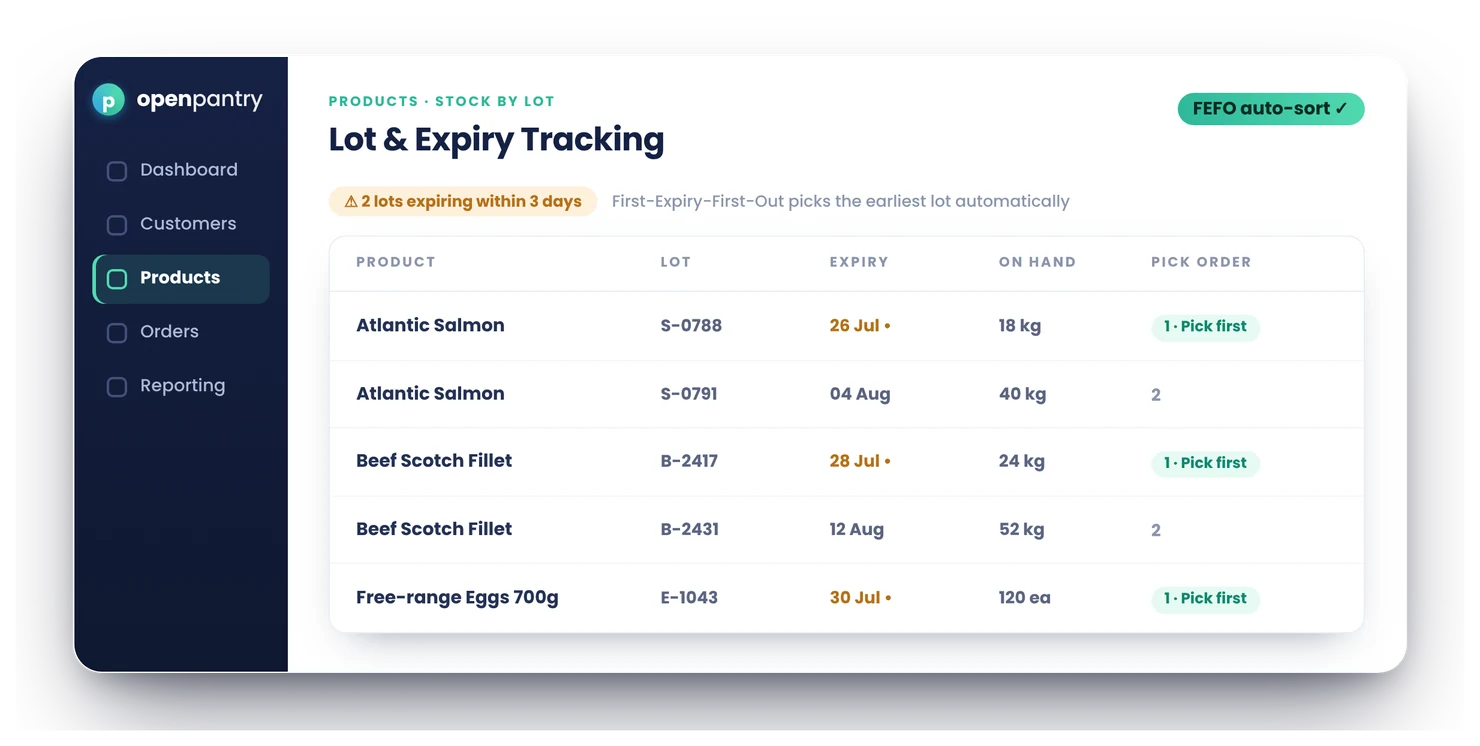



Expiry dates don’t manage themselves

New stock gets stacked in front, old stock expires at the back — write-off by shelf position

Nobody knows which lot went to which customer until it matters — urgently

Expiring stock discovered after it’s too late to discount or move it

Lot costs vary between deliveries but your margins assume they don’t
How Lot and Expiry Tracking Works
Receive with lot + expiry
Incoming stock is recorded by lot with its expiry date and cost.
FEFO directs the pick
Pickers are pointed at the earliest-expiring lot; rotation is automatic, not a training issue.
Lots draw down as orders ship
Each sale decrements the specific lot picked, keeping lot-level stock true.
Costs follow the lot
The lot’s actual cost feeds COGS, so margins reflect what that stock really cost.
Free trial · Cancel anytime
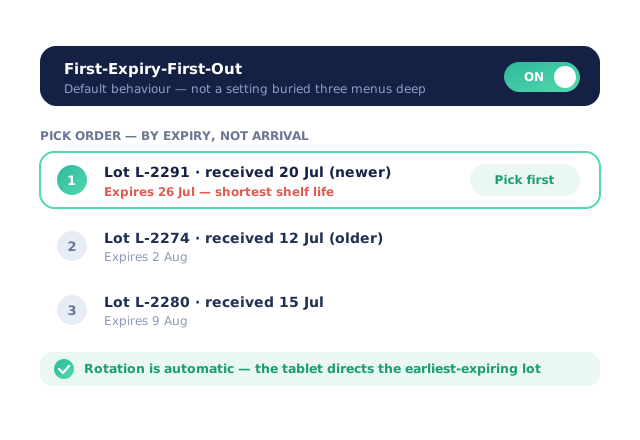
FEFO by default
First-expiry-first-out picking is the default behaviour, not a setting buried three menus deep. Even a newer delivery with a shorter shelf life gets picked first — because FEFO follows the expiry date, not the arrival date.
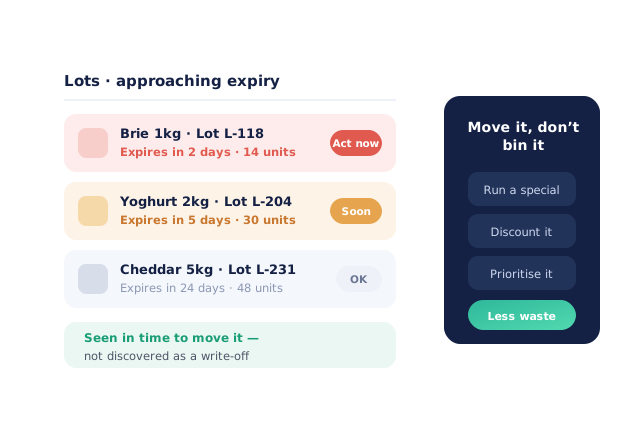
Expiry visibility before it’s a write-off
See what’s approaching its use-by date while there’s still time to move it — run a special on it instead of binning it.
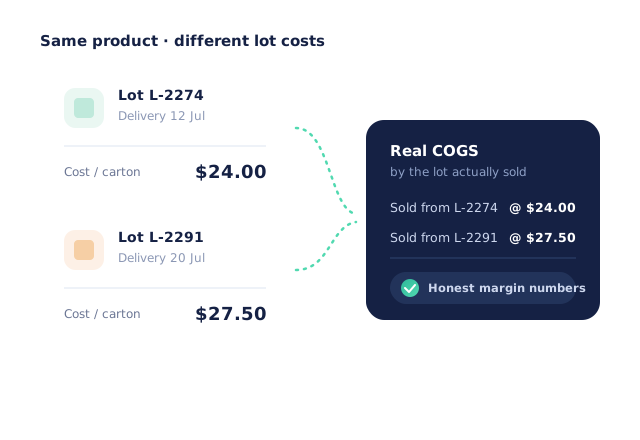
Lot-level cost accuracy
Different deliveries cost different amounts. Because sales draw down specific lots, your cost of goods reflects the actual lot picked — the foundation of honest margin numbers.
Part of the same platform
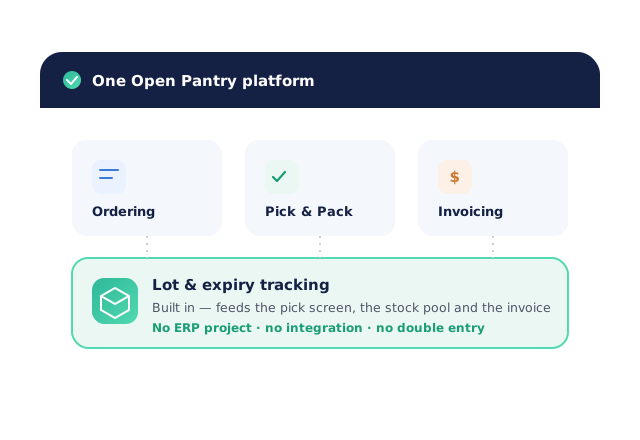
Lot tracking lives inside the same system as your ordering, picking and invoicing — no ERP project, no integration, no double data entry. The same lot records drive recalls, quality holds and expiry digests.
- Trace a lot to every customer who received it, then start a recall
- Put a whole lot on quality hold in one step
- Expiry digest email and bulk write-off of expired lots
- More product lines purchased
- 24%
- Your always-on branded store and app put your full range in front of customers, so baskets grow.
- Less order-processing cost
- 95%
- AI order capture and auto-invoicing remove the manual keying between order and books.
- Fewer picking errors
- 80%
- Tablet pick & pack with FEFO lot and expiry tracking catches shorts and wrong items before they ship.
Real gains suppliers report after moving ordering, fulfilment and invoicing onto Open Pantry.
Lot Costs Flow Into Margins and Your Books
Trusted by M&J Chickens
- $175m+
- Annual turnover
M&J Chickens use Open Pantry to move ordering out of calls and messages and into one digital workflow — giving customers a smooth ordering experience and giving the team fewer errors and less admin.
“With Open Pantry, we launched our own fully branded ordering app — it’s helped us protect our customer base, move to digital ordering, and deliver a much better experience to our venues.”

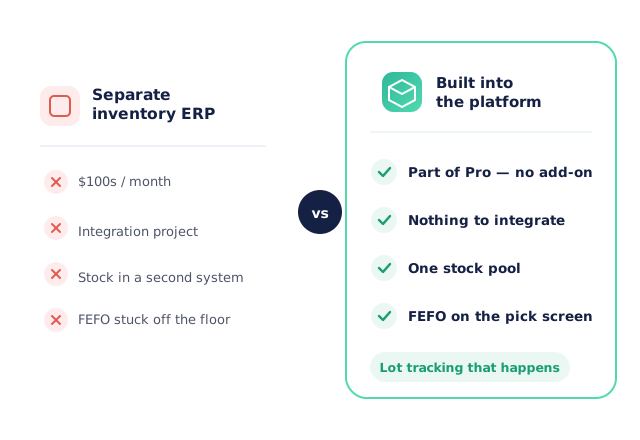
Lot tracking shouldn’t cost more than your ordering platform
Standalone inventory ERPs do lot tracking well — for hundreds of dollars a month, plus an integration project to connect them to your ordering and invoicing. Open Pantry’s lot tracking is built into the platform your orders already run on: the pick screen, the stock pool and the invoice are all the same system, so FEFO actually happens on the warehouse floor.
Open Pantry for food suppliers in Australia
Australian food and beverage wholesalers use Open Pantry to take orders from restaurants, cafés and venues online, with every order flowing to picking, invoicing and accounting.
- Plans priced in
- AUD — see Australia pricing
- Accounting sync
- Xero, MYOB and QuickBooks Online
- Supplier directory
- 1,100+ Australian wholesale food & beverage suppliers
Can Australian food suppliers use Open Pantry?
Yes. Wholesalers and distributors in Australia use Open Pantry to take orders from restaurants, cafés and venues through their own branded ordering app and online store. Plans are priced in AUD, and orders and invoices sync with Xero, MYOB and QuickBooks Online.
Is there a free plan for suppliers in Australia?
Yes. The free plan lets you list products and receive unlimited orders. Paid plans add accounting, inventory and delivery tools, come with a free trial and are priced in AUD.
Questions Suppliers Ask About Lot, Expiry & FEFO
What’s the difference between FIFO and FEFO, and which should a food wholesaler use?+
How do pickers know which lot to pick?+
What happens when I receive stock — do I enter lot and expiry every time?+
Does FEFO still work if a newer delivery expires sooner than older stock?+
Can I see which stock is approaching expiry?+
Does lot tracking change my COGS and margins?+
Do I need barcode scanners for lot tracking?+
How does lot tracking work with products I sell by carton and by each?+
Am I required to track lot numbers as a wholesale food supplier in Australia?+
Can lot tracking help in a recall?+
Can I stop short-dated stock being sold?+
What does lot and expiry tracking cost?+
Works Even Better With
Digital Pick & Pack
FEFO drives the tablet pick line directly — the earliest-expiring lot, every time.
Explore →Purchasing & Auto-POs
When lots draw down and stock runs low, Open Pantry drafts the purchase order to top it up.
Explore →Food Safety & Recalls
HACCP checks, goods-in checks, recalls with customer confirmation, certificates and mock recalls.
Explore →Make Stock Rotation Happen by Default.
Join 600+ Australian suppliers running their ordering, fulfilment and invoicing on Open Pantry.
Setup done for you · Cancel anytime · Your data stays yours