
Production & Landed Cost: Know What Everything You Make Really Costs
Open Pantry’s production tools let food wholesalers and small manufacturers run assembly and repack jobs on a tablet, costing every output from its inputs, packaging and labour. Kits sell from their components, the order list says what to make, and freight, duty and customs on an import are spread onto the stock they belong to — so the cost in every lot is the real one.
- Assembly and repack runs that roll up inputs, packaging and labour
- Kits and bundles sold from component stock — never oversold
- Landed cost spread across a purchase order, lifting lot cost and average cost
★★★★★ Trusted by 600+ suppliers across Australia



What you make, and what you import, is where cost goes missing

Recipe and repack costs kept in a spreadsheet that nobody updates when prices move

Freight and duty paid as an expense, so imported stock looks cheaper than it is

Kits and hampers sold online while one of the components has run out

The production plan worked out on a whiteboard from last week’s orders
How Production & Landed Cost Work
Set up a template once
An assembly or repack template lists the inputs, packaging and labour for a run, with a live cost per run and per unit.
Run it on the floor
Start a run, scan the input cartons or enter picked quantities, then capture the outputs — weighed and labelled where needed.
Complete — the cost goes into stock
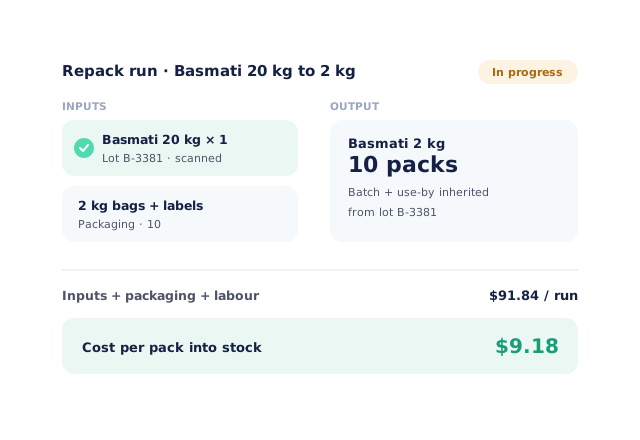
Outputs enter stock as a new lot at inputs + packaging + labour, with batch and use-by worked out from the inputs.
Add landed costs when the bills arrive
Spread freight, duty and customs over the purchase order by value, quantity, weight or your own split, and the stock cost updates.
Free trial · Cancel anytime
Assembly and repack runs that cost themselves
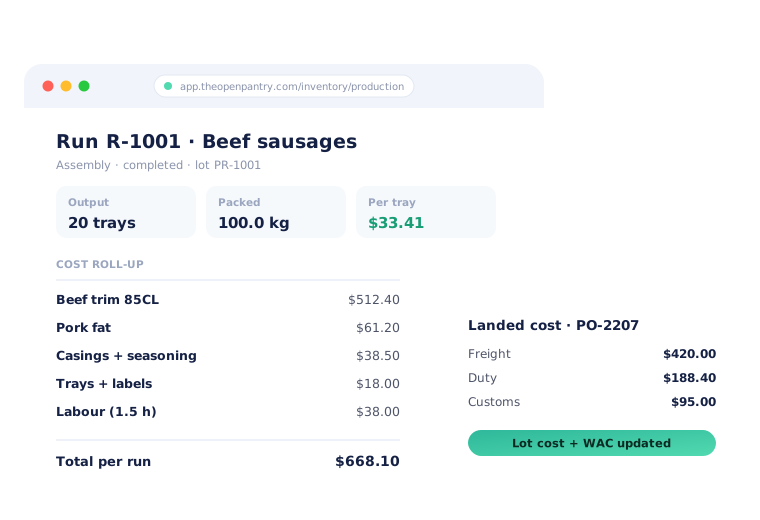
Whether you’re making sausages from trim or repacking 20 kg bags into 2 kg, a run records exactly what went in and what came out. The cost roll-up adds inputs, packaging and labour in whole cents, and every output lot carries it — so the cost of goods on every later sale is real.
- Batch and use-by inherited from the inputs
- A6 GS1 carton labels for weighed outputs
Kits sold from what you actually hold
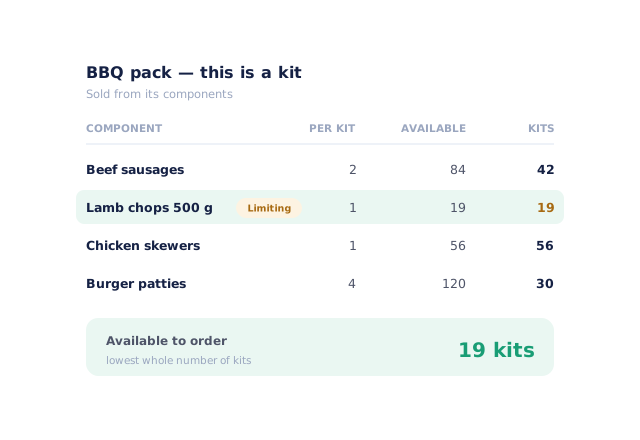
Make any product a kit — a BBQ pack, a hamper, a meal kit — and list its components. Open Pantry works out how many kits you can sell from the component that runs out first, reserves components while orders are open, and posts the sale against each component, not the kit.
An order list that says what to make
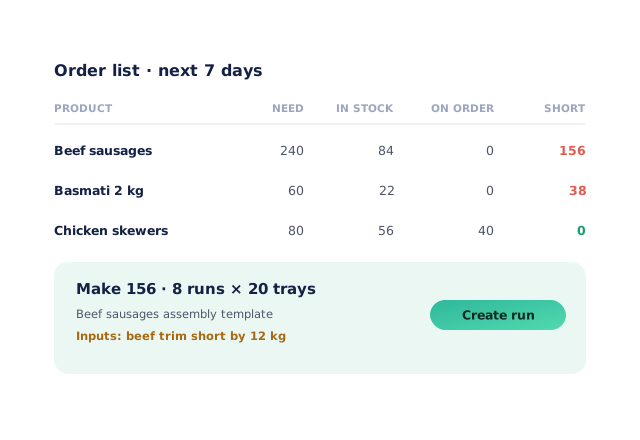
The order list compares what you’ve sold for the coming days with stock and open purchase orders, and turns the shortfall into a suggested make — how many runs, of which template — with a warning when an input is short. One tap creates the run as a draft.
Landed cost on imported stock
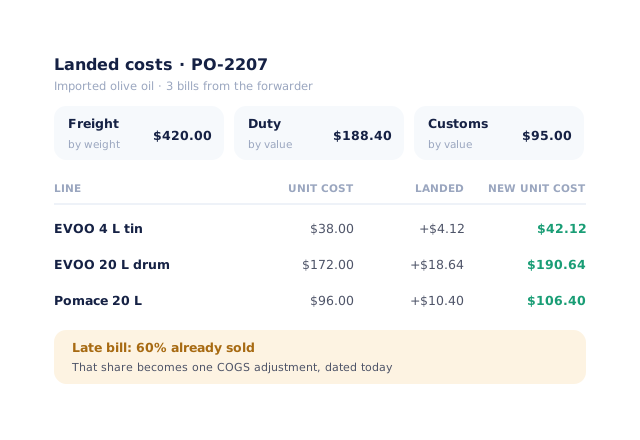
When the forwarder’s bills arrive, mark them as landed cost and spread them over the purchase order by value, quantity, weight or a manual split. Lot cost and weighted average cost rise for the stock still on hand; if some of it has already sold, that share becomes one cost-of-goods adjustment dated the day you apply it — past figures are never rewritten.
- Freight, duty, customs and insurance
- Mark a bill as landed cost from Invoices
- More product lines purchased
- 24%
- Your always-on branded store and app put your full range in front of customers, so baskets grow.
- Less order-processing cost
- 95%
- AI order capture and auto-invoicing remove the manual keying between order and books.
- Fewer picking errors
- 80%
- Tablet pick & pack with FEFO lot and expiry tracking catches shorts and wrong items before they ship.
Real gains suppliers report after moving ordering, fulfilment and invoicing onto Open Pantry.
Production Costs Flow Through Everything
Trusted by M&J Chickens
- $175m+
- Annual turnover
M&J Chickens use Open Pantry to move ordering out of calls and messages and into one digital workflow — giving customers a smooth ordering experience and giving the team fewer errors and less admin.
“Moving to a digital process has transformed our ordering process which is now faster through our own mobile apps.”

Why not keep costing in a spreadsheet?
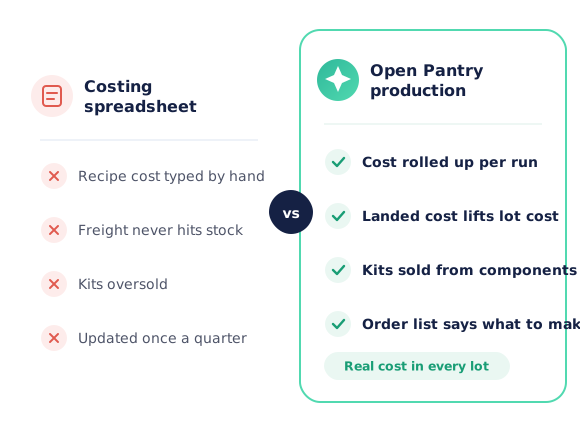
A costing spreadsheet is only as current as the last time someone opened it. It can’t see what a run actually used, it doesn’t move freight and duty onto the stock they belong to, and it can’t stop a kit being sold when a component runs out. Production in Open Pantry costs every run from what really went in, on the same record as your orders and stock.
Open Pantry for food suppliers in Australia
Australian food and beverage wholesalers use Open Pantry to take orders from restaurants, cafés and venues online, with every order flowing to picking, invoicing and accounting.
- Plans priced in
- AUD — see Australia pricing
- Accounting sync
- Xero, MYOB and QuickBooks Online
- Supplier directory
- 1,100+ Australian wholesale food & beverage suppliers
Can Australian food suppliers use Open Pantry?
Yes. Wholesalers and distributors in Australia use Open Pantry to take orders from restaurants, cafés and venues through their own branded ordering app and online store. Plans are priced in AUD, and orders and invoices sync with Xero, MYOB and QuickBooks Online.
Is there a free plan for suppliers in Australia?
Yes. The free plan lets you list products and receive unlimited orders. Paid plans add accounting, inventory and delivery tools, come with a free trial and are priced in AUD.
Questions Suppliers Ask About Production & Landed Cost
What kinds of production does Open Pantry handle?+
How is the cost of a production run worked out?+
What happens to batch numbers and use-by dates?+
Can I print labels for what I produce?+
How do kits work?+
What is the order list?+
What is landed cost, and how does Open Pantry apply it?+
What if the freight bill arrives after some stock has sold?+
Do production and landed costs post journals to Xero or MYOB?+
Can production runs be done on a tablet?+
Which plan includes production and landed cost?+
Works Even Better With
Purchasing & Auto-POs
Raise purchase orders from real demand, then add landed costs as the bills arrive.
Explore →Lot Tracking, Expiry & FEFO
Produced lots carry their batch and use-by, picked first-expiry-first-out.
Explore →Margin & COGS Analytics
See the margin your made and imported lines really earn.
Explore →Put the Real Cost in Every Lot.
Join 600+ Australian suppliers running their ordering, fulfilment and invoicing on Open Pantry.
Setup done for you · Cancel anytime · Your data stays yours