
Catch Overcharges and Price Creep Before You Pay
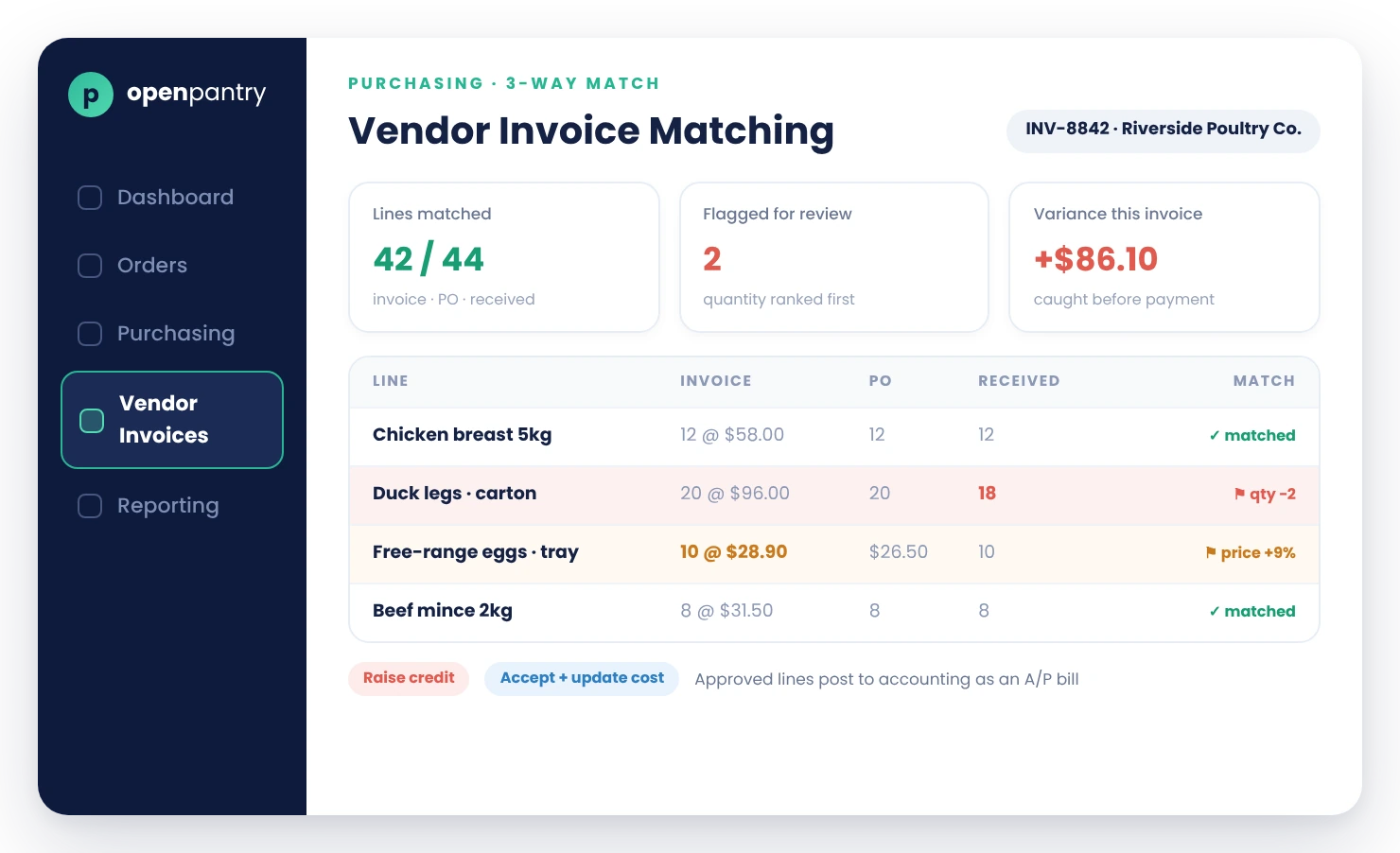
Vendor invoice matching automatically compares each supplier invoice against your purchase order and what was actually received — quantities and prices, line by line. Mismatches are flagged before you pay, so overcharges, short deliveries and quiet price rises get caught at the invoice, not discovered at month end.
- 3-way match: invoice vs purchase order vs goods received, line by line
- Price creep flagged the day it happens — not weeks later in a margin report
- Resolve in clicks: accept variance, update your cost, or raise a credit request
★★★★★ Trusted by 600+ suppliers across Australia



Your Suppliers' Invoices Are Quietly Expensive

Chicken went up $4 a carton three weeks ago — you found out at month end

Invoiced 20, received 18: paid for 20

Nobody has time to check every line of every vendor invoice, so nobody checks any

The cost your margins assume and the cost you actually paid drift apart
How 3-Way Invoice Matching Works
Invoices arrive in one inbox
Vendor invoices land in a dedicated inbox and are read into structured line items.
Matched three ways
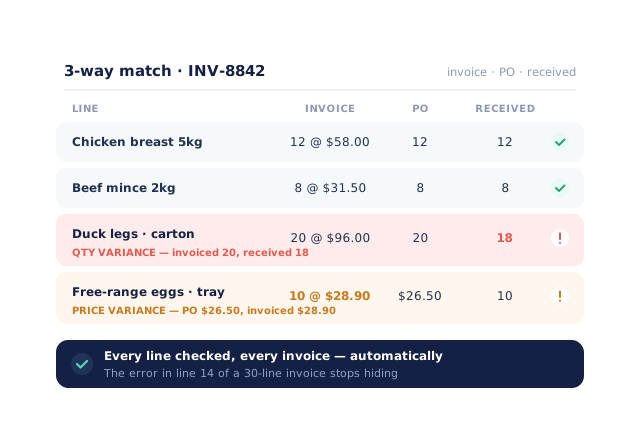
Each line is compared against your purchase order and what was received: right product, right quantity, right price.
Variances flagged with priority
Mismatches outside tolerance are surfaced, quantity issues ranked ahead of price issues, so the worst problems get attention first.
Resolve and post
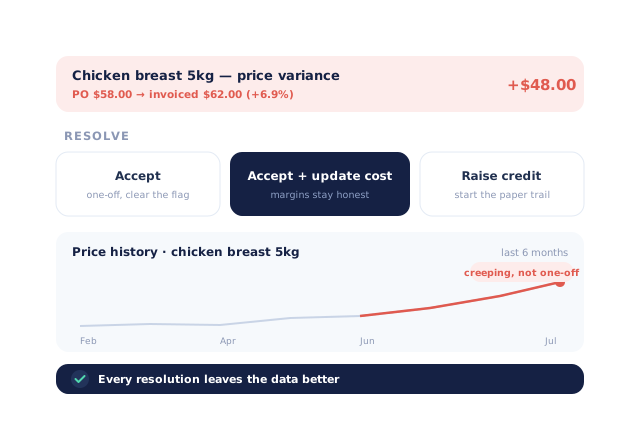
Accept the variance, accept-and-update your cost (so margins stay honest), or raise a credit request. Approved invoices post to your accounting system as bills.
Free trial · Cancel anytime
Line-level, not eyeball-level
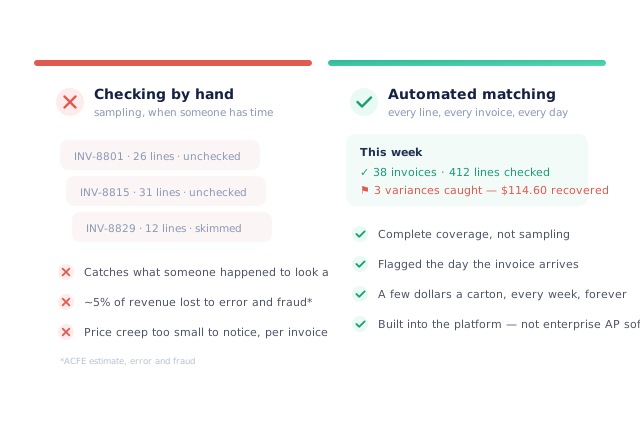
Every line checked, every invoice, automatically. Human checking is sampling; matching is complete coverage — the errors that hide in line 14 of a 30-line invoice stop hiding.
Tolerances so small stuff stays small
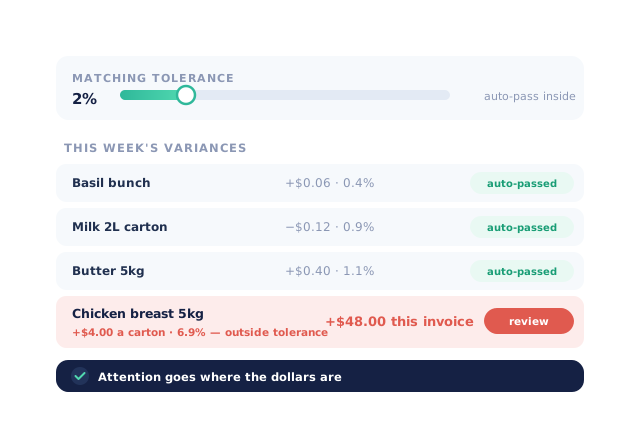
Set a matching tolerance so trivial variances auto-pass and only real discrepancies interrupt anyone. Attention goes where the dollars are.
Resolutions that fix the books
"Accept & update cost" doesn’t just clear the flag — it updates your product cost so downstream margins reflect reality. "Raise credit" starts the recovery paper trail. Every resolution leaves the data better.
- Per-product price charts across vendors show what you've actually been paying over time
- The pattern behind a creeping price is visible, not anecdotal
Straight into accounts payable
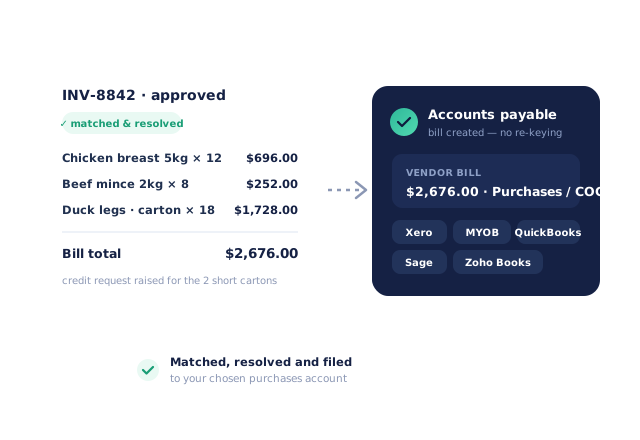
Approved invoices post as vendor bills to your chosen purchases account in Xero, MYOB, QuickBooks or Sage — matched, resolved and filed without re-keying.
- More product lines purchased
- 24%
- Your always-on branded store and app put your full range in front of customers, so baskets grow.
- Less order-processing cost
- 95%
- AI order capture and auto-invoicing remove the manual keying between order and books.
- Fewer picking errors
- 80%
- Tablet pick & pack with FEFO lot and expiry tracking catches shorts and wrong items before they ship.
Real gains suppliers report after moving ordering, fulfilment and invoicing onto Open Pantry.
Approved Bills Post Straight To Your Ledger
Trusted by M&J Chickens
- $175m+
- Annual turnover
M&J Chickens use Open Pantry to move ordering out of calls and messages and into one digital workflow — giving customers a smooth ordering experience and giving the team fewer errors and less admin.
“Moving to a digital process has transformed our ordering process which is now faster through our own mobile apps.”

Why not check invoices by hand?
Fraud examiners estimate businesses lose about 5% of revenue to error and fraud, and food price volatility makes invoices the easiest place for costs to slip through. Hand-checking catches what someone happened to look at, on the day they had time. Automated matching checks everything, every day — and in food distribution the wins aren’t rare: they’re a few dollars a carton, every week, forever.
Open Pantry for food suppliers in Australia
Australian food and beverage wholesalers use Open Pantry to take orders from restaurants, cafés and venues online, with every order flowing to picking, invoicing and accounting.
- Plans priced in
- AUD — see Australia pricing
- Accounting sync
- Xero, MYOB and QuickBooks Online
- Supplier directory
- 1,100+ Australian wholesale food & beverage suppliers
Can Australian food suppliers use Open Pantry?
Yes. Wholesalers and distributors in Australia use Open Pantry to take orders from restaurants, cafés and venues through their own branded ordering app and online store. Plans are priced in AUD, and orders and invoices sync with Xero, MYOB and QuickBooks Online.
Is there a free plan for suppliers in Australia?
Yes. The free plan lets you list products and receive unlimited orders. Paid plans add accounting, inventory and delivery tools, come with a free trial and are priced in AUD.
Questions Suppliers Ask About Vendor Invoice Matching
What is 3-way matching?+
What’s the difference between 2-way and 3-way matching?+
How does it catch a supplier quietly raising prices?+
What happens when an invoice doesn’t match?+
What is a matching tolerance and what should I set?+
Do I need purchase orders in the system for matching to work?+
How do invoices get in — can it read PDFs and emails?+
How are short deliveries and substitutions handled on a matched invoice?+
Can I raise a credit request when an invoice is wrong?+
Does it post to Xero / MYOB / QuickBooks / Sage?+
Does matching update my product costs and margins?+
Is 3-way matching worth it for a smaller wholesaler?+
Works Even Better With
Accounting Sync
Approved vendor bills post to your ledger as accounts payable, mapped to your accounts.
Explore →Margin & COGS Analytics
Updated costs flow into margin analysis so decisions run on what you actually pay.
Explore →Inventory Intelligence
Draft POs from reorder suggestions give you the purchase orders matching needs.
Explore →Catch Every Overcharge, Every Week.
Join 600+ Australian suppliers running their ordering, fulfilment and invoicing on Open Pantry.
Setup done for you · Cancel anytime · Your data stays yours