October 21, 2026
By Geoff Philcox · Comparisons & alternatives
The best B2B ordering platform for an Australian food supplier depends on the problem you need fixed. As at October 2026, Ordermentum suits venue reach, Fresho established fresh-produce operations from $499 a month, Upstock small suppliers starting free, SAAVI ERP-led distributors, and Open Pantry the whole job, free or from $149 a month.
Read more: Best B2B Ordering Platforms for Australian Food Suppliers (2026)October 18, 2026
By Geoff Philcox · Comparisons & alternatives
Wholesale ordering software in Australia costs from $0 to over $1,000 a month. As at October 2026, Open Pantry and Upstock publish free supplier plans, entry paid plans start at $99 to $499 a month, and set-up fees run from $0 to $2,000. Compare year-one cost, including add-ons, payment fees and manual order entry.
Read more: How Much Does Wholesale Ordering Software Cost in Australia?October 13, 2026
By Gelou Jimeno · AI order entry & automation
A food wholesaler can automate email, SMS and WhatsApp orders without a customer app by putting AI order capture behind the channels customers already use. It reads each message, identifies the customer, matches lines to the catalogue and their price list, and places the order in the same queue as online orders.
Read more: How to Automate Email, SMS and WhatsApp Orders Without Making Your Customers Use an AppOctober 8, 2026
By Geoff Philcox · Comparisons & alternatives
The best AI order entry software for food wholesalers is the one that does something useful after the order is read. At least seven vendors now read emails, texts and voice messages, so compare two things instead: whether the order flows on into picking, invoicing and accounts, and whether your corrections teach the system.
Read more: Best AI Order Entry Software for Food Wholesalers: How the 2026 Options Actually CompareSeptember 25, 2026
By Geoff Philcox · AI order entry & automation
EDI and AI order entry solve different problems. EDI exchanges pre-agreed structured messages with large trading partners who require it; AI order entry interprets free-text emails, texts and WhatsApp messages from the long tail of independent venues. Most food wholesalers need both, landing in one order queue.
Read more: AI Order Entry vs EDI for Food Wholesalers: Which Do You Need (and Why Most Need Both)September 25, 2026
By Gelou Jimeno · Warehouse, picking & fulfilment
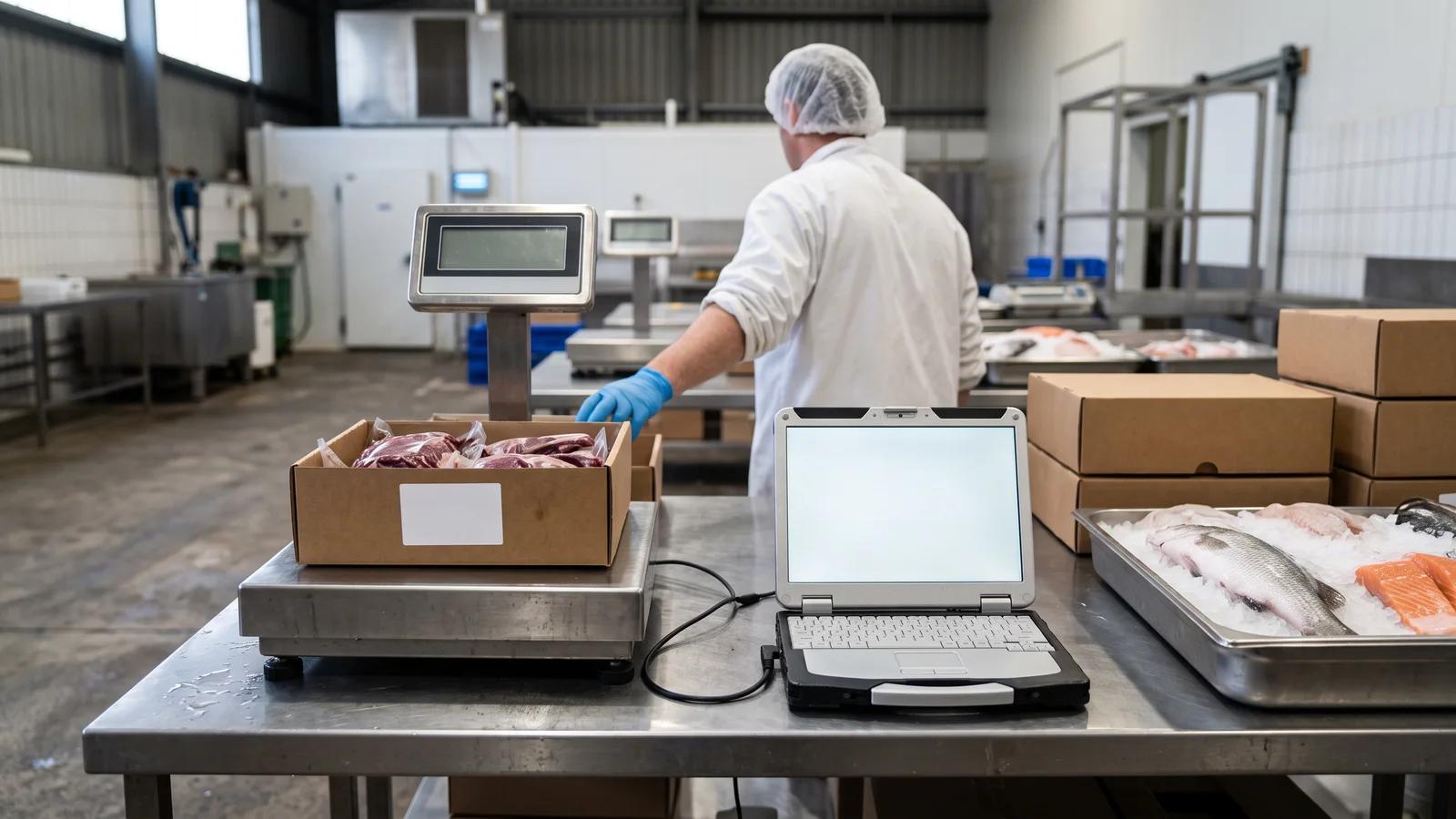
Catch weight software lets packers record each carton's actual weight at the pack bench and bills that weight on the invoice, with no re-keying from paper slips. In Open Pantry, packers type the weight or, on Enterprise, press PRINT on a connected RS-232 bench scale read by Chrome on a laptop or Chromebook.
Read more: Catch Weight Software Without the Clipboard: Connecting a Bench Scale to Open Pantry Pick & PackSeptember 25, 2026
By Gelou Jimeno · AI order entry & automation
EDI for food suppliers means receiving a supermarket's purchase orders electronically and sending back a PO response, advance shipping notice and invoice in the retailer's required format. Woolworths, Coles and Metcash all run EDI accreditation for suppliers. Open Pantry brings EDI purchase orders into Imported Orders, with the PO response deadline visible on each order.
Read more: EDI for Food Suppliers: How to Take Supermarket and Large-Buyer Orders Through Open PantrySeptember 25, 2026
By Gelou Jimeno · AI order entry & automation
Connect your Shopify store to Open Pantry and its orders import automatically into the same Imported Orders list as your emailed and EDI orders. Each line is matched to your catalogue by exact SKU, and when every line matches the order goes straight to picking; anything unmatched waits for review, so clean SKUs decide how much flows through untouched.
Read more: Shopify Wholesale Order Management: Importing Your Store Orders Straight Into Open PantrySeptember 25, 2026
By Gelou Jimeno · Accounting, invoicing & payments
Vendor invoice matching software compares every line of a vendor's bill with your purchase order and the quantity you actually received, then flags price and quantity differences before you pay. For food wholesalers that means short deliveries, unordered items and quiet price rises are caught on the first invoice instead of months later in the margins.
Read more: Vendor Invoice Matching Software for Food Wholesalers: Scan the Bill, Match the POSeptember 22, 2026
By Geoff Philcox · AI order entry & automation
Manual order entry hides across phone, email, SMS, WhatsApp, voicemail, PDFs and rep notebooks, plus the rekeying between order, pick slip, docket and invoice. Cut it by consolidating channels, moving willing customers to self-service, using standing orders, applying AI order entry to the rest, and removing back-end rekeying.
Read more: How Food Wholesalers Reduce Manual Order Entry: A Problem-Led GuideSeptember 14, 2026
By Gelou Jimeno · Order capture & cut-offs
Cutting off orders before delivery day works when the cut-off is set from your real operational lead time, published everywhere customers order, and enforced by the ordering system rather than by staff on the phone. Add a written emergency policy, move the cut-off earlier for peak periods, and give customers weeks of notice before tightening it.
Read more: The Wholesale Supplier's Guide to Cutting Off Orders Before Delivery DaySeptember 10, 2026
By Geoff Philcox · Comparisons & alternatives
Four platforms dominate wholesale food ordering in Australia and New Zealand. Ordermentum has the largest venue network, Fresho the most polished fresh-produce operations, Upstock the cheapest start. Open Pantry is the only one that runs buying, stock, picking, delivery, invoicing and payment in one system, tracks batches and expiry, and checks what was delivered against what was billed.
Read more: Ordermentum vs Fresho vs Upstock vs Open Pantry: the 2026 comparison for food wholesalersSeptember 7, 2026
By Geoff Philcox · AI order entry & automation
AI order entry reads the emails, texts, WhatsApp messages, voicemails and PDF purchase orders your customers already send, identifies the customer, matches each line to a SKU, applies that customer's price list, flags anything uncertain, and creates a draft order for your team to approve before it goes to picking and invoicing.
Read more: How AI Order Entry Works for Food Wholesalers: Email, WhatsApp, SMS, Voice and PDF Orders ExplainedSeptember 3, 2026
By Geoff Philcox · Order capture & cut-offs
Last-minute order changes cost wholesale food suppliers far more than the five minutes it takes to edit the order: they interrupt picking, reshuffle delivery runs, waste short-shelf-life stock and pull owners into reconciliation work. The fix is a published, system-enforced cut-off, a clear late-change policy and data on who is causing the changes.
Read more: Why Last-Minute Order Changes Are Costing Your Wholesale Business More Than You ThinkSeptember 2, 2026
By Geoff Philcox · Industry & verticals
From 1 October 2026 businesses in Australia cannot add a card surcharge to eftpos, Mastercard, Visa or American Express payments. The RBA's Conclusions Paper of 31 March 2026 ended surcharging on debit and credit cards, cut interchange caps and added fee transparency rules. Suppliers who charge a card fee must remove it and move the cost elsewhere.
Read more: The RBA Card-Surcharge Ban From 1 October 2026: What It Means for Food Suppliers and VenuesSeptember 2, 2026
By Geoff Philcox · Comparisons & alternatives
The main Ordermentum alternatives fall into three groups: marketplace platforms that emphasise buyer discovery, purpose-built operations platforms that focus on picking, delivery and invoicing, and generic wholesale tools adapted for food. Which suits you depends on whether you are still buying customer acquisition or already own your customer book.
Read more: Ordermentum Alternatives: What Wholesale Food Suppliers Are Using InsteadJuly 13, 2026
By Gelou Jimeno · Order capture & cut-offs
Set minimum order values by working out the true cost to serve each account, then applying different thresholds by customer type, delivery zone, order frequency or average spend. Offer a small order surcharge as an alternative to blocking the order, keep exceptions dated, communicate the policy early and let your ordering platform enforce it automatically.
Read more: How to Set Minimum Order Values Without Losing CustomersJuly 2, 2026
By Gelou Jimeno · Order capture & cut-offs
Customers keep phoning because it feels faster than your portal, so fix the friction before blaming habits. Make the portal mobile-friendly and personalised, train your top five customers first, use cut-off times as a reliability incentive, turn check-in calls into onboarding moments, and show customers the order history and spend data they gain.
Read more: Get Restaurant Customers to Order Online, Not by Phone.June 24, 2026
By Gelou Jimeno · Reporting & operations
The right time to invest in wholesale supplier software is slightly before the pressure becomes critical, not during a crisis. Signs the window is open include processing more than about 20 orders a week manually, adding customers regularly, several people touching orders, considering an admin hire, or a bad month for errors.
Read more: When Is the Right Time to Invest in Wholesale Supplier Software?June 23, 2026
By Gelou Jimeno · AI order entry & automation
Manual order management costs a wholesale food business across five areas: admin time, order errors, a growth ceiling, hidden customer churn and opportunity cost. Two hours a day of order admin equals roughly $14,560 to $18,200 a year, and a 3% error rate on 100 orders a week can add $7,500 to $15,000 more.
Read more: The Real Cost of Manual Order Management in a Wholesale Food BusinessJune 21, 2026
By Gelou Jimeno · Comparisons & alternatives
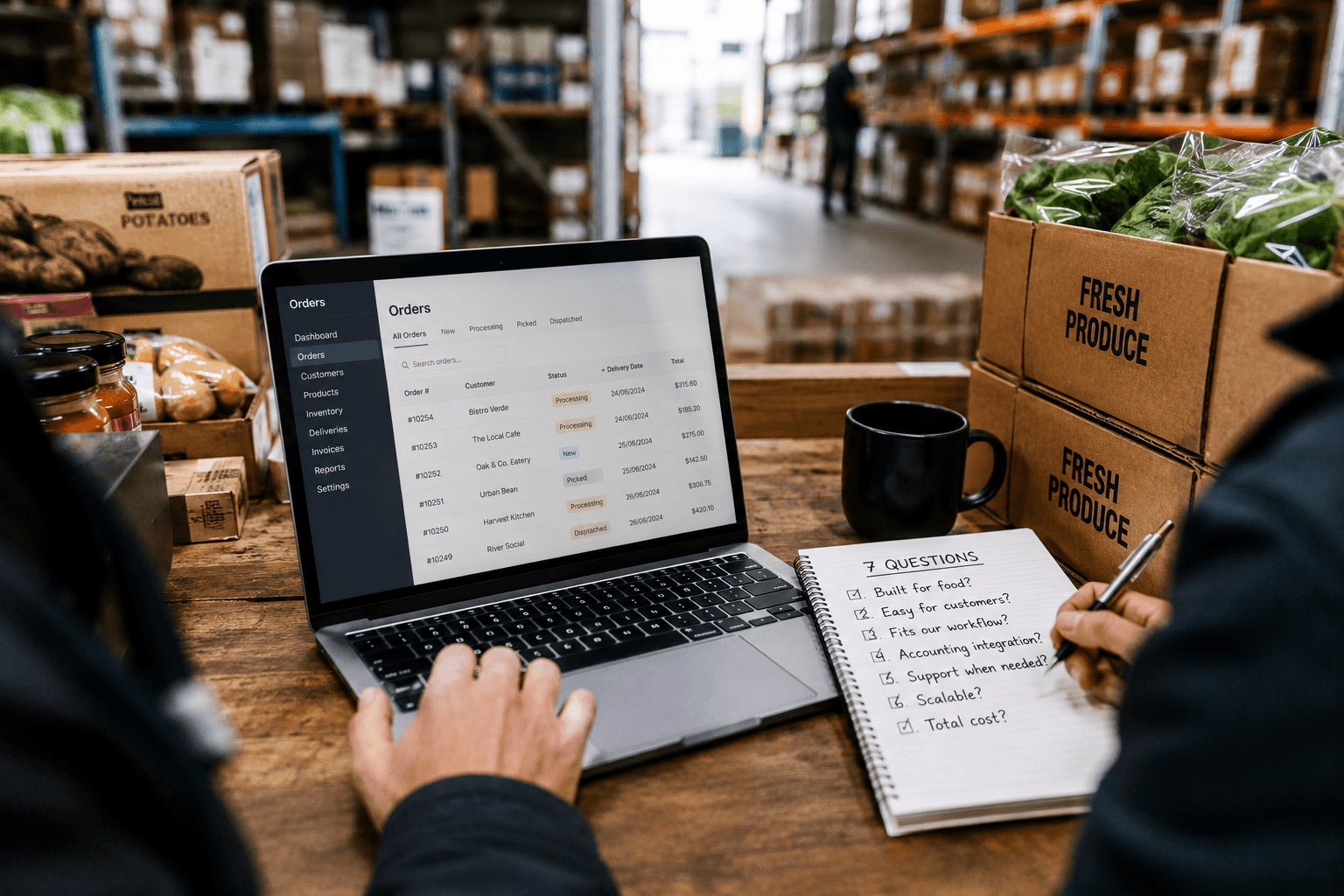
Before committing to wholesale supplier software, ask seven questions: was it built for food or adapted, can customers use it unaided on a phone, does it handle order to pick to pack to deliver, will it sync with Xero, MYOB or QuickBooks, what does support look like, will it scale, and what is the full first-year cost.
Read more: How to Choose Wholesale Supplier Software: 7 Questions to Ask Before You CommitJune 20, 2026
By Gelou Jimeno · Reporting & operations
Your spreadsheet is not broken; the business has outgrown it. The warning signs are maintaining the sheet taking more time than running orders, rising untraceable errors, staff keeping shadow copies, orders arriving on every channel, basic questions being hard to answer, cut-off times slipping, and only one person able to operate it safely.
Read more: Signs Your Wholesale Food Business Has Outgrown SpreadsheetsJune 18, 2026
By Gelou Jimeno · Pricing, catalogues & promotions
Customer-specific pricing lets suppliers match price to the commercial relationship, rewarding volume while protecting margin on smaller accounts. It only works when it is controlled: prices held in spreadsheets, emails or staff memory drift, and drifting prices mean unreliable margins, invoice disputes and discounts that continue long after they should have ended.
Read more: Why Customer-Specific Pricing Is Essential for Supplier ProfitabilityJune 17, 2026
By Gelou Jimeno · Delivery & logistics
Delivery run optimisation uses live order data to build routes around suburbs, postcodes, delivery windows, vehicle capacity, driver availability, warehouse readiness and traffic. It lowers fuel and vehicle costs, shortens driver days, gives chefs consistent delivery times, organises pick lists by run, reduces failed deliveries and produces cleaner invoices with fewer disputes.
Read more: How Delivery Run Optimisation Saves Suppliers Time and MoneyJune 15, 2026
By Gelou Jimeno · Warehouse, picking & fulfilment
Move a warehouse from paper pick slips to digital picking in eight steps: map the existing workflow, clean the order data, train staff on the basics, run paper and digital together for one to two weeks, adopt zone or run-based picking, connect picking to delivery and invoicing, use the live data, then retire paper with support in place.
Read more: How To Transition A Warehouse From Paper Pick Slips To Digital PickingJune 14, 2026
By Gelou Jimeno · Warehouse, picking & fulfilment
Digital picking replaces paper pick slips with live pick lists that update in real time, organise products automatically, record substitutions and shortages, sync with delivery runs and support faster invoicing. Suppliers move across in eight steps, starting with the warehouse workflow rather than the software and keeping paper as a fallback briefly.
Read more: Digital Picking for Wholesale Food SuppliersJune 12, 2026
By Gelou Jimeno · AI order entry & automation
Manual order entry costs foodservice suppliers far more than the typing. Re-keying orders from email, SMS, WhatsApp and handwritten notes creates wrong pack sizes, incorrect quantities, missed notes and pricing mistakes, consumes admin labour, slows the warehouse, buries orders across channels and makes growth depend on adding admin hours.
Read more: The Real Cost of Manual Order Entry for Foodservice SuppliersJune 11, 2026
By Gelou Jimeno · Warehouse, picking & fulfilment
Picking accuracy is a retention strategy, not just a warehouse metric. Chefs plan prep around orders arriving correctly, and most kitchens will not complain twice; they reduce orders or move on. Centralised orders, live digital pick lists, customer-specific catalogues and digitally recorded substitutions remove the causes of mispicks.
Read more: The Link Between Picking Accuracy and Customer RetentionJune 9, 2026
By Gelou Jimeno · Customer growth & retention
Chefs are not avoiding technology; they avoid ordering that feels slow, confusing or unreliable. Digital ordering makes them happier by cutting the time to reorder regular items, reducing errors through structured product information, giving visibility over pricing and delivery, staying consistent every week, and making stock issues quicker to resolve.
Read more: Why Digital Ordering Makes Chefs Happier and More LoyalJune 8, 2026
By Gelou Jimeno · Order capture & cut-offs
Chefs are not against technology; they are against tools that slow them down. Once they try a well-designed ordering system, most prefer it for five reasons: fast reordering at any hour, fewer errors from a structured product list, visibility over orders and pricing, predictable service, and quicker resolution when something is short.
Read more: Why Chefs Prefer Digital Ordering Over Calls, Texts and EmailsJune 6, 2026
By Gelou Jimeno · Warehouse, picking & fulfilment
Order errors come from a fragile workflow, not careless staff. Suppliers cut them without hiring by centralising every order channel into one system, giving each customer a personalised catalogue, running digital pick lists that update with changes, recording substitutions and shortages digitally, invoicing from proof of delivery, and reviewing weekly error trends.
Read more: How to Reduce Order Errors Without Hiring More StaffJune 5, 2026
By Gelou Jimeno · AI order entry & automation
This guide sets out seven parts of the wholesale ordering workflow suppliers should automate: order intake consolidation, customer-specific pricing and product visibility, cut-off reminders and confirmations, pick list generation, delivery run planning, digital proof of delivery with automated invoicing, and reporting. Together they cut admin, protect margins and support growth without extra headcount.
Read more: Wholesale Food Ordering Automation Guide (2026)June 3, 2026
By Gelou Jimeno · Reporting & operations
Spreadsheets feel free, but in wholesale foodservice they cost margin leakage from prices that drift, order entry errors that ripple through the warehouse, version chaos across multiple sources of truth, key-person dependency, delayed invoicing and slower cash collection, and stock counts that drift far enough to cause oversells and emergency buying.
Read more: The Hidden Cost of Spreadsheets for Wholesale SuppliersJune 2, 2026
By Gelou Jimeno · Order capture & cut-offs
Digital ordering rollouts fail on implementation, not technology. Move restaurant customers across with a low-friction approach: a mobile-first system that remembers favourites and past orders, a soft transition rather than a hard cutover, personalised onboarding, benefits framed as time saved, close attention in the first weeks, then phasing manual channels out.
Read more: How to Transition Restaurant Customers to Digital OrderingMay 31, 2026
By Gelou Jimeno · Warehouse, picking & fulfilment
Centralising orders into one digital platform is among the fastest ways to lift warehouse efficiency, often within days. It standardises order formatting, syncs office and warehouse in real time, generates pick lists by run or zone, eases the morning rush, gives drivers accurate run sheets, matches invoices to deliveries and improves stock accuracy.
Read more: How Centralised Orders Improve Warehouse Efficiency FastMay 30, 2026
By Gelou Jimeno · Reporting & operations
Wholesale suppliers can grow revenue from the order data they already hold rather than by hiring reps. Three measures do most of the work: customer activity trends, product performance and category contribution. Used together they flag at-risk accounts early, surface cross-sell opportunities, sharpen stock planning and focus attention where revenue is actually moving.
Read more: How Suppliers Can Use Data to Increase Sales Without Hiring More RepsMay 28, 2026
By Gelou Jimeno · Customer growth & retention
Restaurant buyers in 2026 expect ordering that works whenever they do, pricing that matches agreed rates and shows at checkout, real-time stock visibility, clear delivery communication, transparency about changes and credits, flexible automated payments, detailed product information, and the operating speed of a logistics business.
Read more: What Restaurant Buyers Expect From Suppliers in 2026May 27, 2026
By Gelou Jimeno · Pricing, catalogues & promotions
A digital product catalogue is a supplier's storefront and shapes how much chefs buy. The elements that lift spend are clear descriptive product names, high-quality images, logical categories and subcategories, fast search and filters, customer-specific visibility and customer-specific pricing. Many suppliers see average order value rise 10 to 25% after upgrading it.
Read more: How to Build a Digital Product Catalogue That Increases Buyer SpendMay 25, 2026
By Gelou Jimeno · Accounting, invoicing & payments
Automated invoicing helps foodservice suppliers get paid faster by removing the friction that delays payment. Invoices are generated from the confirmed order so they are accurate, sent the moment delivery is confirmed, followed by scheduled reminders, collected by direct debit or card, synced to Xero or MYOB, and visible to customers in a portal.
Read more: The Supplier’s Guide to Getting Paid Faster with Automated InvoicingMay 24, 2026
By Gelou Jimeno · Accounting, invoicing & payments
Open Pantry stays the operational source of truth for products, customer pricing, ordering and payments, while Xero remains the financial record. Orders export to Xero as draft sales invoices for you to approve. Set-up covers seeding contacts and items, account code and tax mapping, and product and customer matching rules.
Read more: Next Steps: Connect Open Pantry to XeroMay 22, 2026
By Gelou Jimeno · Accounting, invoicing & payments
Open Pantry stays the operational source of truth for products, customer pricing and ordering, while MYOB Business or AccountRight keeps the accounting record. Orders export to MYOB as sales invoices. Setting up covers seeding customers and items, mapping income categories and tax codes, and confirming product and customer matching rules.
Read more: Next Steps: Connect Open Pantry to MYOB (MYOB Business / AccountRight)May 21, 2026
By Gelou Jimeno · Pricing, catalogues & promotions
Customer-specific pricing turns into chaos when it lives in spreadsheets and email threads: conflicting versions, staff unsure which price is right, and margin leaking unnoticed. Centralising pricing gives one master table that updates ordering, pick lists, invoices and accounting at once, with exceptions, group pricing, contract expiry dates and change logs.
Read more: Customer-Specific Pricing for Food Suppliers Made SimpleMay 19, 2026
By Gelou Jimeno · Accounting, invoicing & payments
Open Pantry remains the operational source of truth for products, customer pricing and ordering, while QuickBooks Online keeps invoicing, receivables, reconciliation and reporting. Orders export to QBO as unsent invoices that you review and send. Setup covers seeding, income account and sales tax mapping, and product and customer matching rules.
Read more: Next Steps: Connect Open Pantry to QuickBooks Online (QBO)May 18, 2026
By Gelou Jimeno · Reporting & operations
Stock errors in foodservice supply come from manual stocktakes, picking without updating quantities, unrecorded substitutions, stock held in several locations, phone and SMS orders never entered, and pack breaks or weight variation. Digital inventory linked to orders, picking and delivery keeps counts current and prevents overselling, emergency buying and wasted labour.
Read more: Inventory Management for Food Suppliers: Fix Stock ErrorsMay 16, 2026
By Gelou Jimeno · Order capture & cut-offs
Wholesale order management covers every step from order capture to payment: validating products and pricing, booking delivery, generating picking workflows, dispatch, proof of delivery and invoicing. Running those steps in one digital platform, rather than across email and spreadsheets, cuts errors and speeds fulfilment for foodservice suppliers.
Read more: Wholesale Order Management for Foodservice SuppliersMay 15, 2026
By Gelou Jimeno · AI order entry & automation
Suppliers eliminate manual orders by giving customers a structured digital ordering app and converting the email and SMS stragglers with a manual order transformation tool. Both paths produce the same structured order that flows into picking, delivery, invoicing and reporting, cutting admin time by 30 to 50 per cent.
Read more: How Wholesale Food Suppliers Can Eliminate Manual Orders ForeverMay 6, 2026
By Gelou Jimeno · Reporting & operations
Emergency orders can be cut by up to 70 per cent when wholesalers replace spreadsheets and email with a purchase order management system that centralises purchasing, automates approvals, tracks stock in real time and forecasts demand, so problems are prevented rather than patched with costly rush purchases.
Read more: Cut Emergency Orders by 70% With Purchase Order ManagementMay 4, 2026
By Gelou Jimeno · Reporting & operations
Order management software helps food and beverage wholesalers reach new markets by centralising orders, automating inventory tracking and coordinating shipping in real time. Its sales and stock analytics also surface underserved regions, high-demand products and seasonal surges, so expansion is planned on data rather than guesswork.
Read more: Unlock New Markets with Order Management SoftwareMay 3, 2026
By Gelou Jimeno · Delivery & logistics
Order management software can cut delivery mistakes by up to 80 per cent by automating order processing, synchronising inventory in real time, prioritising urgent orders, coordinating carriers and standardising returns. It also flags discrepancies such as wrong addresses or duplicate orders before a shipment ever leaves the warehouse.
Read more: Cut Delivery Mistakes by 80% with Order Management SoftwareApril 25, 2026
By Gelou Jimeno · Reporting & operations
Digital order visibility rests on three pillars: traceability by lot, batch and expiry date; accountability through a single record of who ordered what, when and from where; and data-driven decisions from live sales, supplier and inventory trends. Together they help wholesalers stay compliant, cut waste and forecast demand.
Read more: How Suppliers Can Boost Distribution with Order TransparencyApril 24, 2026
By Gelou Jimeno · Warehouse, picking & fulfilment
Food safety for wholesale suppliers starts with the inventory system. Recording supplier name, batch number and expiry date, tracking stock across cold rooms and delivery routes, applying first in first out handling and generating audit reports automatically gives full traceability, easier compliance, fewer manual errors and better oversight of suppliers.
Read more: Suppliers: Food Safety Starts with Your Inventory SystemApril 22, 2026
By Geoff Philcox · Order capture & cut-offs
A branded online ordering app lets wholesale customers buy directly from you rather than through a marketplace that shares your customer data and lists competitors beside your products. Suppliers keep control of pricing, branding and customer data, avoid marketplace commissions, and report an average 24 per cent increase in order value.
Read more: Why Wholesale Suppliers Need Branded Online Ordering Apps? (and How to Get One Fast)April 21, 2026
By Gelou Jimeno · Order capture & cut-offs
Order management software makes suppliers faster by capturing self-service orders instantly, validating and routing them automatically, running approvals through automated workflows, confirming stock in real time, and integrating with warehouse and logistics systems so pick-and-pack and shipping documents happen without manual handling.
Read more: How Order Management Software Drives Speed for SuppliersApril 18, 2026
By Gelou Jimeno · Reporting & operations
Transitioning to a purchase order management system takes eight steps: map your current process, set SMART goals, select a system that fits your workflow, prepare and clean data for migration, build a phased implementation plan, train each team in its own role, pilot with a small group, then monitor metrics and refine.
Read more: How to Transition to a Purchase Order Management SystemApril 16, 2026
By Gelou Jimeno · Reporting & operations
Implementing a purchase order system in food wholesale runs across eleven steps: analyse current buying, define outcomes, choose software built for high SKU volume, set roles and permissions, standardise the PO format, build tiered approval workflows, integrate inventory and finance, train by role, pilot, review performance, then use the system for audit readiness.
Read more: Implementing a Purchase Order System: A Step-by-Step GuideApril 13, 2026
By Geoff Philcox · Company & product news
The free Open Pantry info pack for wholesale suppliers is ready to download. It covers how the digital ordering platform works, the main benefits for suppliers, a feature tour with interface screenshots, pricing tiers and integration options, plus customer testimonials and usage statistics from existing users.
Read more: Your guide to growing with Open Pantry is ready.April 9, 2026
By Gelou Jimeno · Reporting & operations
A purchase order management system costs software subscription or licensing, integration work, training, maintenance, data migration and compliance budget. Against that, it removes manual data entry errors, adds real-time visibility, speeds approvals, keeps automated audit trails and cuts the wasted resources and stockpiling that manual procurement causes.
Read more: Purchase Order Management Systems: Cost vs. Benefits for SuppliersApril 7, 2026
By Geoff Philcox · Company & product news
The Wholesale Supplier Growth Playbook 2026 is a free download covering practical strategies for scaling a wholesale business, including customer acquisition, digital marketing and automation. It is aimed at suppliers growing from a standing start toward $100M and more in annual recurring revenue, and is accessed through a download form.
Read more: 🚀 Free Download: Wholesale Supplier Growth Playbook 2026April 6, 2026
By Gelou Jimeno · Reporting & operations
The eight mistakes food suppliers make with purchase order systems are: no clear objectives, ignoring usability, skipping integration, thin employee training, undocumented procurement processes, weak supplier communication, poor security and data privacy, and never reviewing or updating the system once it is live.
Read more: 8 Common Purchase Order System Mistakes & How to Fix ThemApril 4, 2026
By Gelou Jimeno · Reporting & operations
Linking a purchase order system to an ERP removes duplicate data entry and synchronises procurement, inventory and finance in real time. For food suppliers that means fewer pricing and duplicate-order errors, automated reconciliation of orders, invoices and payments, live stock and expiry visibility, and processes that scale across multiple sites.
Read more: Why Linking Your PO System with ERP is a Game-ChangerApril 3, 2026
By Gelou Jimeno · Comparisons & alternatives
An ERP integrates procurement, inventory, finance and logistics in one system and suits large food suppliers with complex supply chains, while standalone purchase order software handles procurement alone, costs less and deploys faster, which suits smaller suppliers wanting a practical procurement fix without a months-long rollout.
Read more: ERP vs. Standalone Purchase Order Management: Pros & ConsApril 1, 2026
By Gelou Jimeno · Warehouse, picking & fulfilment
Inventory order management software carries upfront licensing, implementation and training costs, but replaces the hidden costs of manual tracking: labour on stock counts, data entry errors causing stockouts and overstocking, food waste from expired perishables, lost productivity and slow decisions from outdated data.
Read more: Inventory Order Management Software: Costs vs. BenefitsMarch 31, 2026
By Gelou Jimeno · Reporting & operations
An online purchase order system documents and tracks every purchase between a food supplier and its buyers. Its core features are real-time inventory tracking with FIFO and FEFO support, vendor management, customisable templates, batch and expiry tracking, reporting and analytics, multi-device cloud access and ERP integration.
Read more: Online Purchase Order Systems: A Guide for Food SuppliersMarch 29, 2026
By Gelou Jimeno · Reporting & operations
Sustainable procurement uses digital purchase order management to cut environmental impact: removing paper requisitions, approvals and archiving, improving inventory forecasting so less food spoils, consolidating shipments and optimising routes to lower emissions, and giving visibility into which suppliers actually meet sustainability standards.
Read more: Sustainable Procurement: Smarter POs for a Greener FutureMarch 28, 2026
By Gelou Jimeno · Reporting & operations
Purchase order systems are not just for large enterprises. Five myths hold small and medium businesses back: that POs suit only big companies, that implementation is expensive and complicated, that simple purchases do not need them, that they slow purchasing down, and that they are irrelevant to service-based businesses.
Read more: Debunking Myths: PO Systems Aren’t Just for Big EnterpriseMarch 26, 2026
By Gelou Jimeno · Order capture & cut-offs
Five signs tell a food and beverage supplier it is time for a purchase order management system: frequent order and invoice errors, no real-time view of stock, supplier communication breakdowns, procurement that cannot scale with growth, and slow manual approvals that delay shipments.
Read more: 5 Clear Signs You Need a Purchase Order Management SystemMarch 25, 2026
By Gelou Jimeno · Reporting & operations
Food suppliers lose money on inventory through poor tracking, perishability, forecasting errors, inefficient storage, supply chain disruptions, outdated manual processes and untrained staff. Each has a practical fix, from automated cloud tracking and FIFO rotation to AI forecasting, warehouse organisation, supplier diversification and regular staff training.
Read more: Why Food Suppliers Lose Money on Inventory and How to Fix ItMarch 23, 2026
By Gelou Jimeno · Accounting, invoicing & payments
A purchase order management system helps food suppliers control spending through real-time budget tracking, structured approval workflows, category and supplier spending limits, automated routine purchases, standardised vendor communication, and accounting integration that keeps expense records accurate and current.
Read more: Master Your Spending with a Purchase Order Management SystemMarch 20, 2026
By Gelou Jimeno · Comparisons & alternatives
The article reviews five purchase order management systems for food suppliers in 2025: Open Pantry, BlueCart, Fishbowl Inventory, Ordermentum and MarketMan. It compares automated ordering, real-time inventory tracking, food safety features and accounting integrations to help suppliers pick the right fit.
Read more: Best Purchase Order Management Systems for Food SuppliersMarch 19, 2026
By Geoff Philcox · AI order entry & automation
Food suppliers are moving to digital order management because it automates order entry and invoicing, tracks inventory in real time, validates orders to catch errors early, speeds fulfilment, improves customer service, supplies trend data for decisions, and connects with inventory, finance and CRM systems.
Read more: Why Food Suppliers Are Switching to Digital Order ManagementMarch 17, 2026
By Geoff Philcox · Reporting & operations
Real-time inventory monitoring lets food and beverage wholesalers see stock movement as it happens rather than at periodic counts. The article sets out six benefits: less spoilage, accurate order fulfilment, steadier supply chains, better financial control, easier safety compliance and lower labour costs.
Read more: Real Time Inventory: A must for Food & Beverage WholesalersMarch 16, 2026
By Geoff Philcox · Warehouse, picking & fulfilment
Wholesale suppliers can improve inventory accuracy with five practices: scan barcodes or QR codes instead of counting by hand, set automatic reorder points, track stock in real time, run the warehouse through a digital warehouse management system, and audit physical stock against records regularly.
Read more: Wholesale Inventory Tracking: 5 Key Tips to Improve AccuracyMarch 14, 2026
By Geoff Philcox · Comparisons & alternatives
The article reviews five ERP systems for food and beverage wholesalers: Microsoft Dynamics 365 Business Central, NetSuite, MYOB Acumatica (formerly MYOB Advanced), Odoo and SAP Business One. Each brings inventory, sales, accounting and customer management into one platform, with different strengths by business size and industry.
Read more: Best ERPs for Food & Beverage Wholesalers in Australia (2026)March 13, 2026
By Geoff Philcox · Comparisons & alternatives
The article compares five inventory management systems for wholesale food suppliers: FoodReady, Acumatica, Open Pantry, Linnworks and Cin7 Omni. Each tracks stock in real time and helps reduce waste, with differences in traceability, multi-warehouse support, expiry tracking and sales channel integration.
Read more: Best Inventory Management Systems for Wholesale Food SuppliersMarch 11, 2026
By Geoff Philcox · AI order entry & automation
AI will change how wholesale suppliers work in 2025 in four ways: automating manual order capture to cut customer service costs, using machine learning to read each customer's ordering language, connecting supplier and hospitality procurement systems end to end, and personalising offers from purchase history.
Read more: How AI Will Affect Wholesale Suppliers in 2025March 10, 2026
By Geoff Philcox · Customer growth & retention
Wholesale suppliers can lift profits in 2025 through seven moves: positioning as a premium supplier, raising minimum order value, setting delivery fees that cover real costs, tightening inventory, expanding the product range, automating with technology, and strengthening customer relationships.
Read more: How to Increase Your Profits as a Wholesale Supplier in 2025March 7, 2026
By Gelou Jimeno · Delivery & logistics
Distributing perishable goods brings five recurring challenges: holding freshness and quality, managing complex multi-stage supply chains, coping with seasonal demand swings, meeting health and safety compliance, and running efficiently. The article pairs each with practical controls, from FIFO and temperature monitoring to forecasting and automation.
Read more: Dealing with the Challenges of Distributing Perishable GoodsMarch 4, 2026
By Gelou Jimeno · Delivery & logistics
Delivery route optimisation is the process of planning the most efficient delivery paths around traffic, delivery windows and vehicle capacity. For wholesale food and beverage suppliers it cuts fuel and maintenance costs, lifts driver productivity, protects product freshness and lowers carbon emissions.
Read more: Cost-Effective Delivery Route SolutionsMarch 2, 2026
By Gelou Jimeno · Reporting & operations
A SWOT analysis examines your wholesale business's Strengths, Weaknesses, Opportunities and Threats. Work through it in four steps, then convert the findings into strategy: build on strengths, fix weaknesses, pursue opportunities such as e-commerce and sustainable ranges, and plan around competition and supply chain risk.
Read more: How to Conduct a SWOT Analysis for Your Wholesale BusinessFebruary 26, 2026
By Gelou Jimeno · Comparisons & alternatives
Three order management systems dominate Australian wholesale food ordering in 2026: Open Pantry, free for suppliers to start with Pro from $149 a month; Ordermentum, free for venues with supplier plans from $200 a month; and Fresho, order-to-invoice software for fresh food wholesalers from $499 a month plus set-up.
Read more: Best Order Management Systems for Food Suppliers (2026)February 23, 2026
By Gelou Jimeno · AI order entry & automation
An integrated order management system unifies ordering, inventory and communication in one platform. For suppliers it improves demand forecasting, automates processing and lowers operating costs; for restaurants it supports menu planning against live stock, cuts waste and keeps ingredient supply consistent.
Read more: The Benefits of Integrated Order Management for Suppliers and RestaurantsFebruary 17, 2026
By Geoff Philcox · Customer growth & retention
Online branding for food suppliers means building a consistent identity that customers recognise and trust. The guide covers defining a unique selling proposition, telling an authentic brand story, creating a cohesive visual identity, building a usable e-commerce website, showing product quality transparently, and using customer reviews.
Read more: The Ultimate Guide to Online Branding for Food SuppliersFebruary 12, 2026
By Geoff Philcox · Order capture & cut-offs
The three challenges wholesale food suppliers face most often are running out of stock or letting it spoil, taking orders by phone, text and email, and tracking customer relationship health. Open Pantry answers each with inventory forecasting, one connected order-to-invoice flow, and a customer risk algorithm.
Read more: 3 Challenges Food Suppliers Face (and How Open Pantry Solves Them)February 9, 2026
By Geoff Philcox · Customer growth & retention
Suppliers usually blame price when customers drift, but chefs value an accurate, easy ordering experience more. Open Pantry helps suppliers hold onto customers by giving chefs a fast ordering site, removing manual handling and order errors, and putting fulfilment and customer data in one platform.
Read more: How Open Pantry Helps Build Lasting Customer RelationshipsFebruary 6, 2026
By Geoff Philcox · AI order entry & automation
AI is reshaping food wholesale in five places: inventory optimisation, automatic stock updating and replenishment, automated order capture, demand forecasting that informs pricing, and POS integration that decrements stock as sales are recorded. Together they cut waste, prevent stockouts and remove purchasing guesswork.
Read more: The Role of AI in Food Wholesale TransformationFebruary 5, 2026
By Geoff Philcox · Customer growth & retention
Turning a first order into a lasting account rests on five habits: personalised communication built on order data, fast and courteous service, loyalty rewards, a consistent brand experience, and content that builds a community. Open Pantry's insights tool shows which restaurants to follow up and when.
Read more: Tips and Tricks to Turn New Customers into Returning CustomersFebruary 3, 2026
By Geoff Philcox · Customer growth & retention
Larger restaurants buy from suppliers with a reputation, and that reputation is built on five things: consistent product quality, clear and early communication, fixing problems quickly, pricing that reflects value rather than the lowest number, and service across sales, delivery and accounts.
Read more: Mastering the Art of Winning High-Profile Restaurant ClientsFebruary 2, 2026
By Geoff Philcox · Reporting & operations
Five tools matter most for a wholesale food and beverage supplier: order management software, real-time inventory tracking, a supplier pool that puts you in front of buyers, analytics and reporting, and integration with POS and accounting systems. Open Pantry brings all five into one platform.
Read more: 5 Must-Have Tools for Wholesale F&B SuppliersJanuary 31, 2026
By Geoff Philcox · Reporting & operations
Data drives growth for wholesale food and beverage suppliers in four ways: analysing what customers buy, using analytics to run operations and delivery routes more efficiently, optimising inventory against forecast demand, and personalising offers and marketing from purchase history.
Read more: How Wholesale F&B Suppliers Can Drive Business Growth with DataJanuary 27, 2026
By Geoff Philcox · Comparisons & alternatives
Open Pantry, Ordermentum and Fresho all handle wholesale food ordering but charge very differently. Open Pantry is free for suppliers to start, with Pro from $149 a month. Ordermentum charges venues nothing and suppliers from a $200 a month minimum. Fresho quotes tailored pricing from $499 a month plus a one-off set-up fee.
Read more: A Succinct Comparison of Open Pantry, Ordermentum, and Fresho: Everything You Need to Know to Choose a PartnerJanuary 24, 2026
By Geoff Philcox · Warehouse, picking & fulfilment
Inventory management in wholesale food distribution does five jobs: it keeps order fulfilment accurate, prevents overstock and stockouts, gives real-time tracking and visibility, supports demand planning with customers, and, once automated, removes the manual data entry where errors start.
Read more: The Role of Inventory Management in Wholesale Food DistributionJanuary 22, 2026
By Geoff Philcox · Reporting & operations
Recruiting well for a food and beverage wholesale business means identifying the key roles first, writing job descriptions that show the real work, advertising on digital platforms, showing your culture, paying competitively, keeping the interview process short, selecting against clear criteria, and training people once they arrive.
Read more: Tips for Recruiting Top Talent for Your F&B Wholesale BusinessJanuary 21, 2026
By Geoff Philcox · Reporting & operations
Technology is changing B2B wholesale supply in four places: automated order fulfilment that removes manual errors, data-driven decisions built on analytics, supply chain visibility through tracking and barcoding, and IoT-equipped smart warehouses that monitor stock condition and equipment.
Read more: How Technology is Impacting the B2B Wholesale Supply BusinessJanuary 19, 2026
By Geoff Philcox · Order capture & cut-offs
Order management software makes a food and beverage business more efficient in three ways: it streamlines order processing by automating repeated tasks, it keeps inventory accurate in real time, and it joins supplier and restaurant workflows so ordering, packing, delivery and invoicing run without back-and-forth.
Read more: Three Ways Order Management Software Enhances EfficiencyJanuary 18, 2026
By Geoff Philcox · Delivery & logistics
Food distribution generates emissions from transport, waste from single-use packaging, and spoilage across the chain. Wholesale order management software reduces all three by forecasting demand accurately, replacing paper picking and invoices, optimising delivery runs, and making sourcing decisions visible.
Read more: Sustainable Food Distribution with Wholesale Order Management SoftwareJanuary 16, 2026
By Geoff Philcox · Order capture & cut-offs
Implementing a wholesale order management system starts with assessing where your current process actually hurts, then choosing a system that fixes the most pain points for the least cost. Prioritise end-to-end order automation, real-time warehouse control, and integration with the restaurants you serve.
Read more: Best Practices for Implementing a Wholesale Order Management System for Your Food Business, January 15, 2026
By Geoff Philcox · Pricing, catalogues & promotions
Pricing through volatile costs comes down to five moves: raise prices gradually so customers absorb them, delay reductions and then cut in noticeable jumps, tell customers about changes in advance, lock a margin rather than a price, and read market indicators to anticipate the next shift.
Read more: Mastering the Art of Pricing in a Volatile Market: Wholesalers GuideJanuary 12, 2026
By Matthew Galea · Customer growth & retention
Melbourne chefs Ishy Patel and Andrew Braham say they choose suppliers on honesty, reliability, quality and provenance, personal rapport, adaptability, ethical sourcing, efficient technology and negotiable pricing. Suppliers who build around those nine values, and use technology to support them, win and keep the work.
Read more: Strategies to Grow Your B2B Wholesale Food & Beverage Supply BusinessJanuary 10, 2026
By Matthew Galea · Pricing, catalogues & promotions
Five moves lift a food and beverage wholesaler's margin: replace price locks with margin locks, use technology to cut manual work, sell provenance and branding, carry exclusive brands competitors cannot, and adapt to demand shifts towards online ordering and locally sourced product.
Read more: 5 Easy Wins to Make More Profit as a Food/Beverage WholesalerJanuary 9, 2026
By Matthew Galea · Pricing, catalogues & promotions
Price a wholesale range by tier rather than across the board: compete hard on fast-moving core items chefs compare, take a reasonable margin on medium-volume lines, and charge a premium on rarely ordered specialities. Separate delivery charges and compete on quality rather than price alone.
Read more: Pricing for Success: 5 Key Strategies for Wholesalers in the Food & Beverage IndustryAugust 20, 2024
By Geoff Philcox
Please use our free calculator to help determine what your optimal delivery fee should be and also how to optimise your minimum order value to maximise the profit of your wholesale supply business.
Read more: How to Calculate Your Delivery Fee and Minimum Order Value