

Why Customer-Specific Pricing Is Essential for Supplier Profitability
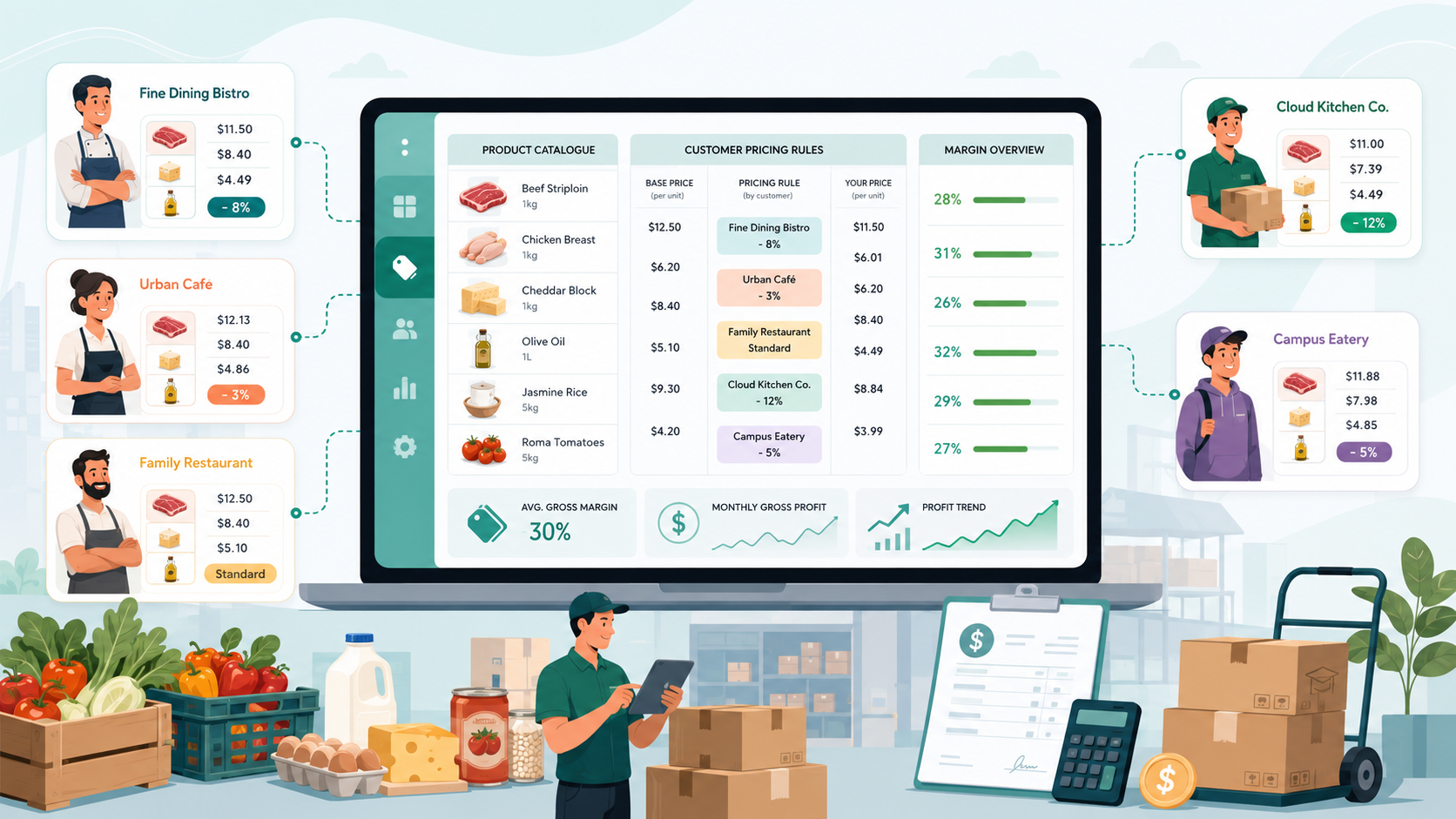
Customer-specific pricing helps suppliers stay competitive without giving away unnecessary margin.
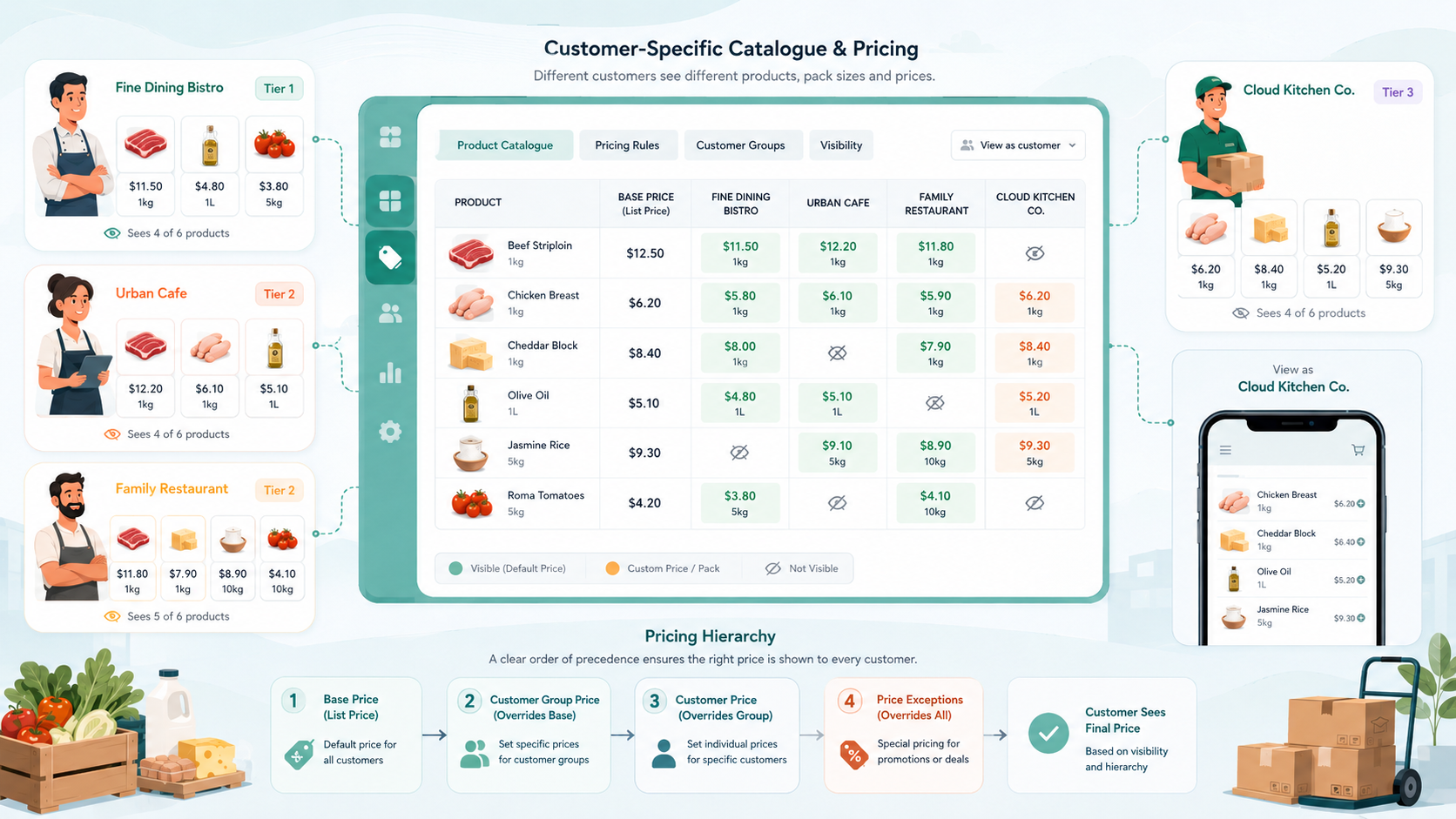
But it only works when the system is controlled. If pricing lives in spreadsheets, emails, or staff memory, the business will eventually lose money through errors, disputes, and inconsistent customer agreements.
A centralised platform like Open Pantry gives suppliers a more reliable way to manage customer-specific pricing, product visibility, ordering, fulfilment, and invoicing in one connected workflow.
Why Pricing Matters More in Wholesale Supply?
In wholesale food supply, profit is often won or lost in small pricing details.
A $1 error on one product may not seem serious. But when that same product is ordered by dozens of customers every week, the loss compounds quickly. Add seasonal cost changes, negotiated deals, pack-size differences, and freight rules, and pricing becomes one of the most important parts of the business.
Common challenges include:
- Frequent cost changes from producers
- Weekly price fluctuations in meat, seafood, dairy, and produce
- Negotiated pricing for high-volume customers
- Franchise groups with multi-location agreements
- Contract pricing tied to volume or loyalty
- Special pricing for premium customers
- Seasonal availability affecting cost and margin
- Staff relying on old price lists or manual overrides
Without a controlled pricing system, prices drift. Once prices drift, margins become unreliable.
The Hidden Cost of Spreadsheets for Wholesale Suppliers
Why Customer-specific Pricing is Essential?
Customer-specific pricing allows suppliers to match pricing to the commercial relationship. Not every customer should receive the same price, because not every customer has the same order volume, delivery cost, loyalty, or negotiated agreement.
Used properly, customer-specific pricing helps suppliers:
➤ Reward High-volume Customers
Larger venues or groups can receive better pricing based on consistent weekly spend.
➤ Protect Margins
Smaller or lower-frequency customers can remain on standard pricing that reflects the true cost to serve them.
➤ Honour Negotiated Contracts
Customer-specific rules ensure each venue receives the pricing that was agreed, without relying on staff to remember every deal.
➤ Manage Franchise and Multi-venue Groups
Different stores may need different prices depending on location, order volume, delivery cost, or group agreement.
➤ Trial New Products or Bundles
Suppliers can offer selected customers introductory pricing or promotional bundles without discounting the entire customer base.
➤ Stay Competitive Without Broad Discounting
A supplier can win or retain a price-sensitive customer without lowering prices for everyone else.
Done well, customer-specific pricing becomes a strategic asset. Done poorly, it becomes a source of margin leakage.
The Real Cost of Manual Order Entry for Foodservice Suppliers
The Essential Components of a Modern Pricing System
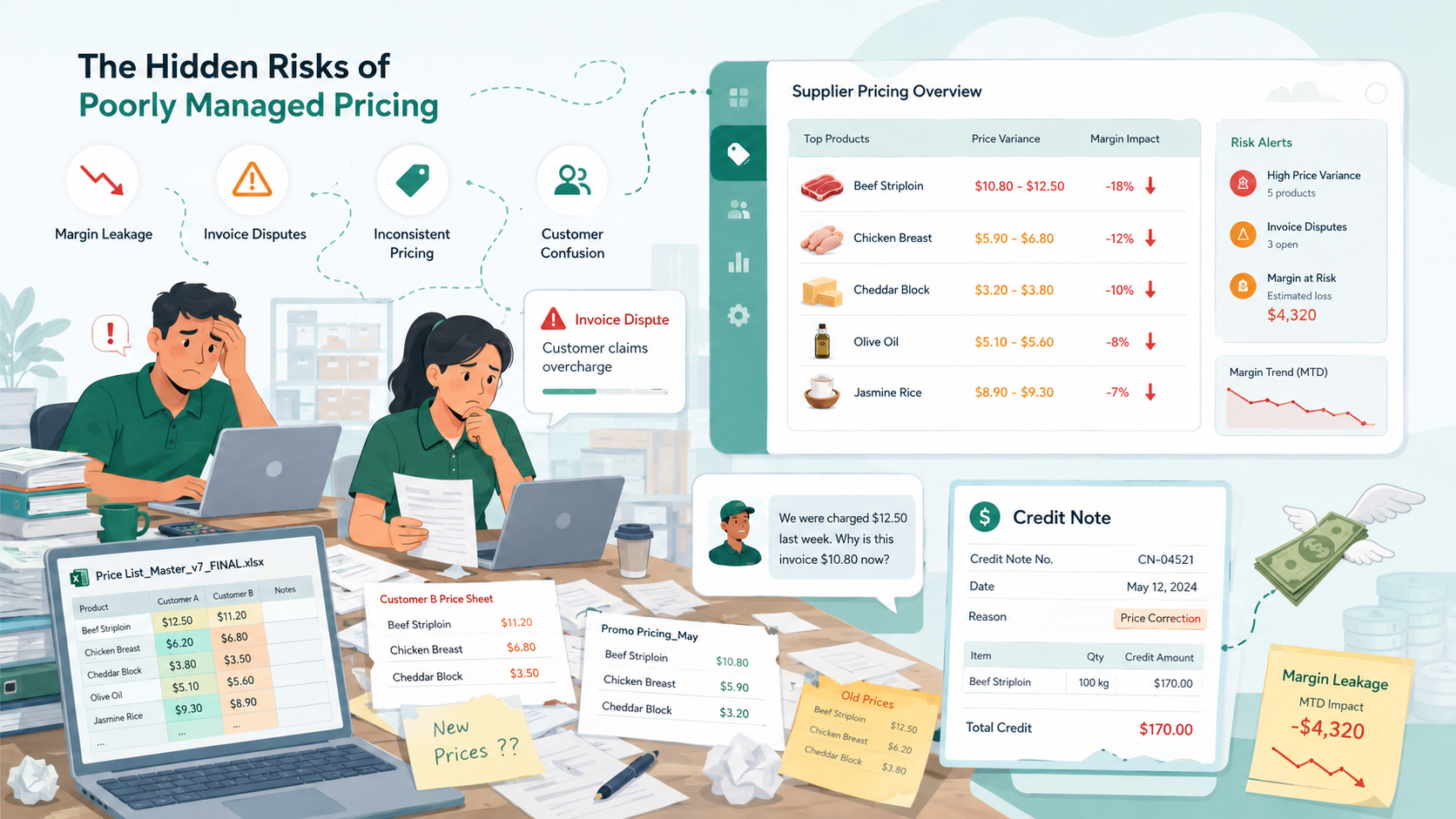
A modern pricing system needs to do more than store prices. It needs to connect pricing to the full ordering workflow.
1. Customer-specific Catalogue Visibility
Not every customer should see every product.
Some products may only be available to certain venues, regions, franchise groups, or premium customers. A digital catalogue allows suppliers to control:
- Which products each customer can see
- Which products each customer can order
- What price applies
- Which pack sizes are available
- Which products are hidden or visible only to selected customers
This prevents confusion and reduces incorrect orders.
2. Pricing Tiers and Exceptions
A good pricing system should support:
- Base prices
- Customer-specific prices
- Tiered pricing by customer group
- Temporary or promotional pricing
- Group-level pricing for franchises
- Individual product-level overrides
- Margin-based pricing
- Fixed-price exceptions
This allows suppliers to manage both simple and complex customer agreements without creating a messy spreadsheet for every account.
3. Automated Price Syncing
Once a price changes, it should update everywhere it is needed:
- Customer ordering portal
- Product catalogue
- Pick lists
- Invoices
- Customer order history
- Sales reporting
- Accounting integrations
This reduces the mismatch between what the customer saw, what the warehouse picked, and what accounts invoiced.
4. Clean Order Data
Pricing accuracy depends on clean product and order data. Product names, pack sizes, units of measure, customer pricing, and delivery notes must be consistent before the order reaches the warehouse.
This is also why digital picking matters. As explained in How Wholesale Food Suppliers Can Transition From Paper Pick Slips to Digital Picking, clean structured orders help pickers move faster and with more confidence.
5. Contract and Agreement Tracking
Suppliers often lose money because contract terms are not stored clearly.
A better pricing process should record:
- Contract pricing
- Volume commitments
- Expiry dates
- Renewal reminders
- Customer-specific terms
- Approved exceptions
This protects the business from accidental discounts that continue long after they should have ended.
6. Reporting and Margin Analysis
Pricing should not be guesswork. Suppliers need reporting that shows:
- Low-margin customers
- High-margin customers
- Product-level profitability
- Weekly margin changes
- Products sold below target margin
- Customers receiving unintentional discounts
- Pricing exceptions that need review
The goal is to make pricing visible, measurable, and easy to manage.
How Customer-specific Pricing Increases Profitability
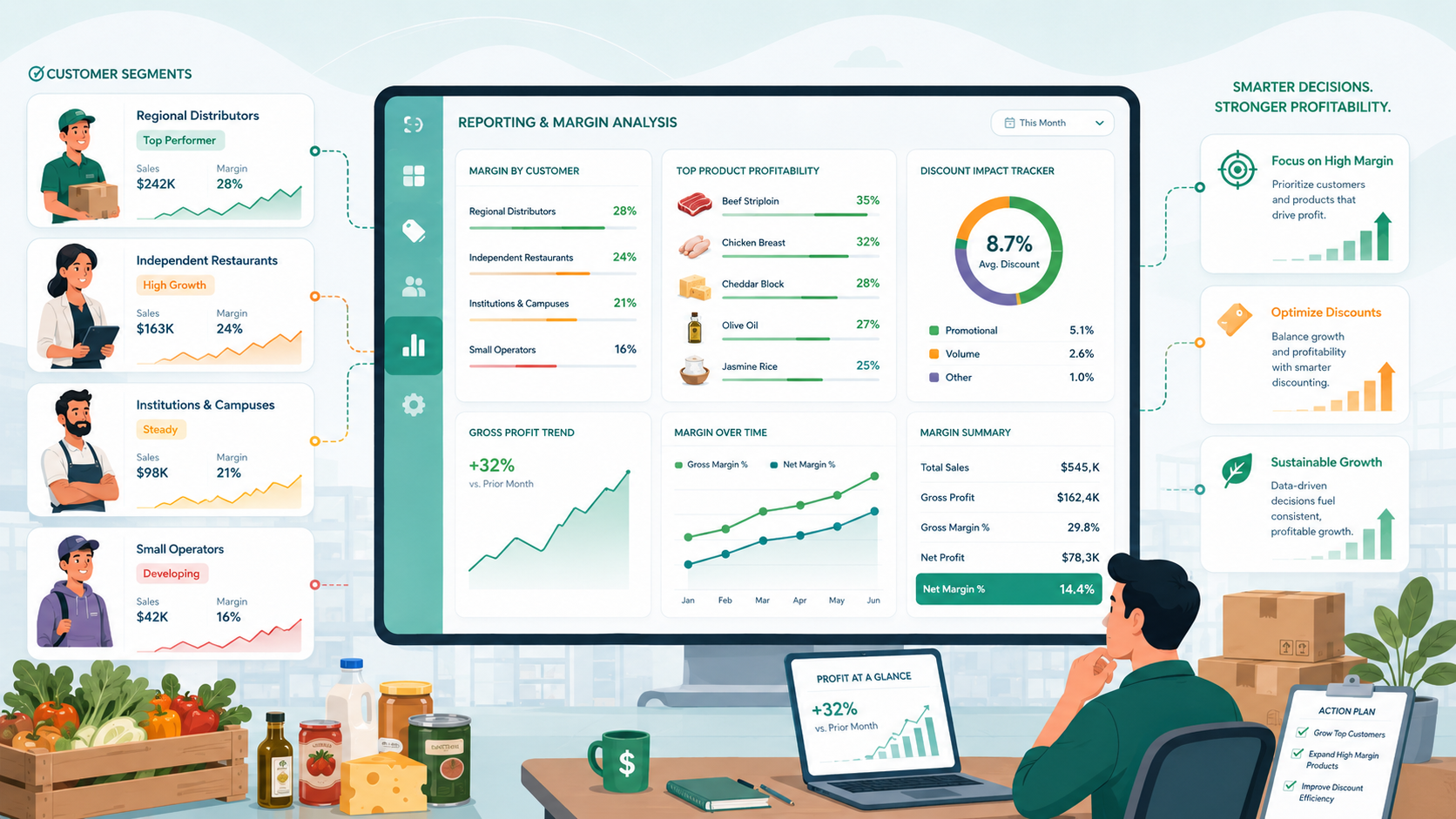
When customer-specific pricing is controlled properly, suppliers usually see improvements across the business.
➤ Higher Margin Retention
Accidental undercharging is reduced because each customer sees the correct price from the start.
➤ Fewer Invoice Disputes
Customers are less likely to challenge invoices when the ordering price, delivered product, and invoice all match.
➤ Stronger Customer Relationships
Chefs appreciate clear, consistent pricing. It gives them confidence when ordering and reduces frustrating follow-up.
➤ Faster Onboarding
New customers can be assigned the right price list from day one, rather than waiting for manual setup across multiple systems.
➤ Greater Operational Efficiency
Sales, admin, warehouse, and accounts teams all work from the same pricing data.
➤ Better Scalability
As the customer base grows, pricing rules apply automatically. The business does not need to rely on more manual checks every time a new account is added.
Implementing a Purchase Order System: A Step-by-Step Guide
Customer-specific pricing helps suppliers stay competitive without giving away unnecessary margin. When pricing is accurate, centralised, and automated, sales teams can negotiate with confidence, admin teams spend less time correcting invoices, warehouse teams work from cleaner order data, and customers trust the supplier more.
But it only works when pricing is controlled. If prices live in spreadsheets, emails, or staff memory, the business will eventually lose money through errors, disputes, and inconsistent customer agreements.
A centralised platform like Open Pantry gives suppliers a more reliable way to manage customer-specific pricing, product visibility, ordering, fulfilment, and invoicing in one connected workflow.
Take control of customer-specific pricing with Open Pantry and protect your margins from order to invoice.