


AI Order Entry vs EDI for Food Wholesalers: Which Do You Need (and Why Most Need Both)
If you supply a major supermarket, a hospital group or a national contract caterer, you already know what EDI is, because they made you implement it. If most of your book is independent restaurants, cafés and pubs, you have probably heard EDI mentioned as the "proper" way to trade electronically and wondered whether you are behind.
You are not. EDI and AI order entry solve two different problems, and most food wholesalers past a certain size end up needing both — EDI for the handful of large, structured trading partners who demand it, and AI order entry for the long tail of venues who will never send a structured message in their lives.
This article explains what each one actually is, where each fits, what each costs you in effort, and how they coexist in one order-to-invoice workflow.
What EDI is
Electronic Data Interchange is a set of standards for exchanging business documents between computer systems without human involvement. GS1 describes it as allowing "computer applications to exchange business data without the need for human intervention", and maintains two standard sets used in Australia — GS1 EANCOM and GS1 XML.
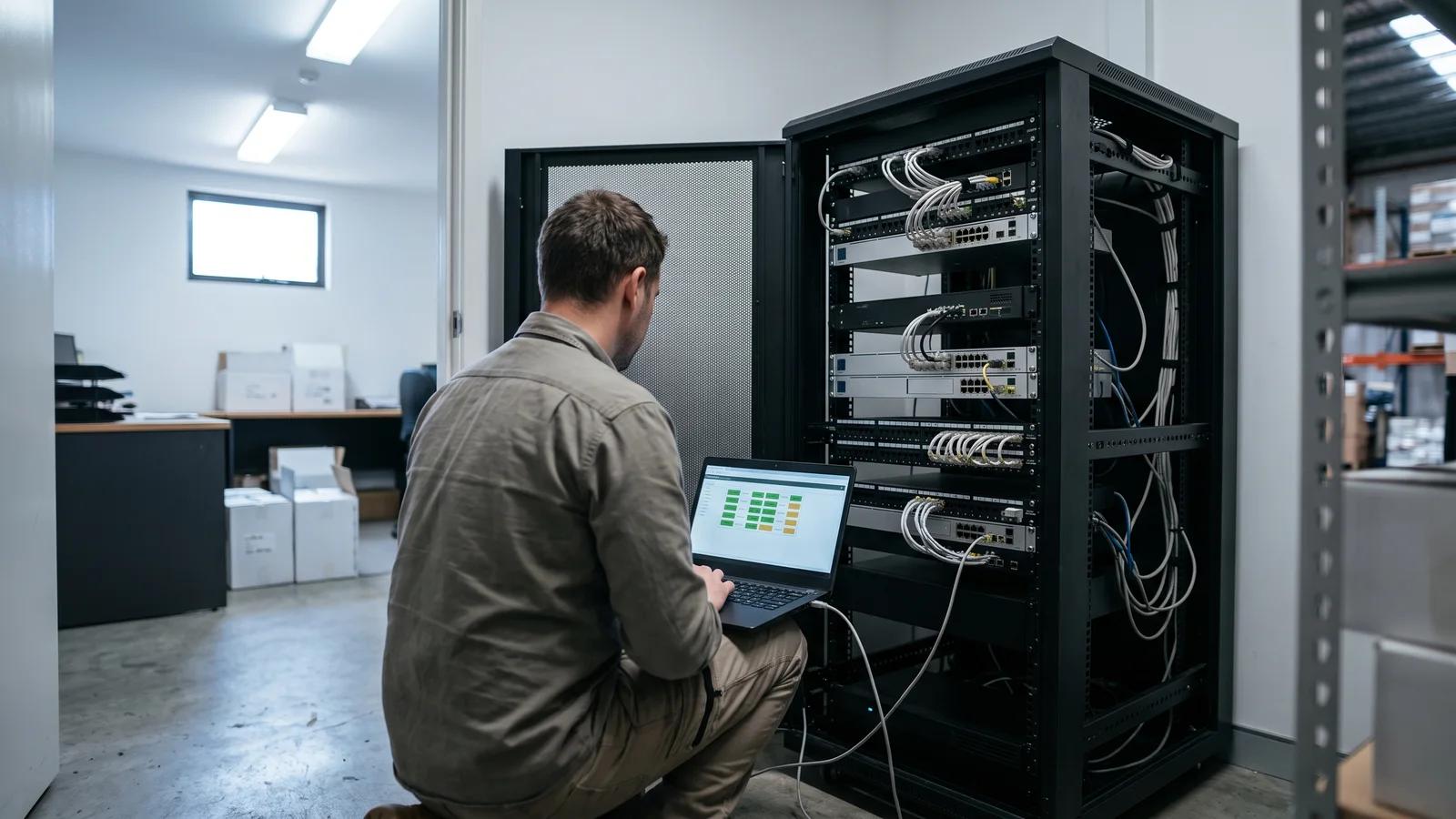
In practice, EDI means your customer’s system sends a purchase order message in an agreed format to an agreed endpoint, your system reads it and creates the order, and you send structured messages back: a despatch advice when the truck leaves, an invoice when it is delivered. Order, invoice and despatch advice are the three most-used message types worldwide.
The defining characteristic of EDI is that both sides agreed on the format in advance. Nothing is being interpreted. A field either contains a valid product identifier or the message is rejected.
What AI order entry is
AI order entry does the opposite job. It takes a message that nobody agreed on the format of — an email, a text, a WhatsApp message, a PDF purchase order — and works out what order the human meant. It resolves the sender to a customer, matches shorthand like "2 bx brocc" to real SKUs, converts pack and unit references, applies that customer’s price list, and produces a draft order for a person to approve.
Where EDI’s strength is certainty, AI order entry’s strength is coverage. It works with customers who have no procurement system, no product codes for your range, and no intention of changing how they order.
Where each one fits
EDI fits structured, high-volume, contractual trading
EDI earns its cost when four things are true:
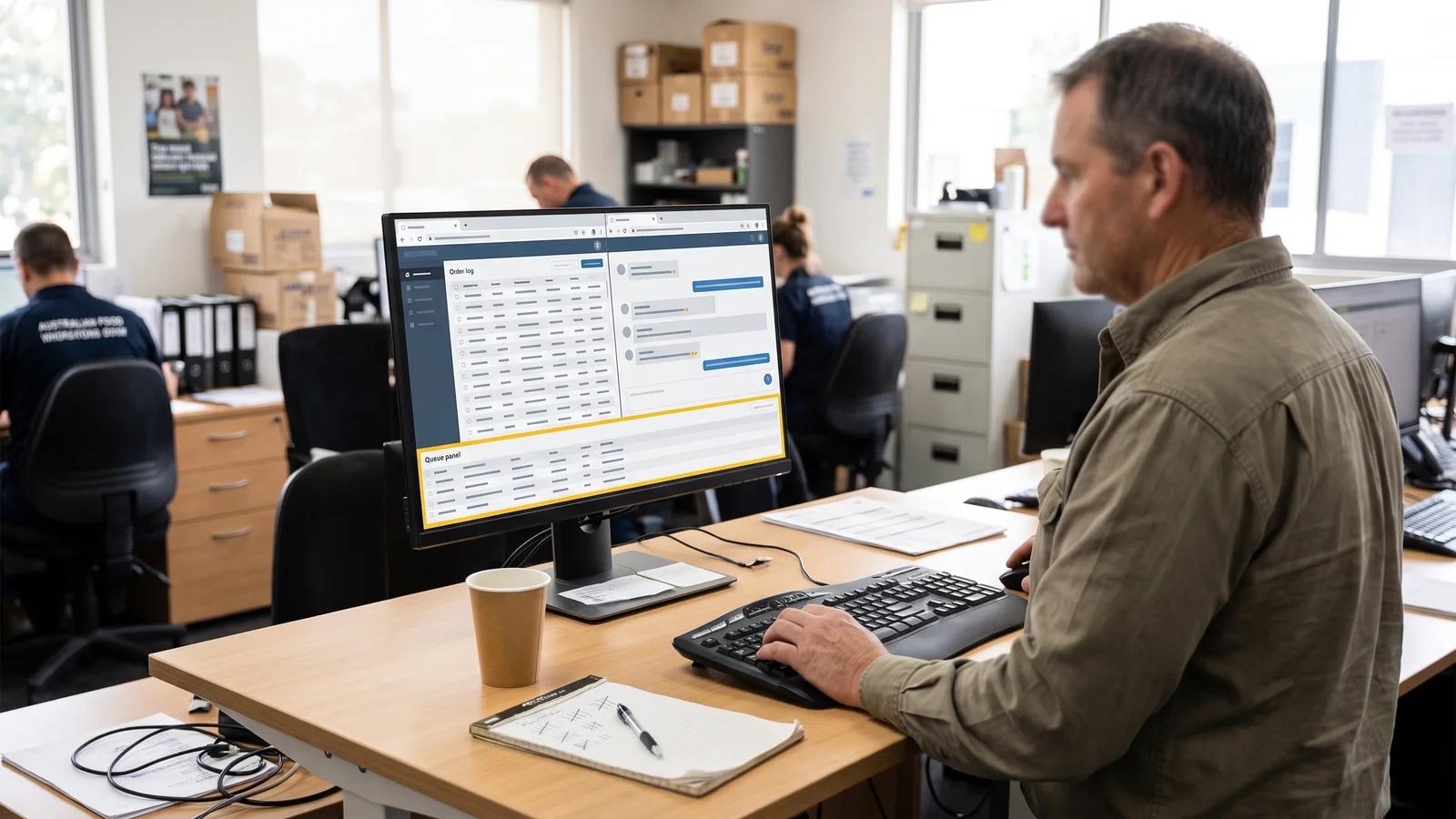
- The customer is large, orders frequently, and has an ERP or procurement system.
- The commercial relationship justifies a setup project on both sides.
- Product identification is standardised — usually GTINs, sometimes the customer’s own codes mapped to yours.
- The trading partner requires it. In grocery and institutional supply, this is often not optional.
The payoff is that a mature EDI connection is close to zero-touch. Orders arrive already structured, matched and priced against the agreed contract. Nobody reads them.
AI order entry fits the messy long tail
AI order entry earns its cost when the opposite is true:
- Many small-to-mid customers, each ordering in their own way.
- Orders arrive in free text across several channels, often outside business hours.
- Products are described in kitchen language rather than by code.
- Order volume per customer is too small to justify any integration project.
For most Australian food wholesalers this is not the minority of the book — it is the majority of the orders, even where the majors are the majority of the revenue. A supplier with 400 venues and six EDI partners may be doing 90% of their transactions by hand.
The honest comparison
Setup effort. EDI is a project: format agreement, mapping, a VAN or AS2 connection or a broker, testing cycles with the customer’s IT team, and a change process every time either side alters a field. AI order entry is a configuration: connect the mailbox or number, load or confirm your catalogue, and correct the first few weeks of matches.
Cost shape. EDI cost is mostly upfront and per-connection, with ongoing transaction or broker fees. AI order entry cost is mostly ongoing and volume-based, with almost no per-customer setup — which is precisely why it scales across a long tail that EDI cannot economically reach.
Failure mode. This is the difference that matters operationally. EDI fails loudly: a malformed message is rejected and someone gets an error. AI order entry can fail quietly, by matching a line to the wrong product with apparent confidence. That is why a human review step is not a training-wheels feature to be switched off later — it is the control that makes the approach safe.
Who has to change. EDI requires the customer to have, and configure, a system. AI order entry requires nothing from the customer at all. For a chef who orders at 5:40am on a phone with one hand, that is the whole argument.
Coverage. EDI covers the partners you have connected. AI order entry covers whatever arrives.
Why most suppliers need both
The two approaches do not compete for the same orders, and running both is not duplication. A realistic setup for a mid-sized wholesaler looks like this:
- EDI for the three to ten large accounts that require it, carrying a large share of volume with almost no manual handling.
- A branded ordering app or web store for customers willing to self-serve — the cheapest and most accurate channel of all, because the customer does the data entry and sees live stock, their own prices and the cut-off.
- AI order entry underneath everything else, catching the emails, texts and messages from customers who will not move, and from customers who normally use the app but sent a text this once because they were in a delivery bay.
The last point is the one suppliers underestimate. Even a well-adopted ordering app does not get you to 100%. There is always a residue of exception orders, and if that residue is handled by a person retyping, then the exceptions carry all the error risk.
Making them coexist
The requirement is simple to state and worth being firm about: every channel must land in one order queue.
Whether an order arrived as an EANCOM message, an app basket or a text, it should become the same order object — same cut-off rules, same picking wave, same stock allocation, same delivery run, same invoice, same accounting sync. If EDI orders live in one system and everything else in another, you will reconcile two sets of numbers forever, and your stock availability will be wrong in both.
Two practical consequences follow. First, keep one catalogue as the source of truth, with EDI identifiers mapped onto it rather than maintained separately. Second, keep one pricing engine: contract pricing for EDI partners and customer price lists for everyone else should be the same mechanism with different values, not two mechanisms.
A worked example
Take a produce wholesaler in Sydney with 320 active customers. Four of them are group accounts — a hospital contract, two hotel groups and a national café franchise — and together they are roughly 45% of revenue. The other 316 are independent venues.
In a normal week, the four EDI partners send about 60 purchase orders between them, all structured, all arriving overnight into the order queue with nobody reading a single one. The other 316 customers send about 900 orders, of which perhaps 500 come through the branded ordering app, 280 by email and 120 by text or WhatsApp. That leaves 400 orders a week — around 80 a morning — that a person has to read and retype.
Adding a fifth EDI partner reduces that 400 by nothing. Turning on AI order entry addresses all 400 at once, and does it without asking a single customer to change anything. That is the whole case, and it is why the sequencing question usually answers itself.
What EDI does not solve
It is worth being clear about the limits, because EDI is sometimes sold as the destination rather than one channel.
EDI does not improve order accuracy for customers who are not on it — which, for most food wholesalers, is nearly all of them. It does not shorten your morning. It does not help with substitutions or short picks, because those happen after the order and are handled in your fulfilment process, not the message standard. It does not handle catch-weight pricing by itself; that depends on how your invoicing works. And it does not make a customer order earlier — cut-off discipline is a commercial and system question either way.
Nor does EDI remove the need for exception handling. A rejected message still has to be chased, usually by phone, usually at the worst possible time of day. The difference is that the exception is visible.
Which should you do first?
If a major customer is asking for EDI and it is a condition of trade, that decision is made for you.
Otherwise, start where the manual hours are. Count the orders that a human currently retypes in a normal week. If that number is large and spread across dozens of customers, AI order entry will return more, faster, than an EDI project for a partner who is not asking for one — and it needs no cooperation from anybody outside your business.
How Open Pantry helps you handle both structured and messy orders
Open Pantry is built so that every channel produces the same order. AI Order Capture converts customer emails, SMS and WhatsApp messages into digital orders against your catalogue and that customer’s price list, with a review step before anything is accepted. Customers who prefer to self-serve order through your own branded ordering app and store, and larger accounts can be connected through ERP integrations on the Enterprise plan. Whatever the channel, orders join one queue, one set of cut-off rules and one digital pick and pack flow, then invoice and sync two-way with Xero, MYOB and QuickBooks. For the groundwork, our guide to wholesale order management for foodservice suppliers covers getting one queue in place first.
Frequently Asked Questions
Sources
Related articles
 Wholesale Order Management for Foodservice SuppliersLearn how wholesale order management helps foodservice suppliers reduce errors, speed fulfilment, and scale operations with digital systems.Read the article →
 The Benefits of Integrated Order Management for Suppliers and RestaurantsDiscover the transformative benefits of Integrated Order Management Systems for suppliers and restaurants. Streamline operations, enhance communication, and boost profitability with real-time insights and automation. Learn how to reduce costs, optimise inventory, and improve customer satisfaction with tools like Open Pantry’s IOMS. Stay competitive in the dynamic food industry—explore our comprehensive guide now.Read the article →
 Why Food Suppliers Are Switching to Digital Order ManagementDiscover how digital order management helps food suppliers streamline operations, reduce costs, and enhance customer experience.Read the article →