

How To Transition A Warehouse From Paper Pick Slips To Digital Picking

For many wholesale food suppliers, paper pick slips have been the backbone of warehouse operations for decades. They are familiar, simple, and inexpensive. But in 2026, paper-based warehouse processes are no longer enough to support speed, accuracy, scalability, or customer expectations. More food wholesalers, distributors, and supplier warehouses are now moving to digital picking systems to reduce picking errors, improve order fulfilment, speed up warehouse workflows, and create more efficient delivery operations.
This article explains how to successfully transition from paper pick slips to digital picking, what challenges to expect, how to train your warehouse team, and why digital warehouse management creates a more reliable, profitable, and scalable operation.
Why Paper Pick Slips Create Warehouse Problems?
Paper works until order volume grows. Then the cracks start to show.
Here are some of the biggest problems with paper-based picking systems:
- Orders are static - If a restaurant changes an order after the pick slips are printed, the warehouse team may never see the update.
- Handwriting and unclear notes cause mistakes - Substitutions, shortages, notes, and special instructions can be hard to read or easy to miss.
- Frequent reprinting wastes time - Every time an order changes, staff may need to reprint paperwork, which creates delays and confusion.
- Hard to prioritise and organise - Paper pick slips do not automatically group products by warehouse zone, delivery run, product category, or customer.
- No real-time warehouse visibility - Admin teams, customer service staff, and drivers often do not know what has been picked until the paperwork comes back.
- Lost or damaged slips - Paper can be misplaced, torn, wet, damaged, or thrown away during busy warehouse periods.
- Slower invoicing and reporting - Invoices often cannot be finalised until paper records are manually checked and entered into the system.
These warehouse inefficiencies cost food suppliers thousands in extra labour, picking mistakes, credits, customer disputes, and delayed fulfilment.
The Real Cost of Manual Order Entry for Foodservice Suppliers
Why Suppliers Are Moving To Digital Picking Systems?
Digital picking solves the weaknesses of paper without making warehouse operations more complicated.
A modern digital warehouse picking system allows suppliers to:
- Update orders in real time
- Automatically organise pick lists
- Record substitutions and shortages
- Sync orders with delivery runs
- Improve warehouse accuracy
- Reduce manual admin
- Connect picking with invoicing
- Create full audit trails for every order
Moving from paper to digital pick lists gives suppliers better operational control, more accurate fulfilment, and faster warehouse execution.
Wholesale Order Management for Foodservice Suppliers
Step 1: Start With Your Warehouse Workflow, Not The Software
One common mistake suppliers make is focusing on software before mapping the actual warehouse process.
Before implementing a digital picking solution, review how your warehouse currently operates:
- Where do orders come from?
- How are pick slips distributed?
- How do pickers move through the warehouse?
- Which areas experience the most congestion?
- Which products or categories create the most confusion?
- When do last-minute order changes usually happen?
By mapping your current workflow first, you can preserve what works, remove bottlenecks, and configure your digital picking process around the reality of your warehouse.
Step 2: Clean Up Your Order Data
A digital picking system is only as good as the data feeding into it.
To make warehouse digitisation work properly, you need:
- Accurate product names
- Correct pack sizes
- Standardised units of measure
- Customer-specific pricing where required
- Delivery instructions
- Clear special notes
- Consistent product categorisation
When order data is structured correctly, pickers can move faster, substitutions are easier to manage, and fulfilment becomes far more reliable.
Step 3: Train Your Warehouse Team On The Basics
The good news is that digital warehouse picking is usually easier to adopt than many suppliers expect.
Even team members with limited technology experience can adapt quickly when training is simple and practical.
Focus early training on:
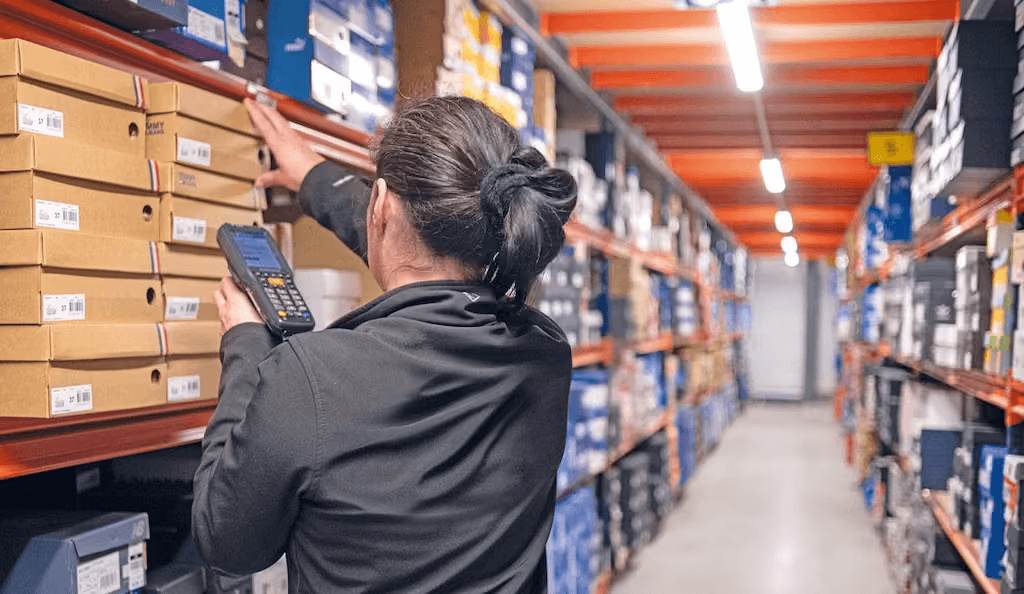
- How to open and read digital pick lists
- How to mark items as picked
- How to record substitutions
- How to flag out-of-stock items or shortages
- How to complete an order
- How to view delivery run information
Keep training short, hands-on, and tied to real warehouse tasks. A simple practical rollout usually works better than overexplaining the software.
Step 4: Run Paper and Digital Systems Together for 1–2 Weeks
A short hybrid transition period reduces risk and builds confidence.
During this phase:
- Use digital picking as the main workflow
- Keep paper as a backup
- Compare both systems daily
- Fix data issues quickly
- Collect picker feedback
- Identify any recurring friction points
Most suppliers find that warehouse staff prefer digital picking faster than expected, especially once they see fewer reprints, fewer mistakes, and clearer pick instructions.

Step 5: Move To Zone-based or Run-based Picking
Once the team is comfortable with the basics, you can improve warehouse efficiency even further by organising pick lists more intelligently.
A good digital pick and pack system can group orders by:
- Warehouse zone
- Delivery run
- Customer
- Product category
- Route or driver
This reduces unnecessary walking, improves picker productivity, and shortens fulfilment times across the warehouse.
How Centralised Orders Improve Warehouse Efficiency Fast
Step 6: Connect Picking With Delivery and Invoicing
One of the biggest advantages of digital picking is that it connects the full order workflow.
When warehouse staff complete picking in a digital system:
- Drivers can access the correct delivery information
- Admin teams can see final picked quantities immediately
- Invoices can be generated faster
- Credit notes are reduced
- Stock records are more accurate
- Reports become more reliable
Paper pick slips create gaps between warehouse operations, delivery, and accounts. Digital systems close those gaps.
How Open Pantry Helps Suppliers Modernise Warehouse Picking
Open Pantry helps suppliers move beyond paper-based warehouse processes by giving them a more connected digital workflow across ordering, picking, delivery, and invoicing. Instead of relying on static pick slips and manual updates, suppliers can manage cleaner digital orders, improve picking accuracy, track substitutions and shortages, streamline delivery runs, and reduce admin across the fulfilment process. For suppliers looking to scale, Open Pantry also helps create more consistency across teams, improve customer service, and build a more efficient wholesale ordering operation from the warehouse floor through to final invoice.
Step 7: Use Real-time Warehouse Data To Improve Performance
Paper gives you very little visibility. Digital picking gives you operational data you can actually use.
Useful warehouse metrics include:
- Most frequently substituted products
- Repeated shortages
- Products with the highest picking error rates
- Pick times by zone
- Staff productivity trends
- Orders with recurring issues
- Delivery run bottlenecks
This data helps suppliers improve warehouse layout, purchasing decisions, replenishment planning, and overall operational performance.
Best Inventory Management Systems for Wholesale Food Suppliers
Step 8: Remove Paper Completely, But Support The Change
Once your warehouse is operating reliably with digital pick lists, you can phase paper out fully.
To make that shift successful:
- Provide simple support resources
- Have someone available to troubleshoot during the first few days
- Review errors immediately
- Keep training practical and ongoing
- Reinforce the new process daily
Within a short period, most supplier warehouses find that digital picking becomes the faster, cleaner, and more dependable way to work.
What Results Suppliers Typically See After Switching To Digital Picking
Suppliers that move from paper to digital warehouse picking systems commonly report:
- Fewer mispicks
- Lower fulfilment error rates
- Faster picking times
- Fewer customer disputes
- More accurate invoicing
- Reduced admin workload
- Better delivery coordination
- Improved warehouse visibility
- Smoother morning operations
- Lower labour costs over time
- Better customer satisfaction and retention
The gains are usually measurable very quickly.
Digital Picking is More Than a Tech Upgrade
Moving from paper pick slips to digital picking is not just a software change. It is an operational upgrade.
Paper-based systems make it harder to scale, harder to stay accurate, and harder to respond to customer changes. A digital picking system for food suppliers gives your warehouse real-time visibility, better accuracy, faster fulfilment, and stronger control across the full order process.
For wholesale food suppliers, distributors, and warehouse teams, digital picking is becoming essential for improving efficiency, reducing costs, and delivering a better customer experience.
Ready to move from paper pick slips to digital picking? Book a demo with Open Pantry today and see how digital picking can help your warehouse run faster, smoother, and more profitably.