
Butcher Software: Take the Wholesale Orders Without Leaving the Bench
Open Pantry is wholesale ordering software for butchers who supply cafés, pubs and restaurants alongside the shop. Your trade customers order from your own app against your own list and their own prices, your cut-off closes the day for you, and catch-weight lines are billed at the weight you actually cut — so the wholesale round stops being something you do after closing.
- Your own ordering app and trade list — not a marketplace
- Cut-off times and delivery days that close the day for you
- Each account on its own prices, billed at the weight you cut
★★★★★ Trusted by 600+ suppliers across Australia
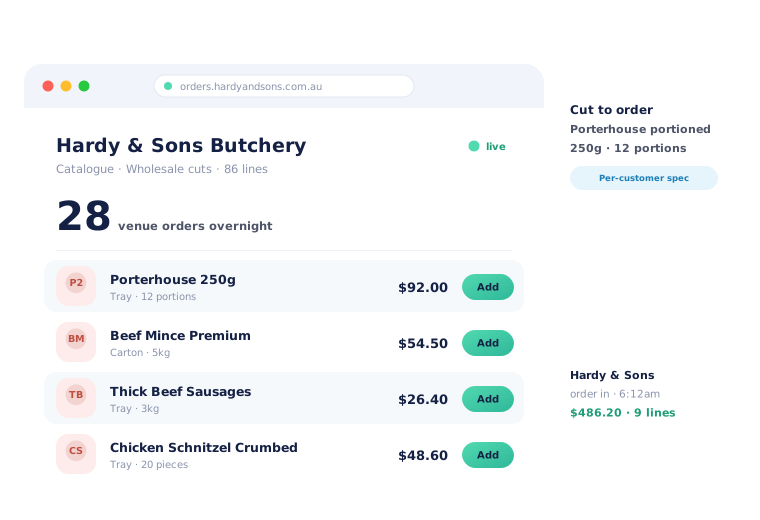



The wholesale round is being run from behind the counter

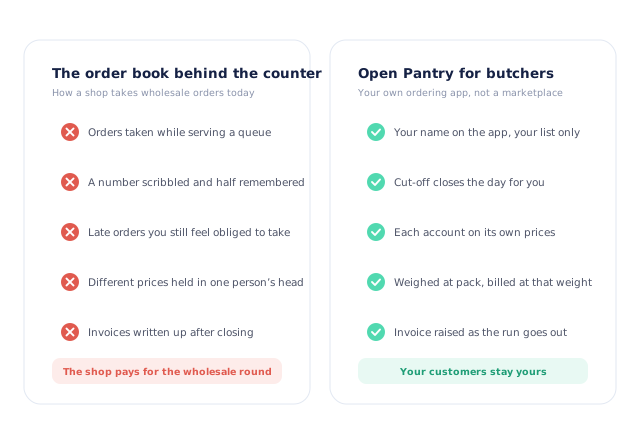
Orders taken on the phone while there is a queue in the shop

A number written in the book, half remembered by the morning

Late orders you still feel obliged to take for a truck already loaded

Four different trade prices held in one person’s head
Your Trade Customers, on Your Own App
Put your trade list online
Only what you want wholesale customers to see — trays, cartons and portioned lines, in the packs you actually supply. Your shop range stays out of it.
Set your cut-off and delivery days
Tell Open Pantry when you stop taking orders and which days you deliver. The app enforces it, including a different cut-off on a Friday if that is how you run.
Accounts order themselves
The café places its order at 9pm on your app, at its own prices and above its own minimum. You see the whole next-day job in one list instead of a book.
Cut, weigh, deliver, invoice
Weight-based lines are weighed as they are packed, and the invoice goes out from those weights as the run leaves — into Xero, MYOB or QuickBooks.
Free trial · Cancel anytime
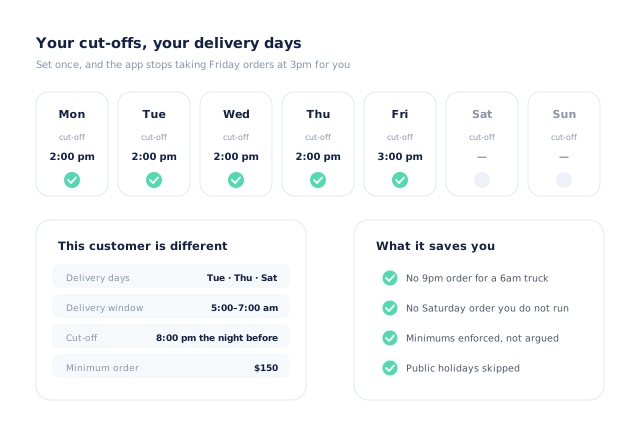
The cut-off does the saying-no for you
Nobody enjoys telling a regular that 8pm is too late for a 6am delivery. Set the cut-off once and the app does it — politely, every time, without you being the one who said it. You can run a different cut-off on each day of the week, and a customer who genuinely needs different terms can have their own.
- One cut-off per day of the week, not one for everything
- Delivery days set per customer, so nobody orders for a day you do not run
- A delivery window and a minimum order value on each account
- Public holidays skipped without anyone remembering to do it
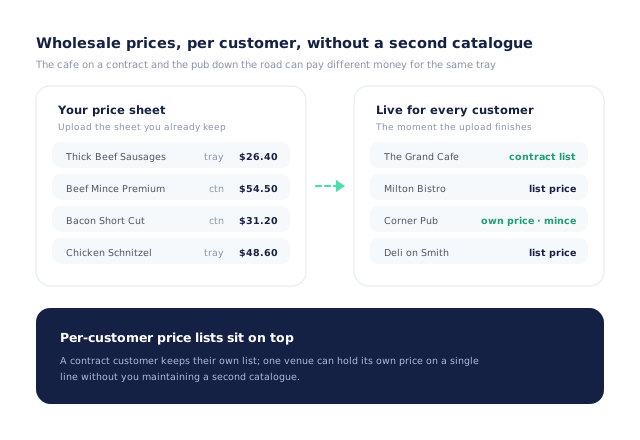
Every account on its own price, from one list
The café you have supplied for ten years and the pub that opened last month are not on the same money, and neither of them should see the other’s price. Customers sit on a shared trade list, and any account can hold its own price on any single line — without you keeping a second catalogue or remembering anything.
- A shared trade list, with per-customer lists on top
- One account can hold its own price on one product
- The right price follows into the cart, the order and the invoice
- Change a price once and it applies everywhere it should
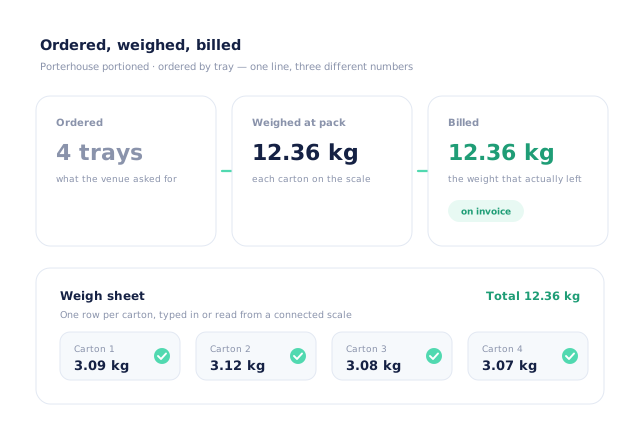
Weighed at pack, billed at that weight
Trays and portioned lines rarely weigh exactly what the order said. Flag those products as catch weight and each is weighed as it is packed — typed in, or read from a connected scale if you use one — and the invoice bills the weighed figure rather than the ordered quantity. Over or under, it is the weight that left the shop.
- One entry per tray or carton as it is packed
- The invoice bills the weighed figure, over or under the order
- Set per product, so only the weight-based lines behave this way
- No weights re-typed after closing
One product, however each account buys it
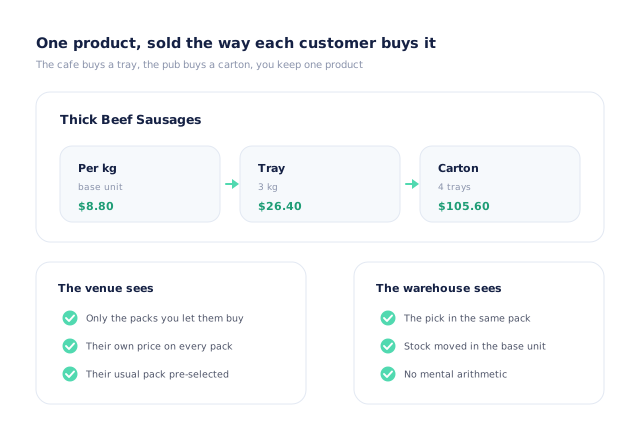
The café takes a tray, the pub takes a carton, the caterer orders by the kilo. In Open Pantry that is one product with a pack ladder, converted automatically, so your stock still moves in one unit and nobody in the coolroom is doing arithmetic to work out what a carton means.
- Base unit, tray and carton on the same product
- Automatic conversion so stock moves in your base unit
- Each account sees only the packs you have opened to them
- The pick slip shows the pack they ordered in
- More product lines purchased
- 24%
- Your always-on branded store and app put your full range in front of customers, so baskets grow.
- Less order-processing cost
- 95%
- AI order capture and auto-invoicing remove the manual keying between order and books.
- Fewer picking errors
- 80%
- Tablet pick & pack with FEFO lot and expiry tracking catches shorts and wrong items before they ship.
Real gains suppliers report after moving ordering, fulfilment and invoicing onto Open Pantry.
Sits On Top of the Accounting You Already Run

Trusted by M&J Chickens
- $175m+
- Annual turnover
M&J Chickens are a protein wholesaler with the same wholesale problem a butcher has at a different scale — trade accounts, weight-based lines and orders arriving right up to the cut-off. Their app carries their name, not ours.
“With Open Pantry, we launched our own fully branded ordering app — it’s helped us protect our customer base, move to digital ordering, and deliver a much better experience to our venues.”

A marketplace puts your customers in front of other butchers.
Listing your trade range on someone else’s platform looks like a shortcut to more wholesale work. It also means your accounts, your prices and your range sit on a site that shows them competitors, and the relationship you built over ten years becomes a search result. Open Pantry is your software, not a marketplace: your name is on the app, your list is the only list on it, and your customer list is nobody’s to sell to.
Questions Butchers Ask About Wholesale Ordering
Is this software for my shop, or for my wholesale customers?+
Do my trade customers get their own app?+
Can I stop customers ordering after a certain time?+
Can I set a minimum order for wholesale accounts?+
Can different accounts pay different prices?+
How do you handle products that vary in weight?+
Can I sell the same line by tray and by carton?+
Do I have to move all my customers across at once?+
Does it invoice, or do I still do that separately?+
How much setup is involved?+
Get the Wholesale Round Off the Counter
Join 600+ Australian suppliers running their ordering, fulfilment and invoicing on Open Pantry.
Setup done for you · Cancel anytime · Your data stays yours