

How Suppliers Can Use Data to Increase Sales Without Hiring More Reps
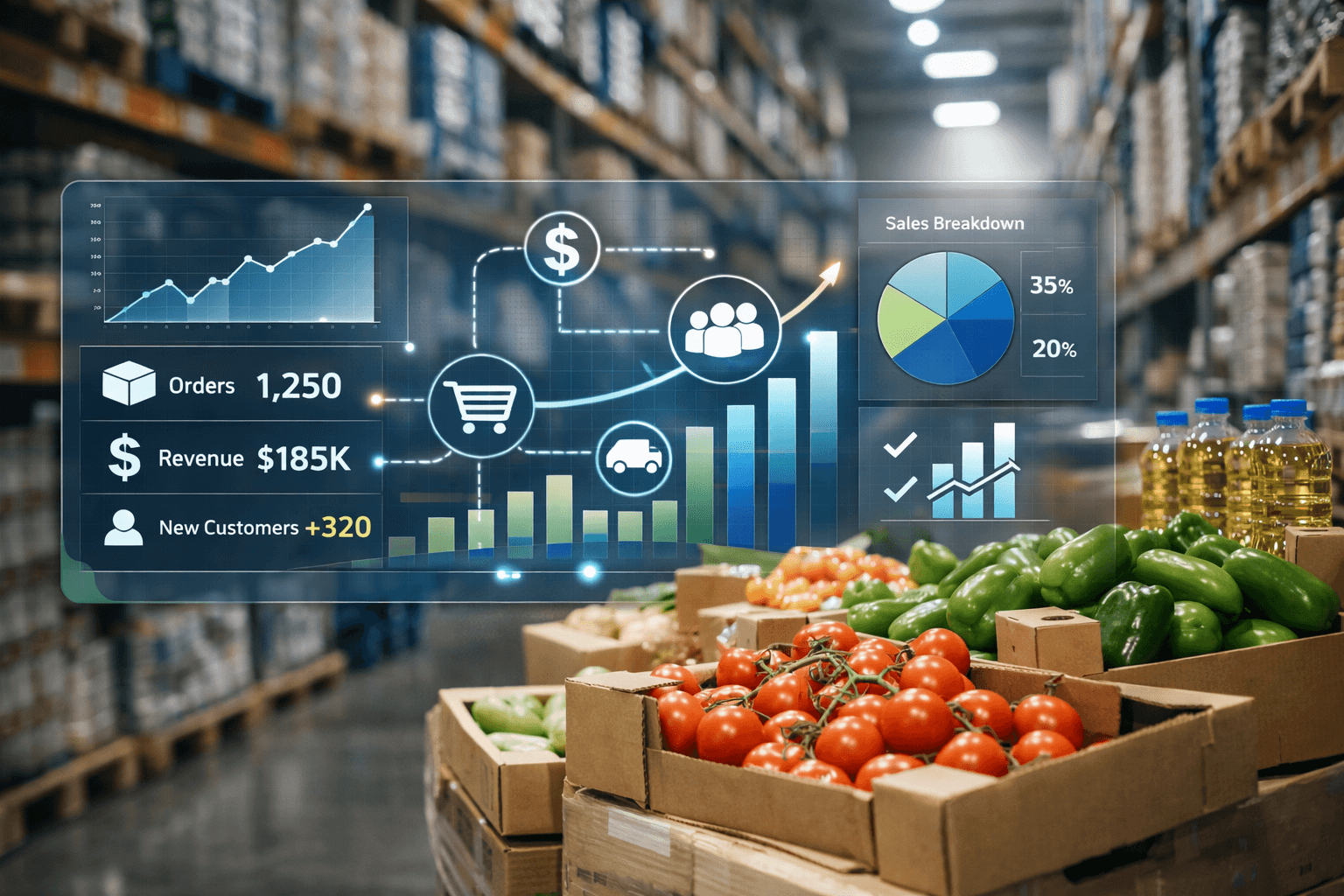
Growing sales has become harder for wholesale suppliers as margins tighten, teams stay lean, and buyer behaviour continues to shift. Hiring more sales reps is not always practical, and relying on instinct or manual follow-ups often leads to missed opportunities. The suppliers that continue to grow are not working harder; they are working smarter by using the data they already have. From customer ordering patterns to product performance and category trends, data reveals where revenue is growing, where it is at risk, and where action will have the biggest impact.
This guide shows how wholesale suppliers can turn everyday order and customer data into clear, practical actions that increase sales, protect key accounts, and drive growth without adding headcount.
Why Wholesale Suppliers Aren’t Fully Using Their Data
Most foodservice suppliers sit on a mountain of valuable information, but it’s often buried in:
- Spreadsheets
- Old accounting software
- Paper invoices
- Staff memory
- Email threads
- Delivery notes
- Separate warehouse systems
When customer information is spread across multiple places, it becomes impossible to see trends clearly. Suppliers end up making decisions based on instinct instead of evidence, which leads to missed opportunities.
Modern supplier platforms like Open Pantry solve this by bringing orders, customers, products, pricing and fulfilment data together in one system. Once that happens, patterns become much easier to spot.
How to Build a Digital Product Catalogue That Increases Buyer Spend
The 3 Data Types Suppliers Can’t Afford to Ignore
Suppliers don’t need complex analytics or dashboards filled with charts. A few simple metrics can reveal significant opportunities and risks.
1. Customer Activity Trends
Tracking order frequency, order consistency, and average order value helps identify which customers are:
- Growing
- Stable
- Declining
- At risk
This data allows suppliers to spot early warning signs (like reduced order frequency), prioritise outreach, tailor promotions, and protect key accounts before revenue is lost.
2. Product Performance
Monitoring product movement shows which items are:
- Increasing in volume
- Dropping in volume
- Seasonal
- Frequently substituted
These insights help suppliers optimise purchasing, adjust pricing, improve availability, and identify upsell or replacement opportunities when buying patterns change.
3. Category Contribution
Understanding which product categories drive the most revenue—and which are underperforming—helps suppliers:
- Allocate inventory more effectively
- Focus sales efforts on high-impact categories
- Avoid overstocking low-demand items
Aligning stock and marketing with actual buying behaviour improves margins and reduces waste.
Even basic trend tracking across these three areas can uncover opportunities worth thousands of dollars—without adding operational complexity.

How Wholesale F&B Suppliers Can Drive Business Growth with Data
How Data Can Boost Sales Without Adding More Reps
The key benefit of data is that it helps you spend time where it matters. You don’t need to cold call more prospects or visit more venues; you simply need to understand buyer behaviour and respond proactively.
Here’s how suppliers use data to grow revenue quickly.
1. Identifying At-risk Customers Early
Every supplier has experienced the frustration of suddenly losing a long-term customer. But in almost every case, there were early warning signs:
- Reduced ordering frequency
- Smaller orders
- Increased substitutions
- Fewer products purchased
- Longer time between orders
Data helps catch these signals early so you can check in with the customer before they switch suppliers.
A simple “Is everything running smoothly this week?” message can save an account worth tens of thousands annually.
Platforms like Open Pantry make this easier by showing order recency and customer activity changes at a glance.
2. Growing Revenue From Existing Customers
Your current customers are almost always your biggest growth opportunity.
Data helps identify:
- Customers who buy one category but could buy more
- Customers who order the same product every week and might accept a higher volume
- Customers who recently opened a new venue
- Customers who respond well to specials or seasonal items
By understanding buying patterns, you can recommend new products that fit their menu and boost order value.
This approach is far more effective than cold outreach and requires no additional staff.
3. Spotting Cross-sell and Upsell Opportunities
Cross-sells and upsells become obvious when viewed through data.
For example:
- Customers buying chicken breast may also need marinades, spices or packaging
- Customers ordering tomatoes frequently might need complementary vegetables
- High-volume seafood buyers may also want premium cuts for specials
- Restaurants with frequent orders may respond well to bulk discounts or multi-buy offers
By mapping product relationships, suppliers can create simple bundles or highlight relevant items through their digital catalogue.
This increases order value without any extra work for your sales team.
4. Improving Stock Planning and Reducing Waste
Data-driven inventory planning directly increases profit.
When suppliers see clear patterns, they can:
- Buy stock more accurately
- Reduce wastage
- Negotiate better volume pricing
- Avoid emergency purchases
- Keep popular items in stock
Predictable demand makes it easier to maintain margins, especially in categories with volatile pricing like meat and produce.
5. Using Automated Reporting to Save Time
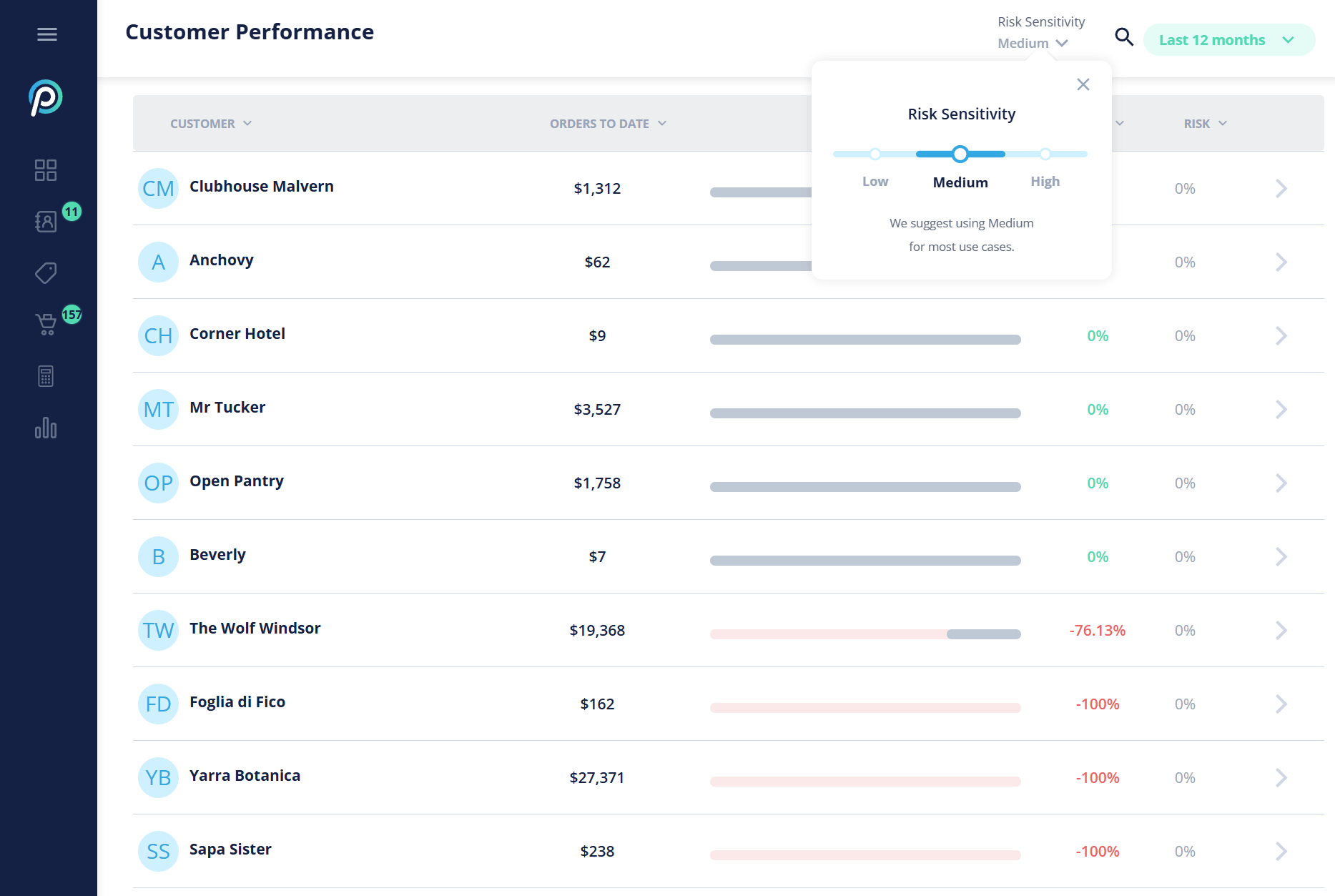
Most suppliers don’t have time to manually analyse data every week. This is where automated reporting is powerful.
A good platform can automatically generate:
- Weekly customer activity reports
- Top-selling product lists
- Declining product alerts
- Category performance breakdowns
- Order frequency summaries
This gives suppliers the insights they need without extra admin.
Open Pantry’s reporting tools provide simple weekly and monthly breakdowns designed specifically for foodservice suppliers.
Why Food Suppliers Are Switching to Digital Order Management
What a Data-Driven Supplier Workflow Really Looks Like
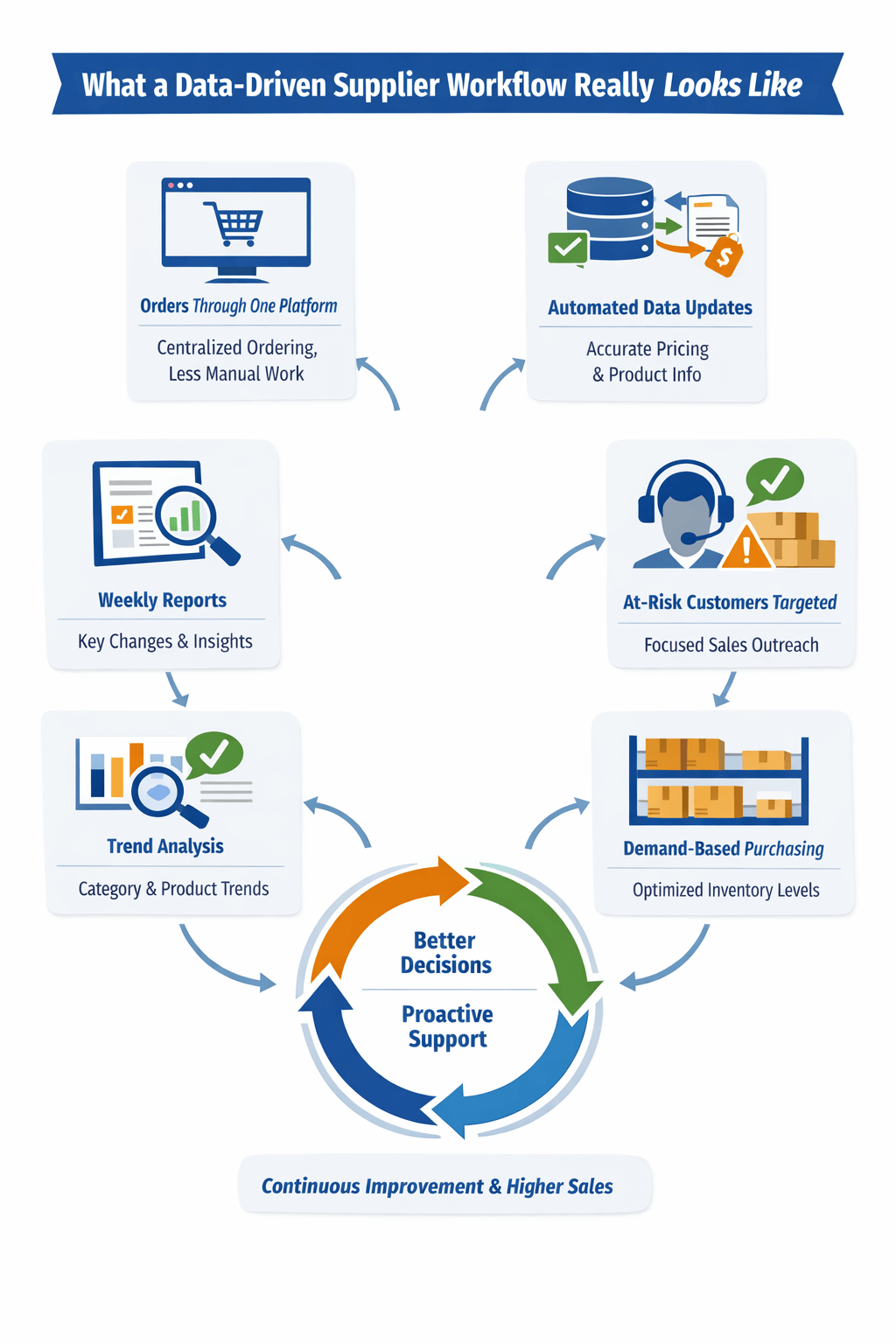
A successful workflow is simple:
⬇️ Flow Through One Digital Platform - All orders are centralised, reducing manual work, errors, and miscommunication across teams.
⬇️ Customer and Product Data Update Automatically - Pricing, order history, and product performance stay accurate without manual tracking.
⬇️ Weekly Reports Highlight Key Changes - Shifts in buying behaviour, demand, or customer activity are visible early.
⬇️ Sales Teams Prioritise at-risk Customers - Reps focus outreach where it matters most, protecting revenue and strengthening accounts.
⬇️ Managers Review Category and Product Trends - Decisions around pricing, promotions, and focus areas are driven by real data.
⬇️ Purchasing Plans Stock Around Real Demand - Inventory levels align with actual buying patterns, reducing stockouts and overstock.
⬇️ Customers Receive Proactive Support - Issues are addressed early, with 7. better recommendations and more reliable supply.
This creates a cycle of continuous improvement, stronger relationships, and higher sales—without increasing headcount.
Data is a Multiplier for Supplier Growth
Data doesn’t create growth on its own—action does. When suppliers have clean, centralised data and clear insights, teams can respond faster, serve customers better, and make smarter decisions across sales, purchasing, and operations.
You don’t need complex analytics to get there. The right platform turns everyday order and product data into practical signals you can act on immediately.
If you’re ready to streamline ordering, pricing, fulfilment, and reporting in one place, explore the Open Pantry supplier platform and see how data can work harder for your business.