Managing seasonal demand as a wholesale food supplier comes down to planning from your own historical order data rather than gut feel, then watching order velocity, stock levels and run capacity daily through the peak. Start four to six weeks out, publish cut-off changes in writing, and document what happened in the week afterwards.
Key takeaways
- Under-preparation costs reputation; over-preparation ties up capital in perishable stock that will not move.
- Your own order history from last year beats industry averages for every seasonal planning decision.
- A Thursday run at ninety per cent capacity in a normal week will overflow during a peak week.
- Start peak preparation four to six weeks out and communicate cut-off changes in writing, early.
- During peak, check stock on fast-moving lines daily and watch order velocity three days ahead.
- A two-page post-peak review becomes next year's baseline and stops you planning from scratch.
In this guide 7 sections
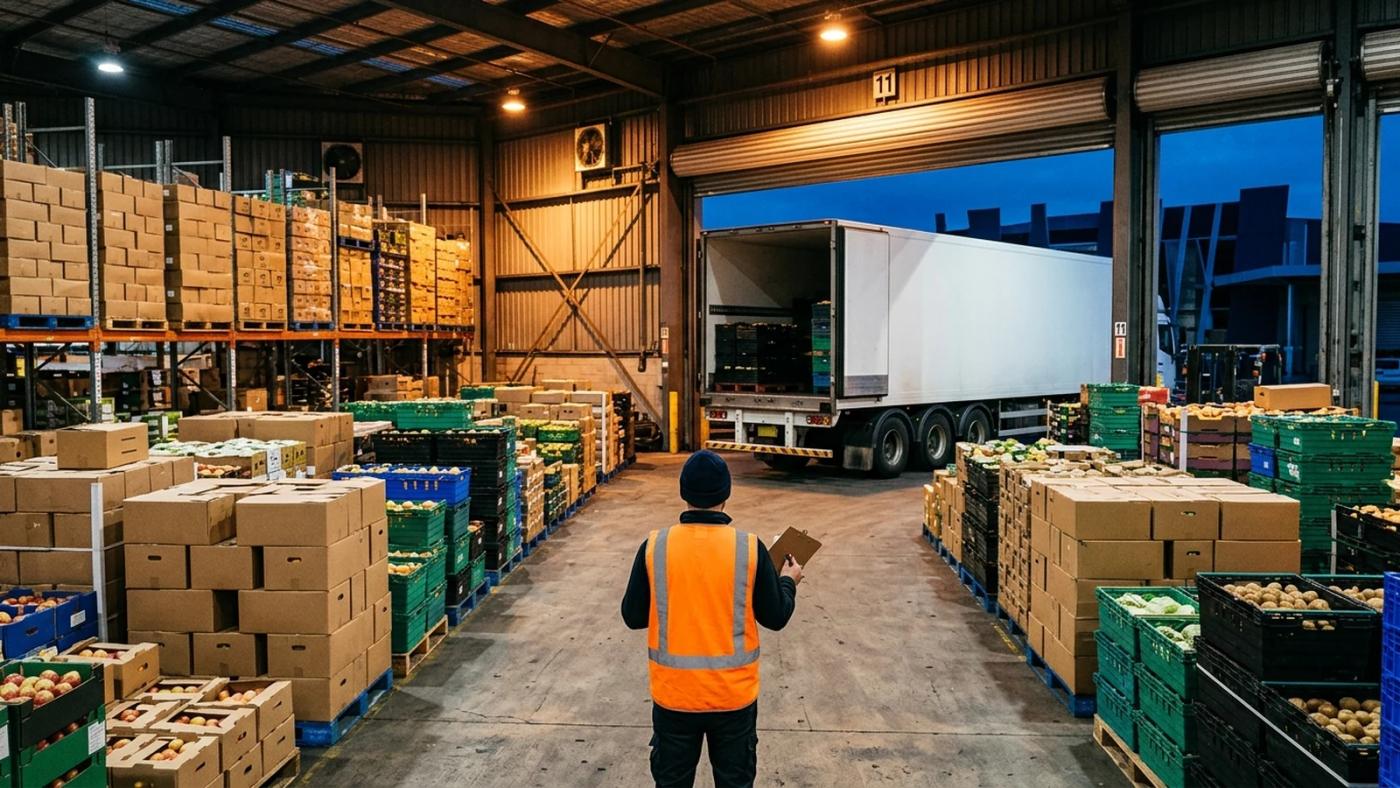
For a wholesale food supplier serving the hospitality sector, the weeks around Christmas are not just busy - they are reputation-defining. Events are booked months in advance, menus are locked in, and your customers are depending on you to deliver. The same is true for Melbourne Cup, school holidays, Easter, Mother’s Day weekend, and every other spike that your particular customer mix generates.
How you handle these peaks tells your customers a lot about whether you are a reliable supplier or a stressful one. Businesses that manage seasonal demand well tend to retain their customers through the difficult periods and grow their reputation in the process. Those that do not - that run short on stock, miss delivery windows, or simply go quiet when things get hard - tend to lose accounts they had spent years building.
This article is about the practical work of managing seasonal demand as a wholesale food supplier: what to prepare, when to do it, and how to get through peak periods without it feeling like a controlled emergency.
The Two Failure Modes
There are two ways to get seasonal demand wrong, and they pull in opposite directions.

Under-preparation is the most visible failure. You run out of a key product on the Wednesday before Christmas. Your delivery runs hit capacity and some customers get late deliveries or none at all. Your pick team is overwhelmed, errors go up, and complaints follow. This failure mode is expensive in terms of both cost and reputation - and it tends to compound, because under-resourced operations make mistakes that then require more time to clean up.
Over-preparation is less visible but also costly. You pre-order too much stock and end up with perishable product that does not move. You roster extra staff for a peak that came in lower than expected. You tie up working capital in inventory that sits in your cool room past its useable date.
The goal is not perfect prediction - that is not achievable. The goal is a planning process that gets you close enough, with enough visibility to adjust as the peak approaches.
Know Your Own Data: The Foundation of Seasonal Planning
The most important input to seasonal planning is your own historical order data - not industry averages, not what worked for a similar business, but what actually happened in your operation last year and the year before.
The questions worth asking are specific:
- Which customers go quiet in January, and by how much? Knowing this lets you adjust stock orders without carrying product for customers who are not ordering.
- Which products spike in December? Not just which products are popular, but which ones spike beyond your normal supplier lead time - the ones you need to order early.
- When do your delivery runs hit capacity? If your Thursday run is at 90 per cent capacity in a normal week, it will overflow in a peak week. You need to know this before the peak, not during it.
- Which customers reliably increase their order volume during peak periods versus those whose volume stays flat or drops? This affects both stock planning and delivery run scheduling.
- Which products were substituted or short-picked last peak? A repeat short pick on the same line two years running is a supply problem, not bad luck, and it needs a different supplier arrangement rather than a bigger order.
If you can answer these questions from data rather than gut feel, your planning will be materially better. If you cannot - because the data is buried in spreadsheets, accounting records, or your memory - that is a signal that your record-keeping needs to improve before next peak season. The case for getting off spreadsheets is set out in the hidden cost of spreadsheets for wholesale suppliers.
Pre-Season Preparation Checklist
The preparation work for a major peak should start at least four to six weeks out. Here is what that should include:

- Communicate cut-off changes to customers early: If your delivery schedule changes over Christmas - fewer delivery days, earlier cut-offs, different run structures - your customers need to know this well in advance, not the week before. Give them enough time to adjust their ordering habits. Send written communication, not just a verbal mention.
- Get early orders from your biggest accounts: Your largest customers have the most planning visibility. They know their Christmas event schedule, their expected covers, and roughly what they will need. Actively ask for early commitments from these accounts - even approximate ones. This gives you the demand signal you need to make stock ordering decisions.
- Pre-stock fast-moving items: Identify the products that are likely to be in high demand and that have reliable supplier lead times. Order ahead on these. The cost of carrying a few extra cases of a product you know you will sell is much lower than the cost of a stock-out on your busiest week.
- Roster staff for peak picking days: Work out which days are likely to have the highest pick volume and ensure you have enough people rostered. This sounds obvious, but the calculation requires knowing your likely order volume per day - which comes back to the data question above.
- Brief drivers on route changes: If your delivery schedule changes - different days, extended runs, new stops - your drivers need the updated information before peak starts. Changes communicated at 5am on Christmas week Monday do not help anyone.
- Agree your substitution rules in advance: Decide now which products may be substituted, with what, and who approves it. A substitution policy written in December is a policy nobody follows; one agreed in November is a policy your pickers and your customers can both rely on.
During Peak: What to Watch in Real Time
Even with good preparation, peaks produce surprises. The question is whether you have visibility to spot problems early enough to respond.
Order velocity is the key leading indicator. If orders are coming in significantly faster than usual in the days before a peak, your stock forecasts and run capacity plans may need adjustment. Seeing this three days out gives you options. Seeing it the morning of the delivery gives you a crisis.
Stock levels on fast-moving items should be checked daily during peak periods - not weekly. A product that was adequately stocked on Monday can be critically low by Wednesday if demand has spiked. The businesses that handle this well are the ones checking proactively, not the ones who find out when a customer calls asking where their order is.
Run capacity should be monitored as orders come in. If a run is building toward its physical limit before cut-off, you may need to add a vehicle, split a run, or reach out to customers on that run about their expected order size. Catching this before the run departs is much easier than managing it in the car park.
Short picks and substitutions are worth watching daily as well, not reviewing afterwards. A rising short-pick rate during a peak is the earliest warning that stock planning has slipped, and it is visible days before the complaints arrive.
Post-Season: Review and Document
The most valuable thing you can do in the week after a major peak is document what happened. What products ran short? Which runs were overloaded? Which customers ordered significantly more or less than expected? Where did your team feel the most pressure?
This review does not need to be extensive - even a two-page summary of what worked and what did not is enough. The goal is to give yourself better inputs for planning next year’s peak, rather than starting from scratch each time.
Businesses that build this institutional memory - that can pull up last year’s Christmas summary and use it as a baseline - consistently outperform those that treat each peak as a new event.
How Open Pantry Helps You Plan for Seasonal Peaks
Managing seasonal demand well comes down to having last year’s numbers in front of you and enough visibility to adjust this year’s plan while there is still time. Open Pantry’s analytics and reporting show what each customer ordered in the same week last year, by product and by run, so stock and rostering decisions start from evidence rather than memory. Cut-off changes and holiday delivery days are published to customers in your supplier portal, so a changed Christmas schedule reaches everyone in writing. As orders build, delivery routes with live ETAs show which runs are filling up before the trucks are loaded, while there are still options.
Frequently asked questions
How far in advance should a wholesale food supplier plan for Christmas?
Start four to six weeks out. That gives you time to send written notice of changed delivery days and cut-offs, secure approximate early orders from your largest accounts, place pre-orders on fast-moving lines with reliable lead times, and roster your pick team against a realistic daily volume rather than a guess made in the second week of December.
What historical data should I look at before a seasonal peak?
Four things: which customers went quiet and by how much, which products spiked beyond your normal supplier lead time, which delivery runs hit capacity and on which days, and which lines were short-picked or substituted. A line that was short two peaks running is a supply arrangement problem, not bad luck, and needs fixing before the peak rather than during it.
How do I stop delivery runs overflowing during peak periods?
Know each run's normal capacity as a percentage before the peak begins, then monitor how each run is filling as orders arrive rather than when the truck is being loaded. If a run is heading past its limit before cut-off you still have options: add a vehicle, split the run, or call the largest customers on it about their expected order size.
What should I watch daily during a peak period?
Order velocity against the same days last year, stock levels on your fastest-moving lines, run capacity as orders build, and your short-pick rate. A rising short-pick rate is the earliest signal that stock planning has slipped, and it shows up days before customer complaints do.
Is it better to over-order or under-order stock for a peak?
Neither is safe, but the costs differ. A stock-out in your busiest week damages customer relationships you spent years building; excess perishable stock is a one-off write-off. On lines with reliable demand history and long shelf life, lean toward carrying extra. On short-shelf-life produce, lean on early commitments from your biggest accounts instead.