A delivery invoice discrepancy is any gap between what a venue ordered, what came off the truck and what the supplier billed. Keep those three numbers as separate records, count at the door, and raise the credit before the invoice is paid. Merge them into one number and the gap disappears from the paperwork.
Key takeaways
- Ordered, received and invoiced are three facts owned by three people. Store them separately.
- Never copy the invoice quantity into received. That shortcut is what hides short deliveries.
- Count deliveries against the order at the door and record a reason for every short line.
- Chilled food should arrive at 5°C or colder; warm product is a receiving discrepancy too.
- Bill short at dispatch: a short pick invoiced correctly never needs a credit.
- Raise credits against the original invoice, never as a free-form discount on the next order.
In this guide 10 sections
- 01What causes a delivery invoice discrepancy?
- 02Why should ordered, received and invoiced be three separate numbers?
- 03How should a venue check off a delivery?
- 04How do you match a supplier invoice to what was delivered?
- 05Can a driver raise a credit for a short delivery at the door?
- 06What does the ATO require for tax invoices and adjustment notes?
- 07How do suppliers reduce delivery invoice discrepancies?
- 08The short version
- 09How Open Pantry helps keep ordered, received and invoiced separate
- 10FAQs
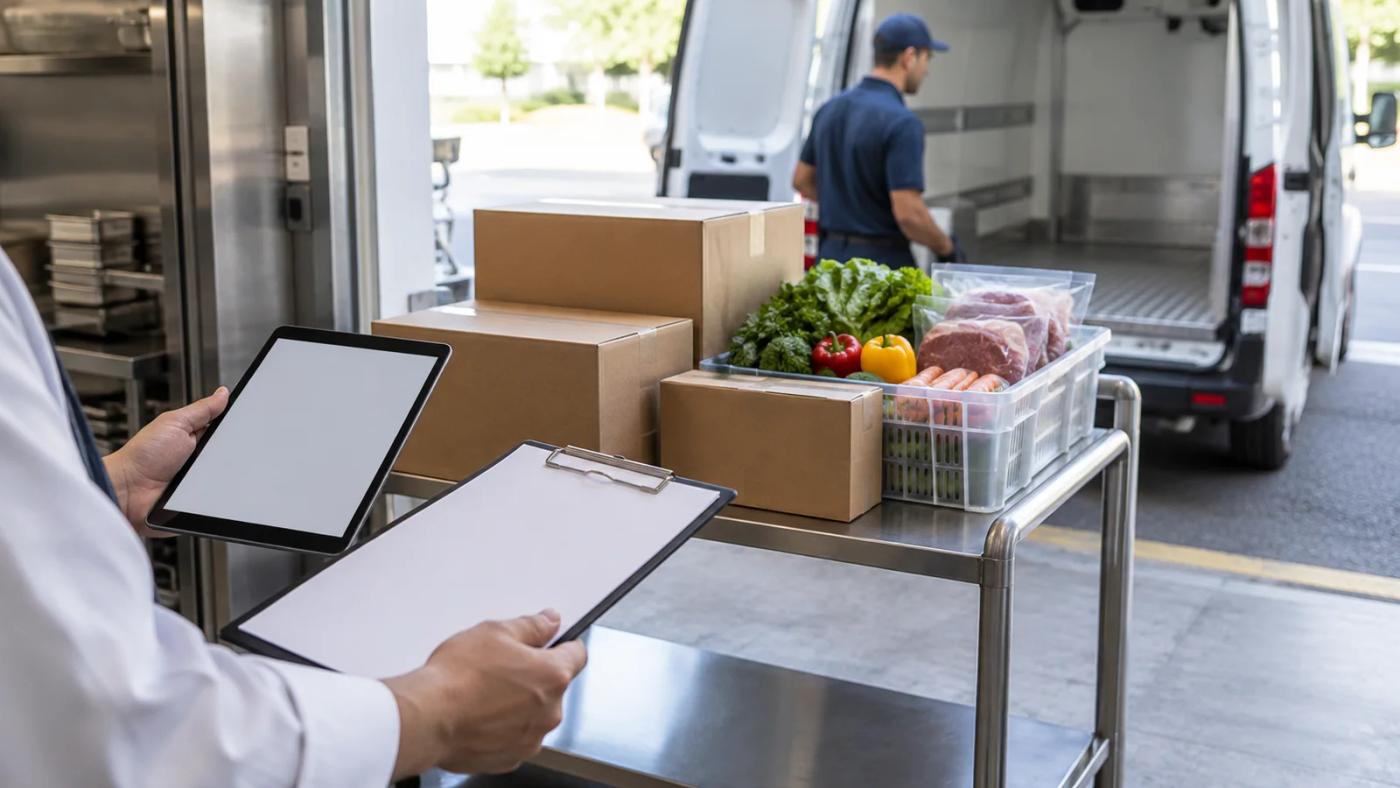
A delivery invoice discrepancy is any gap between what a venue ordered, what actually came off the truck and what the supplier billed. The fix is to keep those three numbers as three separate records, count at the door, and raise the credit before the invoice is paid. Merge them into one number and the gap simply disappears from the paperwork.
Take a simple example (illustrative figures). A restaurant orders 10 kg of chicken thigh at $12.50 a kg. The driver unloads 8 kg because the last case was short-picked. The invoice still says 10 kg, $125.00. If the kitchen signs the docket without counting, and the bookkeeper enters the invoice as "received", the business pays $25.00 for chicken it never had. Nobody stole anything and nobody lied. The system just had nowhere to record the difference.
For suppliers, the same gap shows up from the other side: a credit request three weeks later, a customer who short-pays an invoice without saying why, or a chef who quietly decides you "always get it wrong". This guide covers the venue and receiving side of the problem. If you want the buying side, where a wholesaler checks its own vendors’ bills against purchase orders, read our companion piece on vendor invoice matching and the three-way match.
What causes a delivery invoice discrepancy?
Most delivery invoice discrepancies come from four places, and only one of them is a billing error.
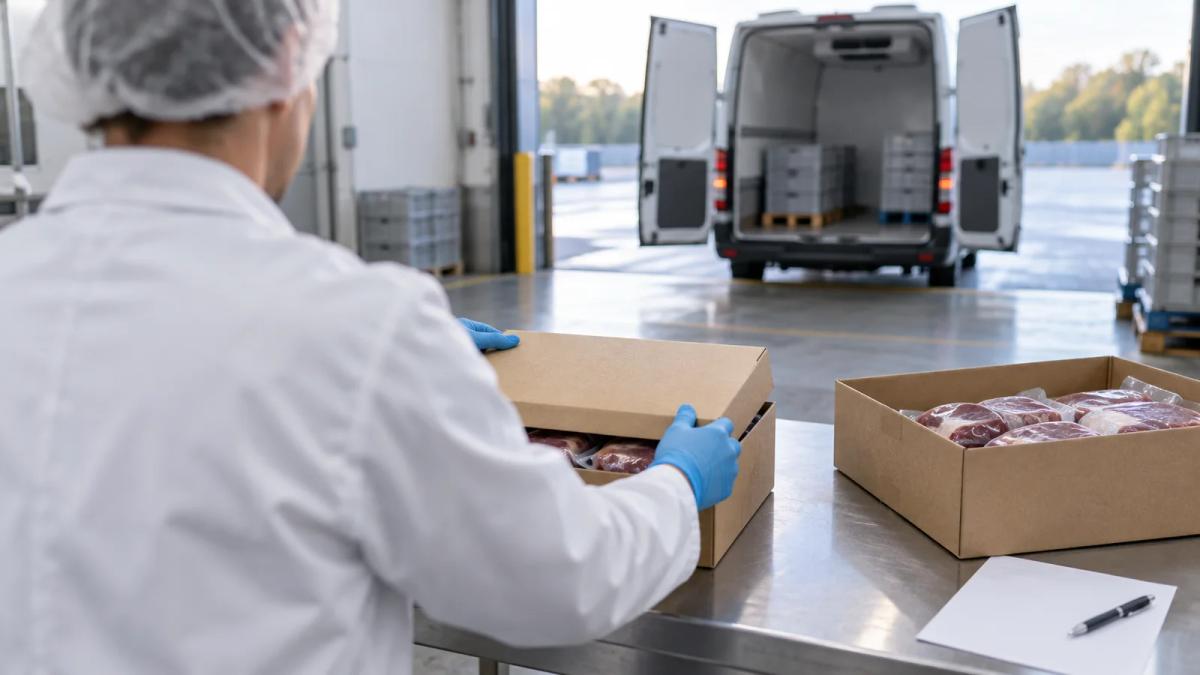
- Short picks and short deliveries. Stock ran out, a case was missed on the pick, or product was left on the truck. The invoice was raised from the order, not from the pick.
- Substitutions. A 5 kg bag replaced two 2.5 kg bags, or one brand replaced another. The quantity looks the same but the unit, price or product code has changed.
- Catch-weight lines. Meat, seafood and cheese are ordered by the piece or carton and billed by the kilogram. The ordered number and the billed number were never meant to be identical.
- Price changes. The supplier’s price moved and the venue’s expected price did not.
Notice that three of the four are about quantity, not price. That matters for how you check. A price change is visible on the invoice. A short delivery is only visible if somebody counted.
Why should ordered, received and invoiced be three separate numbers?
Because each number is owned by a different person and answers a different question. Ordered is the venue’s intent, usually set by the chef or purchaser. Received is a physical fact, owned by whoever checked the delivery at the door. Invoiced is the supplier’s claim for payment, owned by the supplier’s accounts team.
When a system stores only one of these, it has to guess the other two. The most common shortcut is to copy the invoice quantity into "received", because it saves typing. That shortcut is exactly what hides the problem. The invoice says 10 kg, so received becomes 10 kg, so the books balance, so nobody asks.
Open Pantry's check-off keeps the kitchen's count and the supplier's invoice as separate records, which is a rule worth stealing even if you never use the software: never rewrite the supplier’s invoice total from your own reading of their lines. If your count and their bill disagree, that disagreement is the signal. Smoothing it over with an edit destroys the evidence both sides need to settle it fairly.
How should a venue check off a delivery?
The venue should count each delivery against the order at the door, record only the differences, and note a reason for every short line. A good check-off takes a couple of minutes for a normal produce or meat delivery.
A practical check-off routine looks like this:
- Start from the order, not the docket. Pre-fill expected quantities from what was ordered, so staff only change lines that differ.
- Count and weigh what matters. Proteins, seafood and high-value dry goods first. Weigh catch-weight lines rather than trusting the carton label.
- Check temperature on chilled lines. Food Standards Australia New Zealand says chilled potentially hazardous food should be delivered at 5°C or colder, hot food at 60°C or hotter, and frozen food frozen hard. Rejected or warm product is a receiving discrepancy too.
- Record a reason for every short. "Not on truck", "damaged", "wrong product" and "out of date" lead to different conversations with the supplier.
- Stamp who counted and when. A count with a name and time on it is far harder to dispute than a signature on a crumpled docket.
How do you match a supplier invoice to what was delivered?
You compare the invoice line by line against the received count, not against the order, and you label each difference by type. Matching to the order only tells you whether the supplier billed what you asked for. Matching to the count tells you whether you are paying for what you got.
The useful labels are simple:
- Billed, not received: the invoice quantity is higher than the count. This is the classic short delivery and becomes a credit claim.
- Not ordered: a line appears on the invoice that was never on the order. Either it was a genuine extra the venue accepted, or it should be returned.
- Different unit: ordered by the carton, billed by the kilogram, or the pack size changed. Check the conversion before deciding anything.
- Price up: the unit price is higher than the agreed or last-paid price.
Each flagged line then needs a decision: accept it, pay it once without changing the costed price, or decline it and claim the difference with a reason the supplier can see. What you should not do is edit the invoice to match your count. The invoice stays as the supplier issued it, and the credit closes the gap.
Can a driver raise a credit for a short delivery at the door?
Yes, if the supplier’s driver app records shorts at the stop. The best place to settle a short delivery is at the door, while the driver, the product and the venue’s staff are all in the same place.
In practice, the driver marks the short items, the stop becomes a partial delivery, and a credit request is created for those lines straight away. The customer can sign for the short items and the driver takes a delivery photo. The supplier’s office still reviews and approves the credit, but the evidence was captured at the moment of delivery rather than reconstructed from memory a fortnight later.
This also fixes the most common supplier frustration with credits: being asked to approve a claim for something nobody on your side saw. When the claim starts in your own driver’s hands, approval is a formality.
What does the ATO require for tax invoices and adjustment notes?
The ATO says a supplier must issue a tax invoice within 28 days when a customer asks for one, unless the sale is $82.50 or less including GST. Tax invoices for sales of $1,000 or more must also show the buyer’s identity or ABN.
On the credit side, the ATO says you generally need a valid adjustment note before you can claim a decreasing GST adjustment, unless the GST involved is $75 or less. A credit note that references the original invoice and the lines credited does the job for most short deliveries. Talk to your accountant about how your accounting software treats credit notes against already-paid bills.
The practical point: a credit that is raised against the original invoice, with lines and GST inherited from it, keeps both sides’ books clean. A free-form "$25 off next order" does not.
How do suppliers reduce delivery invoice discrepancies?
Suppliers reduce discrepancies by invoicing from the pick, not the order, and by making every short visible before the truck leaves. Most disputes start in the warehouse, not at the venue.
- Bill short at dispatch. If the picker marks a line short, the invoice should already reflect it. No credit needed.
- Flag substitutions on the invoice. Show the original and the substitute so the venue’s check-off makes sense.
- Weigh catch-weight lines at pick. Bill the actual weight, not the nominal carton weight.
- Give drivers a way to record shorts. A credit request raised at the stop beats a phone call from the chef at 3pm.
- Watch credit reasons by customer and product. Repeated "not on truck" claims on the same run point to a loading problem, not a customer problem.
Accurate picking is the cheapest discrepancy fix there is. We cover the warehouse side in more detail in the link between picking accuracy and customer retention.
The short version
A delivery invoice discrepancy is not a failure of honesty; it is a failure of record-keeping. Keep ordered, received and invoiced as three numbers, count at the door, raise credits against the original invoice, and never edit the supplier’s bill to make the numbers agree. The disagreement is the information.
How Open Pantry helps keep ordered, received and invoiced separate
Open Pantry is an Australian B2B ordering and operations platform for wholesale food and beverage suppliers, with restaurant ordering, inventory and menu-costing tools (founded 2018). It stores ordered, received and invoiced as three separate numbers. Venues use delivery check-off to count against the order on a phone or tablet; shorts become one credit request per delivery, and invoices are matched line by line against the count, with labels such as Billed, not received and Different unit. Check-off and credit requests are free for venues; invoice matching sits in the paid restaurant plans.
For suppliers, short picks are billed short at dispatch, drivers record short deliveries in the driver app, and every credit is raised against the original order through credits and returns, then synced to your accounting software. For your own vendor bills, see vendor invoice matching.
Frequently asked questions
What should a restaurant do when a delivery invoice does not match what was delivered?
Count the delivery against the order at the door, record each short line with a reason, and raise a credit request for the difference before paying. Do not edit the supplier's invoice to match your count. Keep the invoice as issued and let a credit note referencing the original invoice close the gap, so both sides' books stay accurate.
How do I claim a credit from a supplier for a short delivery?
Raise a credit request against the original order or invoice, listing the short lines, quantities and a reason such as not on truck or damaged. Evidence helps: a timed check-off count, a signed docket or a driver's delivery photo. The supplier reviews and approves the request, then applies the credit to an unpaid invoice, the next invoice or a refund.
What is the difference between a short pick and a short delivery?
A short pick happens in the supplier's warehouse when a line cannot be filled, so it should be billed short at dispatch and needs no credit. A short delivery is found at the venue when less arrives than was invoiced, for example a case left on the truck. Short deliveries are the ones that need a credit request.
Does the venue or the supplier fix a delivery invoice discrepancy?
Both. The venue's job is to count what arrived and claim the difference with a reason. The supplier's job is to invoice from the pick rather than the order, review the claim and issue a credit note against the original invoice. Discrepancies settle fastest when the short is recorded at the door by the driver or receiving staff.
Do I need an adjustment note for a supplier credit in Australia?
Generally yes. The ATO says you need a valid adjustment note before claiming a decreasing GST adjustment, unless the GST involved is $75 or less. A credit note that references the original tax invoice and the credited lines usually serves this purpose. Check with your accountant how your accounting software records credits against bills already paid.
Sources
- Australian Taxation Office - Tax invoices (accessed 20 Oct 2026)
- Australian Taxation Office - Adjustment notes (accessed 20 Oct 2026)
- Food Standards Australia New Zealand - Receiving food (accessed 20 Oct 2026)
- Open Pantry - Delivery check-off for restaurants (accessed 20 Oct 2026)
- Open Pantry - Credits & Returns for suppliers (accessed 20 Oct 2026)
- Open Pantry Help Centre - Drivers and the driver app (accessed 20 Oct 2026)
- Open Pantry Help Centre - Credits: requesting and approving customer credits (accessed 20 Oct 2026)