wholesale ordering

Open Pantry Blog

Ordered, Received, Invoiced: The Three Numbers Behind Every Delivery Invoice Discrepancy

A delivery invoice discrepancy is any gap between what a venue ordered, what came off the truck and what the supplier billed. Keep those three numbers as separate records, count at the door, and raise the credit before the invoice is paid. Merge them into one number and the gap disappears from the paperwork.
Read more: Ordered, Received, Invoiced: The Three Numbers Behind Every Delivery Invoice Discrepancy

Compare Open Pantry with Ordermentum, Fresho, FoodByUs and others

April 4, 2026

Why Linking Your PO System with ERP is a Game-Changer

By Gelou Jimeno · Reporting & operations
A girl holding a phone.
Linking a purchase order system to an ERP removes duplicate data entry and synchronises procurement, inventory and finance in real time. For food suppliers that means fewer pricing and duplicate-order errors, automated reconciliation of orders, invoices and payments, live stock and expiry visibility, and processes that scale across multiple sites.
Read more: Why Linking Your PO System with ERP is a Game-Changer
April 3, 2026

ERP vs. Standalone Purchase Order Management: Pros & Cons

By Gelou Jimeno · Comparisons & alternatives
A man using a POS.
An ERP integrates procurement, inventory, finance and logistics in one system and suits large food suppliers with complex supply chains, while standalone purchase order software handles procurement alone, costs less and deploys faster, which suits smaller suppliers wanting a practical procurement fix without a months-long rollout.
Read more: ERP vs. Standalone Purchase Order Management: Pros & Cons
April 1, 2026

Inventory Order Management Software: Costs vs. Benefits

By Gelou Jimeno · Warehouse, picking & fulfilment
A man using a tablet and a bar code scanner to take inventory.
Inventory order management software carries upfront licensing, implementation and training costs, but replaces the hidden costs of manual tracking: labour on stock counts, data entry errors causing stockouts and overstocking, food waste from expired perishables, lost productivity and slow decisions from outdated data.
Read more: Inventory Order Management Software: Costs vs. Benefits
March 31, 2026

Online Purchase Order Systems: A Guide for Food Suppliers

By Gelou Jimeno · Reporting & operations
A man using a tablet to check inventory in a warehouse.
An online purchase order system documents and tracks every purchase between a food supplier and its buyers. Its core features are real-time inventory tracking with FIFO and FEFO support, vendor management, customisable templates, batch and expiry tracking, reporting and analytics, multi-device cloud access and ERP integration.
Read more: Online Purchase Order Systems: A Guide for Food Suppliers
March 29, 2026

Sustainable Procurement: Smarter POs for a Greener Future

By Gelou Jimeno · Reporting & operations
Illustration of stacked reusable produce crates on a pallet with plants and a leaf icon.
Sustainable procurement uses digital purchase order management to cut environmental impact: removing paper requisitions, approvals and archiving, improving inventory forecasting so less food spoils, consolidating shipments and optimising routes to lower emissions, and giving visibility into which suppliers actually meet sustainability standards.
Read more: Sustainable Procurement: Smarter POs for a Greener Future
March 28, 2026

Debunking Myths: PO Systems Aren’t Just for Big Enterprise

By Gelou Jimeno · Reporting & operations
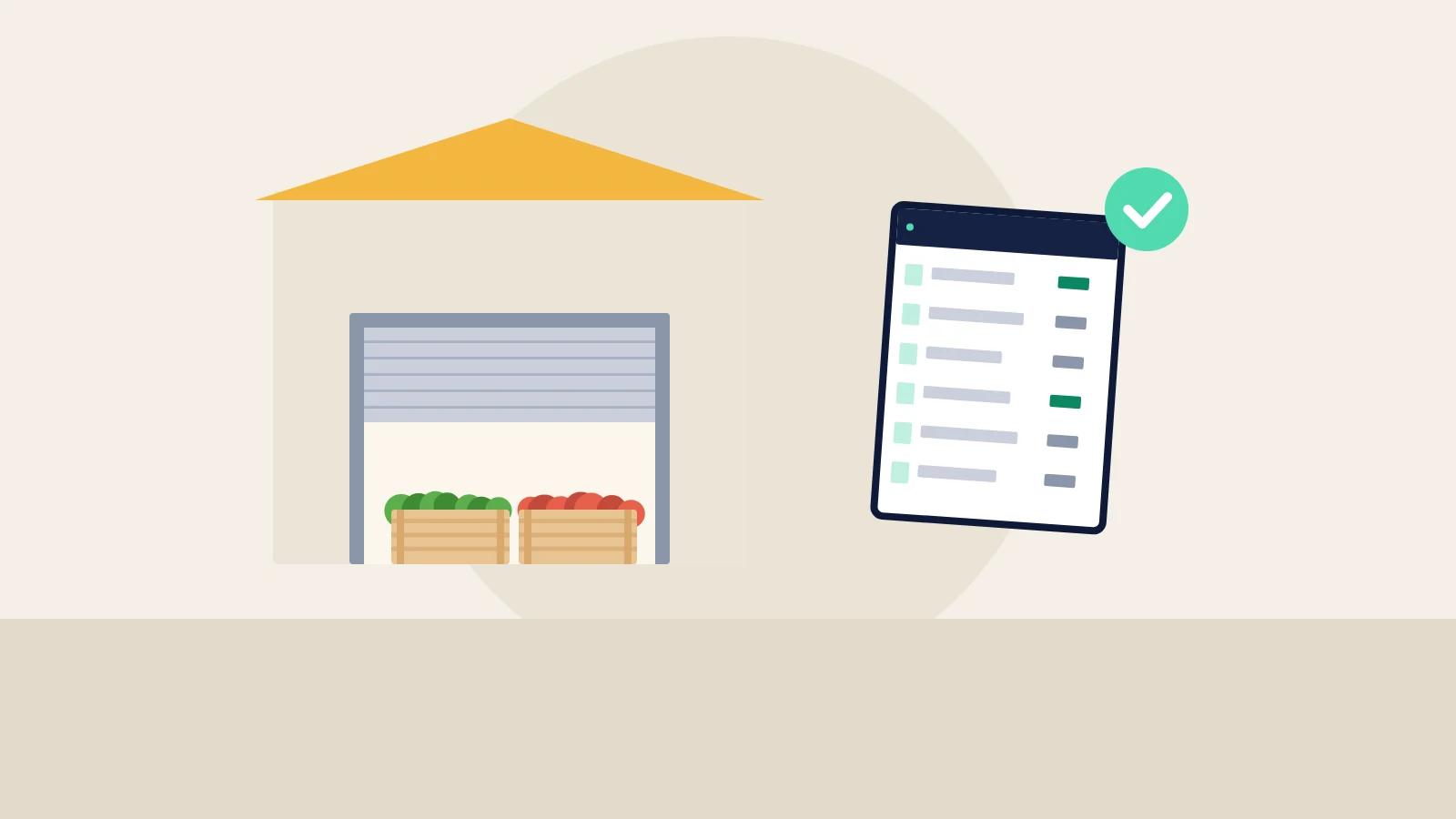
Illustration of a small food wholesaler's warehouse next to a tablet showing a ticked purchase order.
Purchase order systems are not just for large enterprises. Five myths hold small and medium businesses back: that POs suit only big companies, that implementation is expensive and complicated, that simple purchases do not need them, that they slow purchasing down, and that they are irrelevant to service-based businesses.
Read more: Debunking Myths: PO Systems Aren’t Just for Big Enterprise
March 25, 2026

Why Food Suppliers Lose Money on Inventory and How to Fix It

By Gelou Jimeno · Reporting & operations
A woman disposing of food waste onto a pile of rotten vegetables.
Food suppliers lose money on inventory through poor tracking, perishability, forecasting errors, inefficient storage, supply chain disruptions, outdated manual processes and untrained staff. Each has a practical fix, from automated cloud tracking and FIFO rotation to AI forecasting, warehouse organisation, supplier diversification and regular staff training.
Read more: Why Food Suppliers Lose Money on Inventory and How to Fix It
March 23, 2026

Master Your Spending with a Purchase Order Management System

By Gelou Jimeno · Accounting, invoicing & payments
Illustration of a purchase order, stacks of coins and a wallet, representing control of spending.
A purchase order management system helps food suppliers control spending through real-time budget tracking, structured approval workflows, category and supplier spending limits, automated routine purchases, standardised vendor communication, and accounting integration that keeps expense records accurate and current.
Read more: Master Your Spending with a Purchase Order Management System
March 14, 2026

Best ERPs for Food & Beverage Wholesalers in Australia (2026)

By Geoff Philcox · Comparisons & alternatives
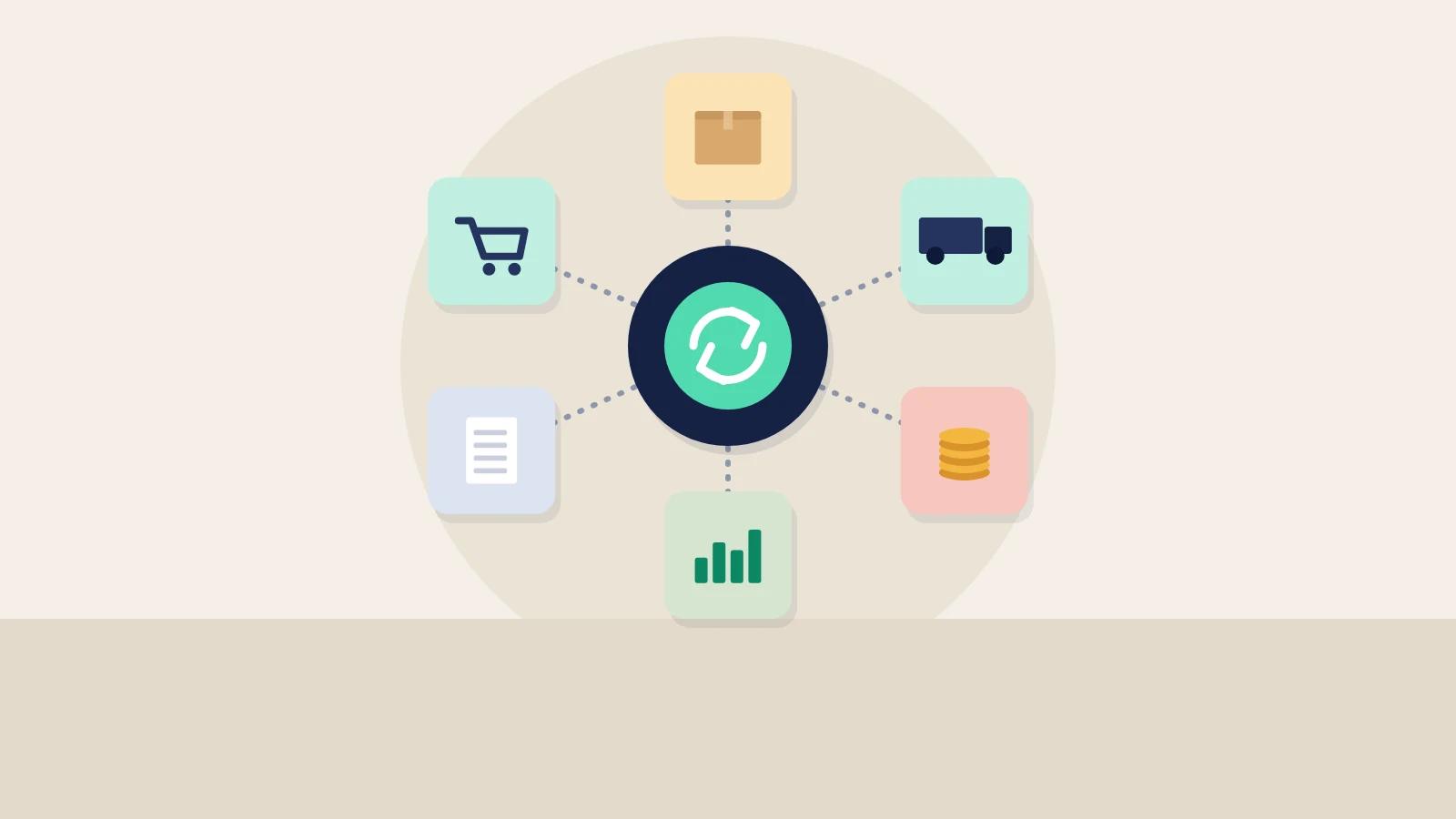
Illustration of an ERP hub connected to inventory, delivery, finance, reporting, documents and ordering modules.
The article reviews five ERP systems for food and beverage wholesalers: Microsoft Dynamics 365 Business Central, NetSuite, MYOB Acumatica (formerly MYOB Advanced), Odoo and SAP Business One. Each brings inventory, sales, accounting and customer management into one platform, with different strengths by business size and industry.
Read more: Best ERPs for Food & Beverage Wholesalers in Australia (2026)
March 13, 2026

Best Inventory Management Systems for Wholesale Food Suppliers

By Geoff Philcox · Comparisons & alternatives
A warehouse supervisor in hi-vis scanning cartons on racking in a food distribution warehouse, with a pallet jack of boxes in the aisle.
The article compares five inventory management systems for wholesale food suppliers: FoodReady, Acumatica, Open Pantry, Linnworks and Cin7 Omni. Each tracks stock in real time and helps reduce waste, with differences in traceability, multi-warehouse support, expiry tracking and sales channel integration.
Read more: Best Inventory Management Systems for Wholesale Food Suppliers
March 7, 2026

Dealing with the Challenges of Distributing Perishable Goods

By Gelou Jimeno · Delivery & logistics
A person in gloves is holding shrimp in a container.
Distributing perishable goods brings five recurring challenges: holding freshness and quality, managing complex multi-stage supply chains, coping with seasonal demand swings, meeting health and safety compliance, and running efficiently. The article pairs each with practical controls, from FIFO and temperature monitoring to forecasting and automation.
Read more: Dealing with the Challenges of Distributing Perishable Goods

Curious how we can save you money?

Get your free Demo Today

Join the worlds leading edge ordering management system

Get a Demo Today