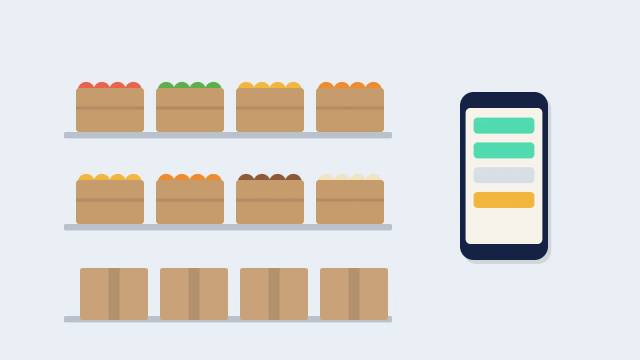
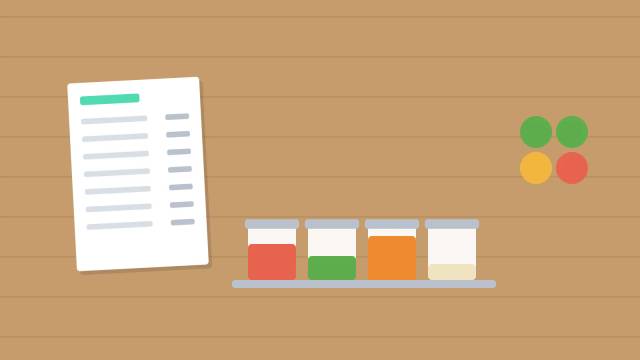
To reduce food waste in restaurants, log every discard with a dollar value and a reason, order perishables to a forecast rather than a fixed par, and prep to the covers you expect. Waste then becomes a weekly dollar line you can sort, fix item by item and watch fall.
Key takeaways
- Restaurant food waste mostly comes from over-ordering, over-prepping, spoilage and plate waste, each needing a different fix.
- Log every discard with item, quantity, reason and the latest invoice cost so waste is measured in dollars.
- Track weekly waste as a share of food purchases beside food cost percentage so jumps are visible.
- Order perishables to expected use minus on hand and on order, rounded up to the supplier's pack size.
- Build prep lists from the day's expected portions minus prepped stock, rounded to real batch sizes.
- ReFED estimates US restaurants save about eight dollars for every dollar invested in food waste reduction.
In this guide 8 sections
- 01Where does restaurant food waste actually come from?
- 02How do you measure waste in dollars?
- 03How does ordering to a forecast cut waste?
- 04How should prep lists change?
- 05Is reducing waste worth the effort?
- 06How Restaurant AI Manager helps with reducing food waste
- 07In summary: how to reduce food waste in restaurants
- 08FAQs

In the US, ReFED estimates that food waste can account for as much as 4.2% of total sales in an average restaurant. On a venue turning $40,000 a week, that rate would put about $1,680 a week in the bin. The way down is to treat waste as a buying and prep problem rather than a bin problem, and to put a price on every discard so you know which items to fix first.
If you run a kitchen, you already know the feeling. The walk-in is full on Monday, half a crate of herbs has gone black by Wednesday, and the end-of-week bin is heavy with trim, last night’s mash and a tray of prepped garnish nobody used. Everyone agrees waste is bad. Nobody can tell you what it cost last week, which item caused most of it, or whether it is getting better.
Where does restaurant food waste actually come from?
Most kitchen waste comes from three places: over-ordering, over-prepping, and spoilage or handling, with plate waste as a fourth that sits with the menu and portions. The scale is not small. Australian hospitality produces more than 1.2 million tonnes of food waste a year, about 16% of the national total, according to End Food Waste Australia. In cafes, an RMIT study found up to 60% of an average bin is food.
- Food waste from Australian hospitality each year (End Food Waste Australia)
- 1.2 Mt+
- Hospitality's share of Australia's total food waste (End Food Waste Australia)
- 16%
- Share of an average Australian cafe bin that is food (RMIT, 2024)
- Up to 60%
Here is how each source usually shows up on the floor:
- Over-ordering: the rep rings, you add an extra box "just in case", and perishables sit until they turn. Common with herbs, leaves, soft fruit, dairy and fish.
- Over-prepping: prep lists copied from last Saturday, or a fixed par for every day of the week, so a quiet Tuesday gets Saturday’s mise en place.
- Spoilage and handling: poor rotation, unlabelled containers, a cool room door left ajar, stock received warm and put away late.
- Plate waste: portions that are too big or garnishes nobody eats. ReFED’s US guide reports guests leave an average of 17% of the food on their plate.
The fix for each is different, which is why one waste total on its own is not much use. You need the reason as well as the amount.
How do you measure waste in dollars?
Measure waste by logging every discard with the item, quantity, unit and reason, then multiplying by the cost per unit from the latest invoice. Kilos tell you how heavy the bin was. Dollars tell you what to fix first.
Keep the log where the waste happens: a clipboard on the cool room door, or a phone at each section. Each line needs:
- Item and quantity (for example, 2.5 kg salmon trim)
- Reason code: overproduced, spoiled or expired, trim and yield, mistake or dropped, returned by guest
- Who logged it and when
- Cost per unit, taken from the last invoice, not last year’s recipe card
Here is what three lines of a week’s log might look like in a bistro:
| Item | Quantity | Unit cost | Reason | Cost |
|---|---|---|---|---|
| Salmon trim | 3 kg | $34/kg | Trim and yield | $102.00 |
| Cream | 4 L | $7.50/L | Expired | $30.00 |
| Rocket | 2.2 kg | $18/kg | Spoiled | $39.60 |
In a spreadsheet with quantity in column B and unit cost in column C, each line’s cost in column D is:
=B2*C2Say the week’s waste comes to $610 and food purchases were $9,400, with purchases in cell F1. Waste as a share of purchases is about 6.5%:
=SUM(D2:D40)/F1Run that number weekly and sort by dollars. In most kitchens a short list of items makes up most of the cost, and those are the ones worth changing first. Track waste as its own line beside food cost %, so a jump shows up as waste rather than vanishing into a vague "food cost is up". If food cost is moving and you can’t see why, our guide to why actual food cost runs higher than your recipes say shows where waste sits in that gap.
How does ordering to a forecast cut waste?
Ordering to a forecast cuts waste because you buy what you expect to use before the next delivery, not what fills the shelf. The basic sum is expected use until the next delivery, plus a small buffer, minus what’s on hand and already on order, rounded up to the supplier’s pack size.
In Excel, with expected use in B2, buffer in C2, on hand in D2, on order in E2 and pack size in F2, the number of packs to order is:
=MAX(0,ROUNDUP((B2+C2-D2-E2)/F2,0))Worked example (hypothetical numbers): your rocket supplier delivers Tuesday and Friday. From Tuesday to Friday you expect to use 4.5 kg on current covers, you want a 0.5 kg buffer, you have 1.2 kg on hand and nothing on order. That is 3.8 kg needed. Rocket comes in 1 kg bags, so you order 4 bags, not the usual 6 "to be safe".
Three things make this work in practice:
- Use delivery days. A Friday order has to cover the weekend; a Tuesday order does not.
- Count before you order. A forecast is only as good as the on-hand number you subtract.
- Adjust for bookings and functions. A 60-cover function on Saturday changes the order; a usual Saturday does not need padding on top of a padded par.
Pars still have a place for long-life staples like flour, oil and tinned tomatoes, where an extra unit costs you shelf space rather than a bin. Our comparison of par levels and forecast ordering covers when each one fits.
How should prep lists change?
Prep lists should be built from the day’s expected portions, minus what is already prepped, rounded to your batch sizes, rather than copied from a fixed sheet. A Tuesday and a Saturday should not get the same list.
Practical changes most kitchens can make this week:
- Set day pars. Write separate prep quantities for quiet, normal and busy days, or tie them to booked covers.
- Subtract what is already there. Check the walk-in before the list is written, not after the stock is cooked.
- Round to real batch sizes. If your braise is made in 5 kg batches, the list should say one batch or two, not 7.3 kg.
- Label everything with the item, date made and use-by, and rotate first in, first out.
- Split by station so each section prepares only its own items.
For the step-by-step version, see how to write prep lists from what you’ll actually sell, and for running prep sheets day to day, how prep sheets conduct kitchen harmony.
Is reducing waste worth the effort?
Usually yes: the published evidence puts the return well above the cost. ReFED estimates US restaurants can realise about $8 of cost savings for every dollar invested in food waste reduction. Champions 12.3 research, reported by letsrecycle.com, found an average return of £14 for every £1 invested in reducing hospitality and food service waste. Those are overseas figures, but the mechanics are the same in an Australian kitchen: every kilo you do not throw away is a kilo you did not need to buy.
Menu changes help too. Fewer dishes sharing more ingredients means less stock to go off, and a special built from overstock is better than a bin.
How Restaurant AI Manager helps with reducing food waste
Restaurant AI Manager, Open Pantry’s AI restaurant operations software, records waste alongside counts and transfers, and when GP slips it splits the movement into price rises, waste, yield and count error in dollars that add up. The morning briefing ranks what is costing the most this week, including waste that jumped. Forecast orders are built from sales, bookings and functions, minus what is on hand and on order, rounded up to packs and timed to each supplier’s delivery days, and they wait for your approval. Prep lists by station come from the day’s forecast and functions, rounded to batch sizes. You can try it in the free live demo, with no sign-up.
In summary: how to reduce food waste in restaurants
To reduce food waste in restaurants, measure it in dollars with a reason for every line, order perishables to expected use rather than fixed pars, and prep to the day’s forecast. Start with the few items costing you the most, fix those, and keep the weekly waste number next to your food cost so you can see it fall.
Frequently asked questions
How do I calculate the cost of food waste in my restaurant each week?
Log every discard with the item, quantity, unit and reason, then multiply the quantity by the cost per unit from the latest invoice. Add the lines up for the week and divide by food purchases for the same week to get waste as a percentage. Sort by dollars so the few items costing the most are fixed first, and track the number weekly beside food cost.
What are the main causes of food waste in a commercial kitchen?
Most commercial kitchen waste comes from over-ordering perishables, over-prepping on quiet days, spoilage from poor rotation or storage, and plate waste from large portions or garnishes guests leave. Each has a different fix, so record a reason code with every discard. Without the reason you only know the bin was heavy, not whether to change the order, the prep list or the plate.
Should restaurants use par levels or forecasts to order perishable stock?
Forecasts usually suit perishables better. Order what you expect to use before the next delivery, plus a small buffer, minus what is on hand and already on order, rounded up to the pack size. Fixed par levels still work for long-life staples like flour, oil and tinned goods, where an extra unit costs shelf space rather than ending up in the bin.
Is it worth the time to track food waste in a small restaurant or cafe?
Usually yes. ReFED estimates US restaurants save about eight dollars for every dollar spent reducing food waste, and Champions 12.3 research found a fourteen-to-one average return in hospitality and food service. A simple waste log at the cool room door takes seconds per entry and quickly shows which handful of items cause most of the cost, which is where small changes pay back fastest.
How do I get kitchen staff to actually log food waste every shift?
Make logging quicker than ignoring it. Put the log where waste happens, such as the cool room door or each section, keep reason codes to five or fewer, and let staff record quantity and reason while someone else adds the dollar value from invoices. Share the five costliest items each week at the pre-service briefing so the team sees what their entries changed.
Sources
- Restaurant Food Waste Action Guide (ReFED)
- End Food Waste Australia unveils action plans to help slash food waste and costs for cafes and caterers (End Food Waste Australia)
- Shorter menus could reduce food waste and save cafes thousands: study (RMIT University)
- WRAP: reducing hospitality food waste could see 1:14 ROI (letsrecycle.com)